


The federal government has hauled Utah into court over prediction markets, challenging a state gambling crackdown that targets Kalshi and potentially $61.2 million in trading fees. The showdown pits Washington’s derivatives regulator against one of America’s strictest gambling prohibitions.
CFTC Sues Utah, Warns Kalshi Crackdown Threatens Federal Oversight
WRITTEN BY

SHARE
Key Takeaways
- The CFTC filed its 10th state lawsuit, challenging Utah’s enforcement against regulated prediction markets.
- Utah alleges Kalshi collected up to $61.2 million in fees and caused $5.5 million in resident losses.
- Kalshi’s earlier federal court defeat complicates the CFTC’s effort to establish exclusive jurisdiction.
CFTC Challenges Utah’s Gambling Crackdown
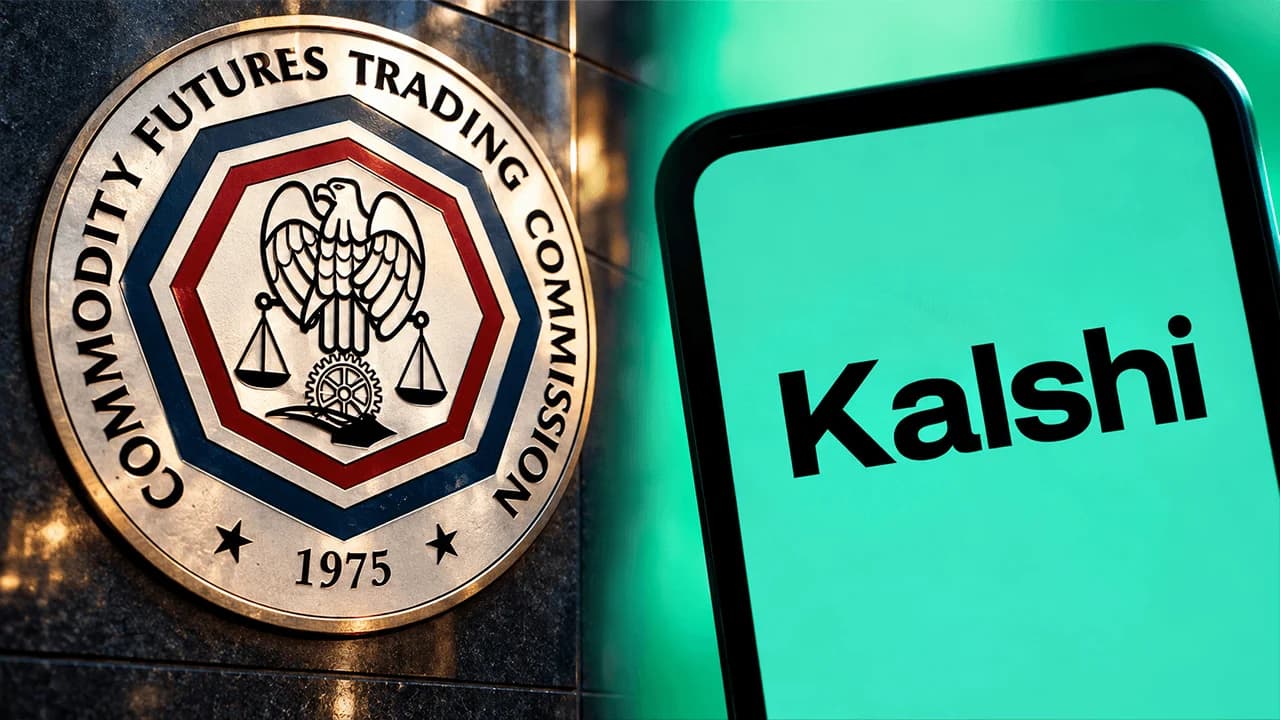
On Tuesday, the Commodity Futures Trading Commission (CFTC) and the United States filed suit against Utah and Attorney General Derek Brown in federal district court, seeking to prevent state authorities from enforcing gambling restrictions against federally regulated prediction markets.
The complaint, filed in the District of Utah under case number 2:26-cv-01055, argues that the Commodity Exchange Act (CEA) gives the CFTC exclusive authority over event contracts traded on designated contract markets. “The United States and the CFTC bring this action to halt Defendants’ efforts to prohibit the operation of derivatives markets governed by federal law,” the complaint states.
The regulator has also filed lawsuits against nine other states over the legal boundaries of federal oversight of event-based trading contracts, including New York, Kentucky, Rhode Island, Arizona, Minnesota, Wisconsin, New Mexico, Connecticut, and Illinois.
“Utah seeks to shut down prediction markets across a wide variety of markets,” CFTC Chairman Michael S. Selig remarked. “Event contracts do not just serve hedging and investment purposes—they also provide the public with information about the outcome of future events.”
Selig added:
“Congress entrusted the CFTC to be the federal regulator with sole responsibility to oversee these markets. As I’ve said before, the CFTC has the expertise and responsibility to defend its exclusive jurisdiction over commodity derivatives, and that’s exactly what we’ll do.”
The agency wants a federal judge to declare Utah’s gambling and public-nuisance laws preempted when applied to covered federally regulated contracts. It also seeks preliminary and permanent injunctions preventing state officials from pursuing enforcement against regulated platforms and their business partners.
Utah Targets Kalshi Over Millions in Trading Fees
The federal challenge follows Utah’s Oct. 20 lawsuit against Kalshi, its affiliates, and two Susquehanna entities. Brown’s complaint alleges the companies operated an illegal gambling enterprise offering contracts tied to sports, elections, politics, entertainment, and other outcomes. Utah estimates Kalshi collected between $30.6 million and $61.2 million in fees from state accounts through mid-October. The state also alleges residents suffered approximately $5.5 million in trading losses.
More than 32,000 Utah residents had verified Kalshi accounts earlier in 2026. Brown accused the company of operating “an online casino in Utah and call[ing] it a prediction market.” Utah wants the activity stopped, allegedly unlawful profits surrendered and affected customers compensated. Kalshi maintains that its exchange operates under federal oversight and that individual states cannot independently prohibit its regulated contracts.
Earlier Court Defeat Complicates Federal Challenge
Interestingly, Kalshi had already lost a major round of this fight. On Aug. 4, U.S. District Judge Robert J. Shelby ruled that federal commodities law didn’t prevent Utah from enforcing its gambling prohibitions against Kalshi’s sports contracts. Kalshi appealed, but the 10th U.S. Circuit Court of Appeals denied its request for an injunction pending appeal on Sept. 8.
The latest CFTC complaint advances three preemption arguments: express federal authority, comprehensive federal regulation, and conflicts between state restrictions and national derivatives oversight. “The State’s actions inject uncertainty into federal derivatives markets over the scope of the Commission’s jurisdiction,” the CFTC’s complaint against Utah reads.
A ruling favoring Washington could redraw the regulatory boundaries for prediction markets nationwide. A Utah victory would strengthen states’ arguments that federally regulated contracts can still constitute prohibited gambling services. For now, the federal government is defending markets that a federal judge has already allowed Utah to restrict.

Crypto casino Gamdom faces a $15 million bitcoin ransom demand after cyber-extortion group Whitearmor claimed to have stolen records belonging…
Read Now: Crypto Casino Gamdom Faces $15M Bitcoin Ransom After Multimillion-Dollar Hack