


South Korea is preparing to push its cryptocurrency gains tax back for a fourth time, according to local reporting, potentially giving investors until 2029 before the government collects a dime. The proposed delay would extend a tax policy first scheduled to launch in 2022.
South Korea's Crypto Tax Faces Fourth Delay as 2029 Date Looms: Report
WRITTEN BY
SHARE

Key Takeaways
- Regional reports say South Korea is considering a fourth crypto tax delay, potentially shifting implementation to 2029.
- South Korea’s proposed 22% tax applies to annual cryptocurrency profits exceeding 2.5 million won.
- U.S. participation in CARF isn’t expected until 2029, complicating South Korea’s enforcement plans.
A Crypto Tax That Keeps Missing Its Start Date
According to a report from the 43-year-old news publication Business Korea, South Korea’s long-delayed cryptocurrency tax faces another postponement as lawmakers, government officials, and industry representatives question whether the country can enforce the measure fairly.
Under existing legislation, annual virtual asset profits exceeding 2.5 million won, roughly $1,800, face a combined 22% tax. That includes a 20% national levy and 2% local tax, with no provision for carrying losses into subsequent years.
Originally scheduled for 2022, the tax was pushed to 2023, then 2025, and most recently Jan. 1, 2027. Now, a fourth postponement is gathering political support. Interestingly enough, the tax has survived six years of legislative debate without collecting a single won.
U.S. Reporting Gap Complicates Enforcement
The latest complication involves the Organization for Economic Cooperation and Development’s Crypto-Asset Reporting Framework (CARF), designed to help tax authorities exchange cryptocurrency transaction information across borders. South Korea expects to begin exchanging data in 2027, but the United States isn’t scheduled to participate until 2029. That two-year gap threatens to complicate enforcement against investors using overseas platforms.
Domestic exchange customers, meanwhile, could face closer scrutiny simply because their transactions are easier to track. On Oct. 16, Democratic Party lawmaker Park Min-gyu introduced legislation linking the tax’s implementation to the second year following South Korea’s first CARF information exchange. Under the anticipated timetable, that means 2029. Opposition People Power Party lawmakers have floated similar postponements, including proposals extending the deadline to 2030, or eliminating the tax altogether.
Political Pressure Builds as Exchanges Push Back
Political resistance extends beyond parliament. A National Assembly petition demanding another two-year postponement collected more than 50,000 signatures, qualifying it for formal review. Younger investors have become particularly important to the debate, with cryptocurrency offering an alternative investment avenue amid expensive housing and financial pressures.
On Oct. 20, finance ministry officials met representatives from South Korea’s five major cryptocurrency exchanges and the Digital Asset Exchange Alliance (DAXA) to discuss implementation readiness. Domestic reporting indicates the presidential office has also warmed to postponement, citing enforcement shortcomings, investor fairness, and the delayed U.S. reporting timetable.
Industry representatives warn that premature taxation could drive trading toward overseas exchanges while leaving domestic platforms footing heavier compliance costs. South Korea‘s Virtual Asset User Protection Act already provides some regulatory safeguards, but broader digital asset legislation remains unfinished. For now, Jan. 1, 2027, remains the legally binding implementation date. Changing it requires parliamentary approval.
South Korea has spent years designing a cryptocurrency tax, yet its ability to enforce the measure may ultimately depend on when Washington begins sharing information.
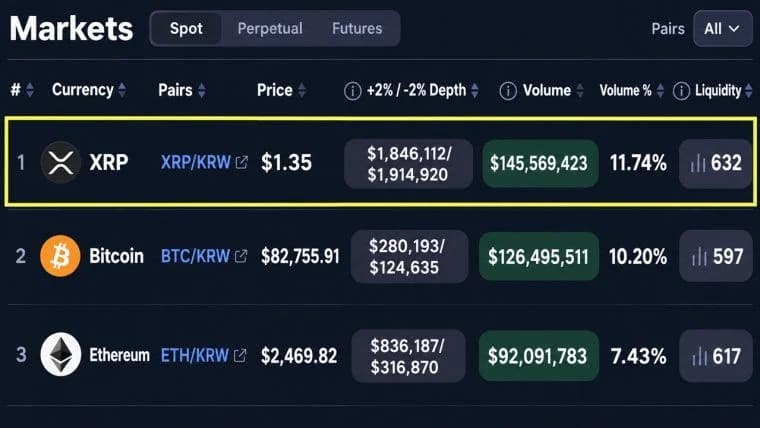
XRP topped Upbit's spot volume in snapshots taken more than seven hours apart, beating bitcoin and ether in won trading…
Read Now: XRP Is Outtrading Bitcoin and Ether on South Korea’s Biggest Exchange