Artificial intelligence (AI) laboratories have released a wave of mathematical research claiming solutions to decades-old problems, while rumors that OpenAI or Anthropic may have cracked integer factorization have ignited discussions about encryption, Bitcoin’s security model, and the future of blockchain cryptography.
AI Math Breakthroughs Ignite RSA Crack Rumors and Bitcoin Security Debate
WRITTEN BY

SHARE
Key Takeaways
- OpenAI released nine mathematical manuscripts on Nov. 24, followed by six AI-generated research papers from Google on Nov. 25.
- Complexity theorist Scott Aaronson acknowledged hearing rumors of cryptographic breakthroughs, although their precise nature remains unconfirmed.
- Bitcoin relies on elliptic-curve cryptography rather than RSA, meaning an integer factorization breakthrough would not automatically compromise cryptocurrency wallets.
AI-Generated Mathematical Discoveries Fuel Cryptographic Speculation
A succession of mathematical claims from some of the world’s most advanced artificial intelligence laboratories has reignited a fundamental debate about the security assumptions underpinning modern computing. This week, developments at OpenAI and Google arrived alongside speculation that considerably more consequential cryptographic discoveries may remain behind closed doors.
On Nov. 24, the AI lab OpenAI added nine manuscripts to its public mathematics repository, including a claimed solution establishing the exponent of square matrix multiplication at exactly 9/4. The discovery, if independently validated, would resolve a computational problem that mathematicians have spent decades investigating.
Matrix multiplication is fundamental to scientific computing, AI, engineering and numerous cryptographic applications. The previously established upper bound for its exponent stood at approximately 2.371, whereas OpenAI’s research claims both an upper and matching lower bound of 2.25.
Another manuscript claims to resolve Smale’s ninth problem through a deterministic, strongly polynomial algorithm for linear programming. Additional research addresses circuit complexity, polytope geometry, Fourier transforms and integer multiplication, with selected mathematical arguments accompanied by formalizations using the Lean proof assistant.
The manuscripts remain at varying stages of verification. Although machine-checked proofs offer greater mathematical assurance than conventional AI-generated explanations, partial formalizations should not be mistaken for comprehensive independent validation.
Google followed on Nov. 25 with six research papers generated by Cogentic, a multi-agent system built on its Gemini 4 model. Among the most intriguing manuscripts is “Unconditional Integer Factorization in Time L_N[1/3, O(1)],” which describes a classical algorithm capable of factoring integers without relying on unproven mathematical hypotheses.
However, Google’s discovery introduces an important distinction between theoretical progress and practical cryptanalysis. The algorithm improves upon mathematical guarantees surrounding factorization but remains considerably slower than existing practical methods. It does not establish that integer factorization can be performed in polynomial time or introduce an immediate threat to modern RSA encryption.
Google’s accompanying research examines deterministic factorization, discrete logarithms, approximate Nash equilibria, communication complexity and graph reconstruction. The company says its mathematical proofs were generated without human intervention beyond the initial prompt.
Scott Aaronson Addresses Rumors of Cryptographic Bombshells
University of Texas at Austin professor and former OpenAI researcher Scott Aaronson has become a central figure in the discussion after acknowledging speculation that frontier AI laboratories possess undisclosed cryptographic discoveries.
Responding to a reader on his Shtetl-Optimized blog on Nov. 24, Aaronson revealed that he had encountered numerous rumors suggesting OpenAI, Anthropic or both had discovered a polynomial-time algorithm for integer factorization.
The following day, on Wednesday, Aaronson described himself as “virtually certain, from multiple reliable sources” that the laboratories possessed consequential cryptographic findings. Nevertheless, the complexity theorist expressed considerably less confidence about their precise nature, cautioning that information may have become distorted as it circulated among researchers.
Aaronson also believes developments in mathematical reasoning could bring computer scientists closer to resolving the famous P versus NP problem. He anticipates that some algorithms emerging from these research programs will eventually compromise cryptographic systems currently in operation.
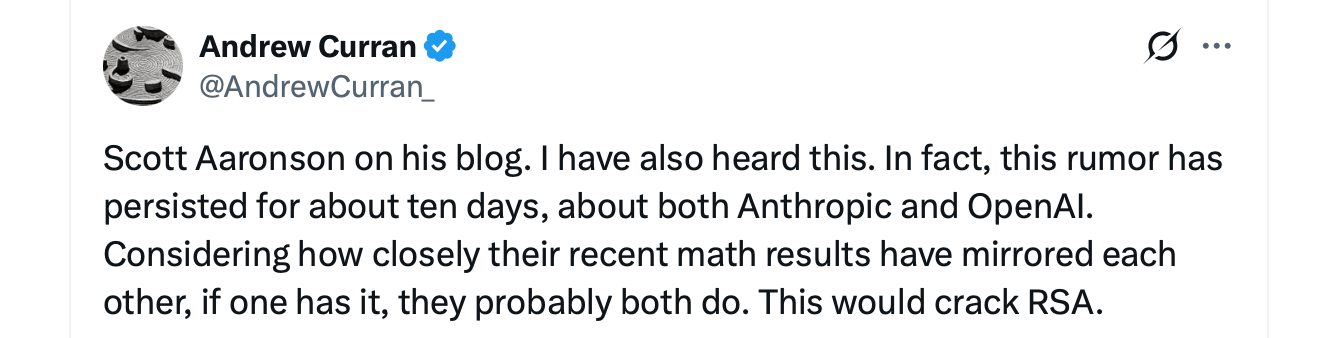
Technology commentator Andrew Curran indicated that similar rumors involving both laboratories had circulated for approximately 10 days. Meanwhile, neither a publicly demonstrated attack against a modern RSA key nor confirmation from OpenAI or Anthropic has substantiated the speculation.
Ledger CTO Weighs in on RSA and Elliptic-Curve Cryptography
Charles Guillemet, chief technology officer (CTO) at cryptocurrency hardware wallet manufacturer Ledger, addressed the growing speculation surrounding several fundamental cryptographic primitives.
Guillemet distinguished integer factorization from primality testing, which mathematicians established could be performed in polynomial time in 2002. Determining whether a number is prime and discovering its constituent prime factors are fundamentally different computational challenges.
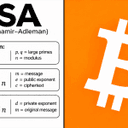
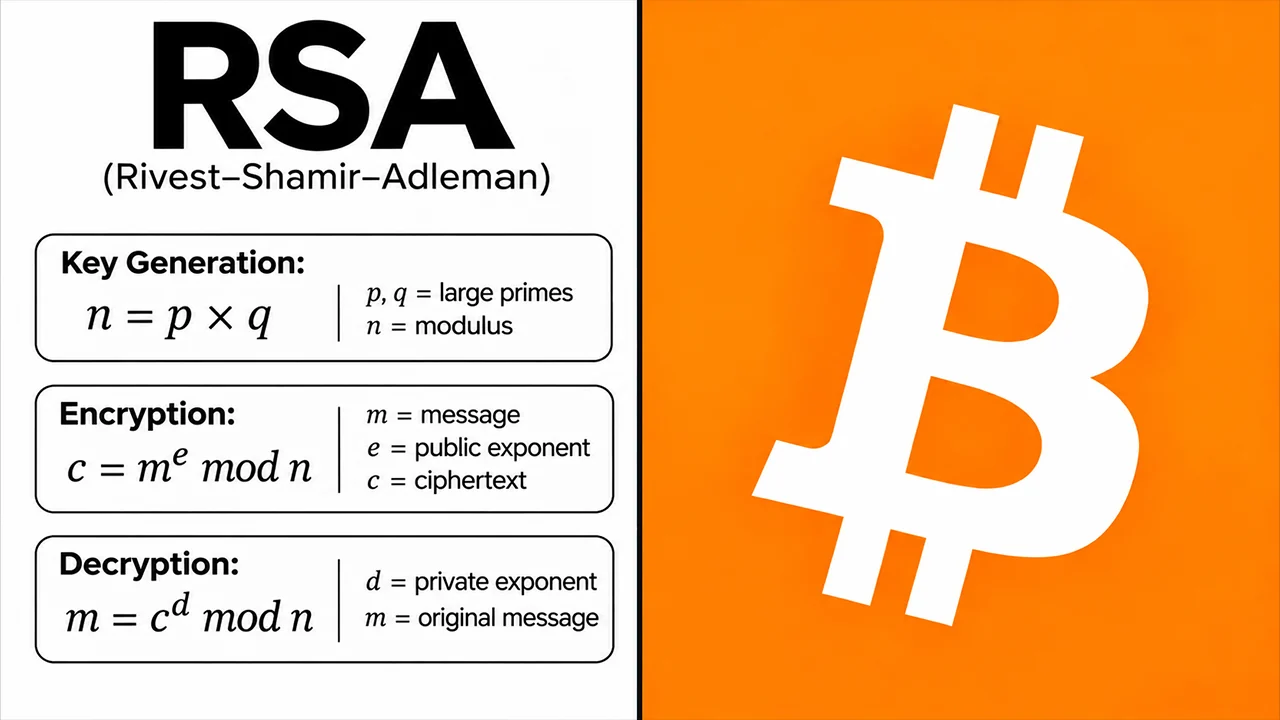
“If it were in P, RSA would simply be broken, and that would be huge: a large part of our systems still rely on RSA,” Guillemet explained on Wednesday.
The Ledger executive also addressed separate rumors concerning elliptic-curve cryptography (ECC) and Ring Learning With Errors (Ring-LWE), a mathematical problem underpinning certain post-quantum cryptographic constructions.
A practical breakthrough against elliptic curves could compromise widely deployed digital signature and key exchange systems, while weaknesses in Ring-LWE could complicate ongoing efforts to migrate toward quantum-resistant security infrastructure.
Nevertheless, Guillemet insisted he remains skeptical that frontier laboratories have completely dismantled these cryptographic foundations. The Ledger CTO stated:
“Personally, I don’t think findings like these are coming. I wouldn’t be surprised if some of these primitives turn out to be a bit weaker than we thought, but I’d be very surprised to see any of them fall apart completely.”
Guillemet further noted that responsibly disclosing a discovery of such magnitude without inadvertently facilitating widespread exploitation would present considerable difficulties.
Technology analyst Chubby similarly discussed the implications of a practical RSA breakthrough, suggesting that the rumors, if accurate, could potentially explain why some laboratories have withheld newer AI models.
The tech analyst wrote:
“If an algorithm like this actually works on real key sizes, you wouldn’t even need a quantum computer to break it.”
The commentator pointed to potential consequences involving compromised software authentication, encrypted communications, and an accelerated migration away from RSA. The suggested connection between unpublished mathematical discoveries and delayed AI model releases, however, remains extremely speculative.
What AI Cryptographic Breakthroughs Could Mean for Bitcoin
Despite the growing anxiety surrounding RSA, Bitcoin’s design does not rely on integer factorization for its transaction authentication. Instead, the network uses the elliptic curve secp256k1, employing the Elliptic Curve Digital Signature Algorithm (ECDSA) and Schnorr signatures to prove ownership and authorize transactions.
Consequently, an algorithm capable of efficiently factoring large integers would not automatically enable an attacker to derive private keys from public BTC keys, forge transactions, or spend another person’s bitcoin.
A practical solution to the elliptic-curve discrete logarithm problem, however, would introduce an entirely different predicament. Such a discovery could undermine the mathematical relationship between public and private keys, potentially exposing cryptocurrency holdings associated with revealed public keys.
Ethereum and numerous alternative blockchain networks rely on comparable cryptographic assumptions. Cryptocurrency exchanges, cross-chain bridges, institutional custodians, multisignature wallets and blockchain-based financial applications could also face security challenges if their underlying authentication mechanisms became vulnerable.
Bitcoin’s SHA-256 hashing algorithm, which is instrumental in proof-of-work (PoW) mining, represents another distinct cryptographic primitive. Breaking RSA or elliptic-curve signatures would not necessarily compromise SHA-256, illustrating why cryptographic breakthroughs must be evaluated individually rather than interpreted as a universal collapse of digital security.
Even a polynomial-time algorithm would not necessarily translate into an immediate practical attack, since its computational requirements could remain prohibitively expensive.
For cryptocurrency developers, the latest mathematical claims nevertheless introduce a new dimension to discussions surrounding cryptographic agility and quantum-resistant signatures. Migrating decentralized networks toward alternative authentication mechanisms could require substantial coordination among developers, node operators, wallet providers and asset holders.
As of Nov. 26, the distinction between published mathematics and unconfirmed cryptographic discoveries remains paramount. Google’s factoring research does not establish a practical RSA attack, and no publicly demonstrated algorithm has invalidated current security assumptions. What has changed is the apparent speed at which AI systems can confront mathematical problems long considered exceptionally difficult, forcing the cryptocurrency industry to contemplate whether its cryptographic defenses can evolve as quickly as the mathematics challenging them.
Bitcoin could fall to $48,500 if it stays below its roughly $53,000 realized price, a strategist warned. The analyst still…
Read Now: Bitcoin Could Sink to $48,500 if It Breaks Below $53K, Analyst Warns

About the author
WRITTEN BYJamie RedmanNews Lead
Jamie Redman is the News Lead at Bitcoin.com News and a financial technology journalist based in Massachusetts.