


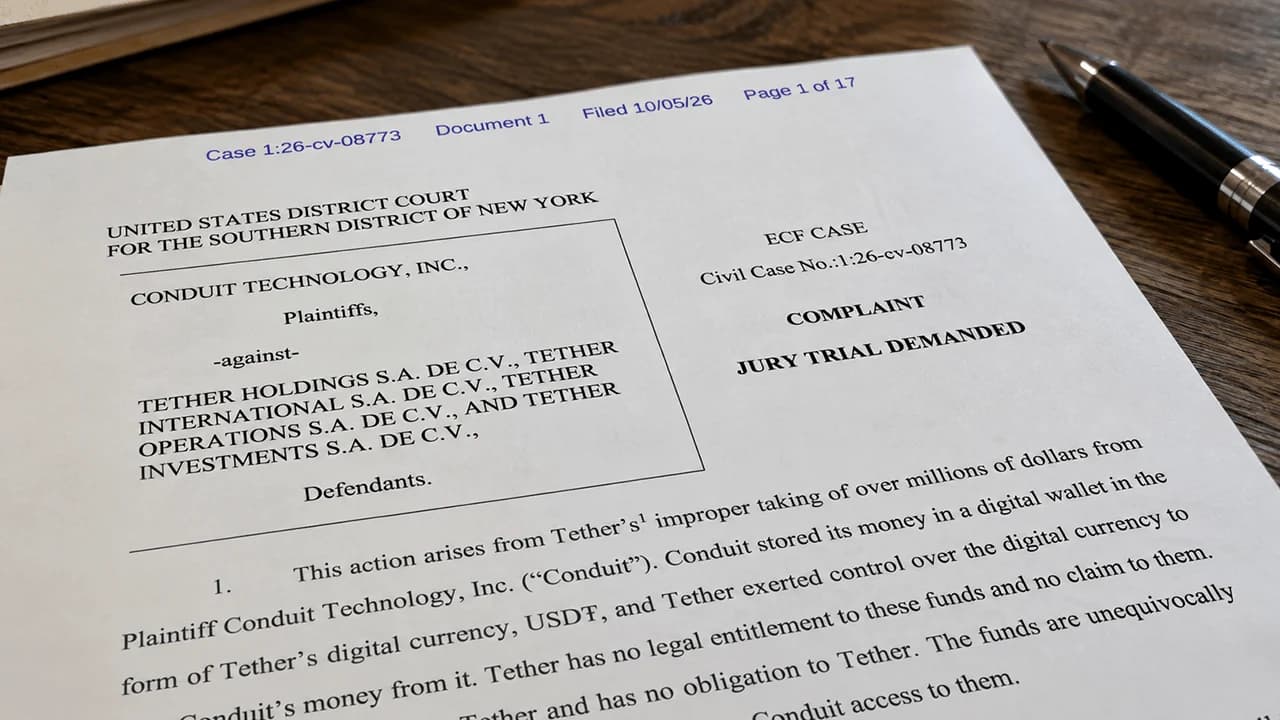
Conduit Technology has sued Tether after the stablecoin issuer froze $2.76 million in the company’s USDT and allegedly kept it locked for more than a year. The stranger part is why. Conduit says Brazilian police never asked Tether to freeze its treasury wallet and that Tether’s own financial crime unit selected the address using criteria it hasn’t disclosed.
Conduit Sues Tether Over a $2.76M USDT Wallet Frozen for a Year
WRITTEN BY

SHARE
Key Takeaways
- Conduit says Tether froze $2.76M in USDT without a police request.
- Tether faces six claims as Conduit fights to regain its working capital.
- Conduit wants its $2.76M unfrozen plus profits tied to Tether’s reserves.
Conduit Technology has taken the stablecoin issuer Tether to federal court over a $2.76 million USDT freeze that has lasted more than a year, arguing the stablecoin giant effectively seized working capital it had no right to touch. Conduit claims that Brazilian authorities investigating an unrelated company never identified its treasury wallet for freezing. Instead, according to the complaint, Tether’s own financial crime unit picked the address using its own undisclosed criteria.
“Tether acted on its own initiative, through its T3 Financial Crime Unit, based on its own private criteria,” the legal complaint states.
Bitcoin.com News reached out to a Tether spokesperson for comment but did not immediately receive a response.
A $2.76 Million Wallet Goes Dark
Conduit says it created the Fireblocks wallet in May 2025 in order to hold the company’s working capital. Before Tether froze it on Sept. 24, 2025, the wallet had processed 4,427 transactions involving 78 counterparties and more than $1.1 billion in volume. At press time on Oct. 6, the Tron wallet that holds the stablecoin cache commands a modest $33 in TRX and $2.756 million in Tron-based USDT.
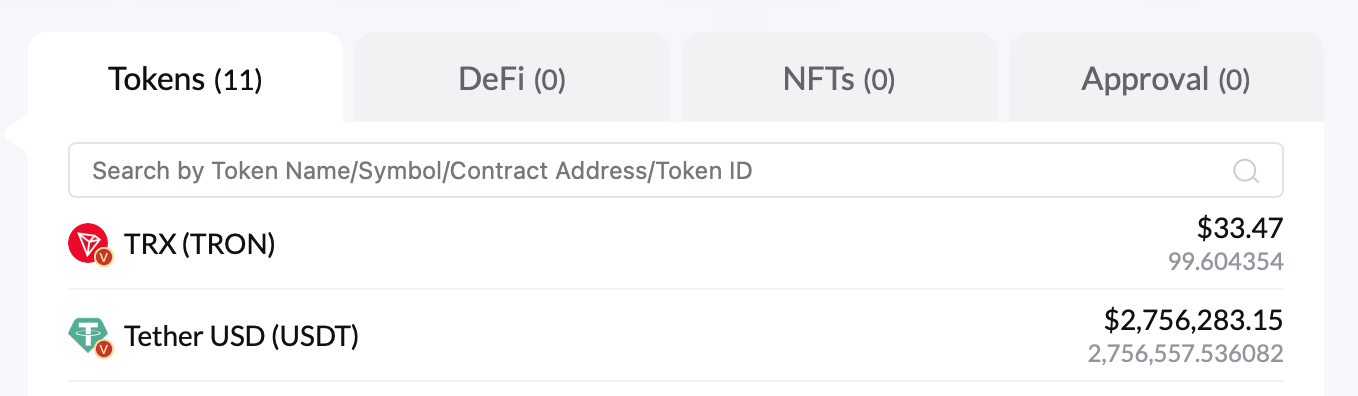
The plaintiff’s attorneys say Tether repeatedly directed Conduit toward Brazil’s Federal Police, according to the complaint. Except there was a problem: Conduit alleges police confirmed its wallet wasn’t among the addresses they had identified in an investigation involving Onix Intermediações.
The complaint states
“Tether is not allowed to take money from businesses just because they chose to store that money in Tether’s currency.”
Conduit Wants More Than an Unfreeze
Conduit argues the stablecoin freeze deprived it of a substantial chunk of working capital, reducing its ability to pre-fund transactions. The company says the financial strain eventually forced it to lay off employees and close offices.
The lawsuit brings six claims, including conversion, unjust enrichment, breach of fiduciary duty, and computer fraud. Conduit wants its wallet unfrozen, damages of at least $2.76 million, and an accounting of the income Tether allegedly earned from reserves backing the frozen USDT. It also wants those profits disgorged.
That leaves a potentially consequential question for stablecoins. Having the technical power to freeze somebody’s tokens is one thing. Conduit is asking a federal court to decide when an issuer legally gets to use it.
Fortitude Mining has signed a non-binding agreement for up to $100 million of Bitmain’s next-generation zcash mining hardware, securing priority…
Read Now: Fortitude Bets Up to $100 Million on Bitmain Zcash Mining Hardware