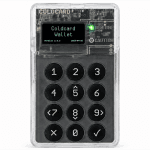



Coinkite, the company behind Coldcard, the hardware wallet affected by a vulnerability in its seed generation code, might face legal action from victims who have lost over $88 million in BTC over the last two days.
Coinkite Faces Class Action Threat as Bitcoin Wallet Bug Costs Users Over 1,300 BTC
WRITTEN BY

SHARE
Key Takeaways
- Victims are planning class-action lawsuits against Coinkite after losing $88 million to the Coldcard wallet bug.
- Legal experts are sharply divided on Coinkite’s liability, complicating victims’ prospects for recovering funds.
- These potential product liability cases could establish major legal precedents for crypto hardware wallet makers.
Users Prepare To Exert Legal Action Against Coinkite Over Coldcard Vulnerability
Coinkite, the company behind the Coldcard series of hardware wallets, might face legal action from users who have collectively lost over 1,300 BTC linked to the vulnerability in the seed phrase generator used by some of its models.
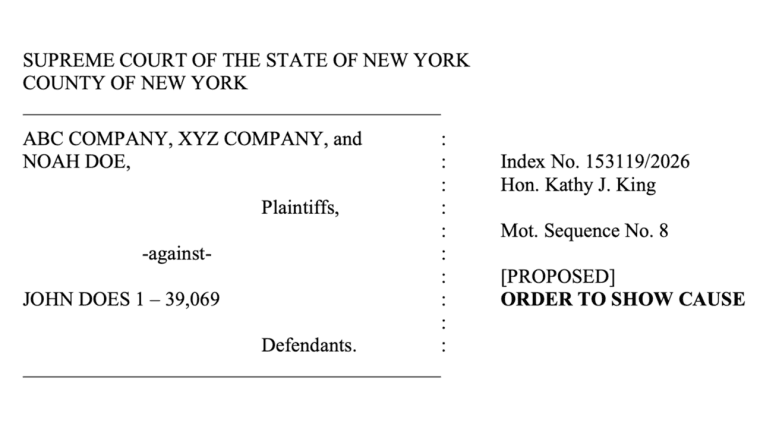
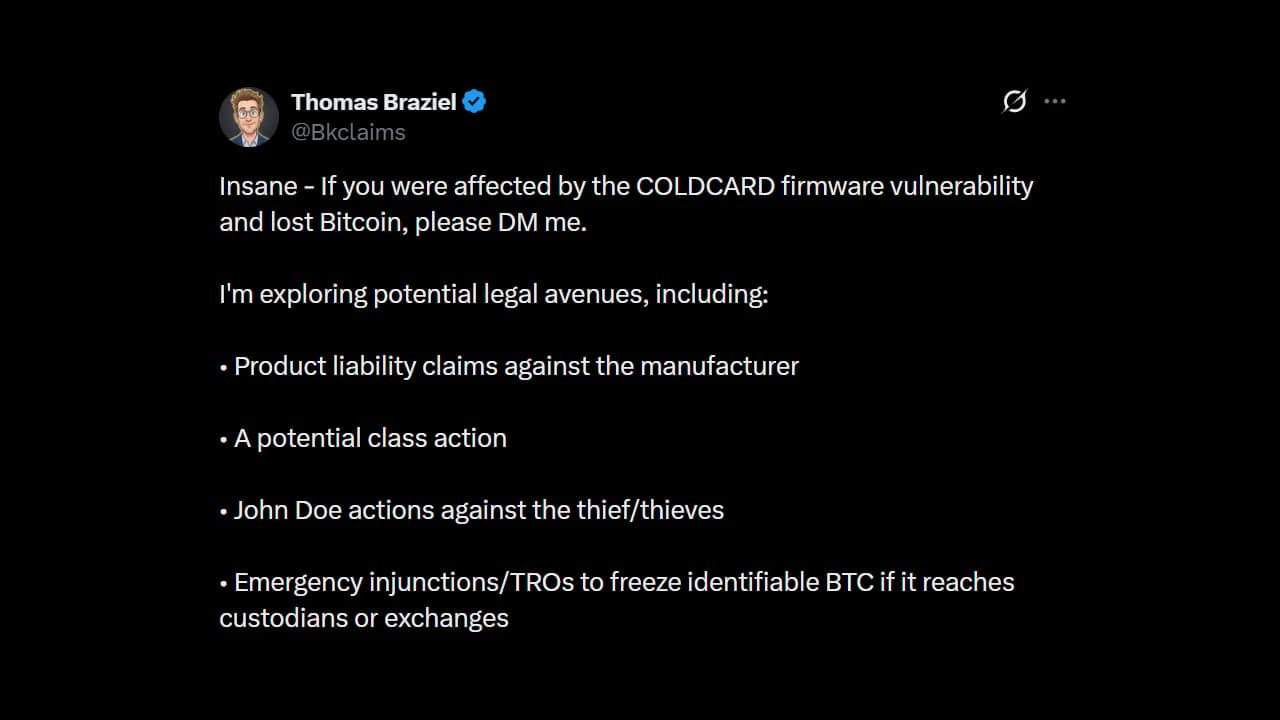
Thomas Braziel, founder and managing partner of 117 Partners, is studying how to act against the company, mentioning targeting product liability claims and even pursuing a class action lawsuit against the manufacturer.
Braziel is currently coordinating and gathering information from victims internationally before embarking on these actions.
He is not the only one planning to go after Coinkite. Felipe Ojeda, a bitcoin advocate in Brazil who lost almost all of his capital, has already filed a police report and will introduce a complaint against the company in Brazil.
Nonetheless, he is not hopeful about the future of such actions, as he acknowledges that the company does not have the financial muscle to make everyone affected whole, even as it was one of the most trusted in the field of self-custody.
“What is the valuation of this company? It received two rounds of investment there in 2013; it has no sales volume, despite being the largest in this matter of self-custody; in the real world outside of bitcoin, it represented nothing, a tiny company,” he told Livecoins.
Opinions are divided on whether Coinkite might be held liable for these losses. Cris Carrascosa, CEO of ATH21, a legal firm, stressed that Coinkite had “zero regulatory responsibility over the funds of the users of its products,” explaining that she was pessimistic about the outcome of any legal action against the company.
“Those lawsuits are going to be terribly difficult to push through because it will have to be proven that Cold Card could have foreseen the hack,” she assessed.
Even so, Ana Ojeda, Head of Institutional BD at Blend, claims there could still be a chance for Coinkite to be held liable, at least in some capacity. While she acknowledges that “there is no automatic right for victims to get every sat back,” there is “a credible legal basis to investigate responsibility” as there are serious arguments for defect and negligence in Coinkite’s actions.
The outcome of hypothetical legal actions against Coinkite can set a precedent for similar cases happening in the future. At the time of writing, over $88 million in bitcoin had been stolen from Coldcard wallets affected by the random seed generation vulnerability, and experts expect figures to keep growing.
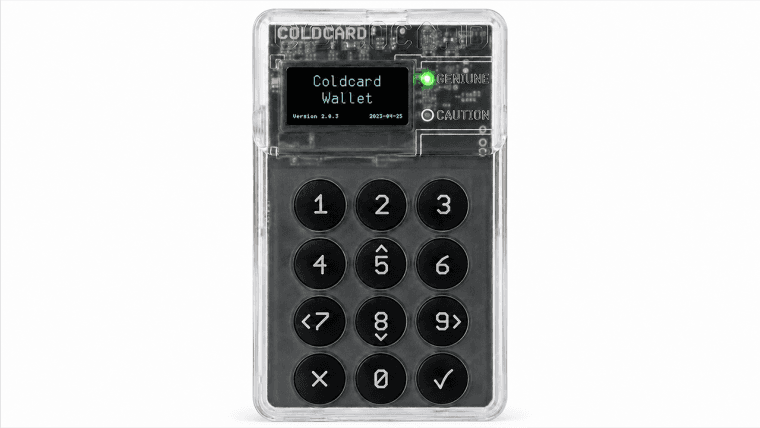
A suspected third wave of Coldcard-related bitcoin sweeps has pushed the observed incident to an estimated 1,367 BTC, while exchange…
Read Now: Coldcard Theft Balloons to $88M as Exchange Deposits Spike, Old BTC Moves