Federal Reserve Chair Jerome Powell revealed a major shift to the central bank’s monetary policy framework during his Aug. 22, 2025, speech at the Jackson Hole Economic Symposium, signaling a departure from strategies rolled out in 2020 as economic conditions changed.
Powell Signals Return to Traditional Inflation Targeting
WRITTEN BY

SHARE
Fed Chair Unveils Revised Inflation Strategy
The updated Statement on Longer-Run Goals and Monetary Policy Strategy restates the Fed’s commitment to “maximum employment” and “stable” prices, anchored by a 2% inflation target measured by the personal consumption expenditures price index. Gone is the pledge to let inflation “average” 2% over time, effectively retiring the “makeup” policy that once tolerated readings above 2% to offset years of subdued inflation.
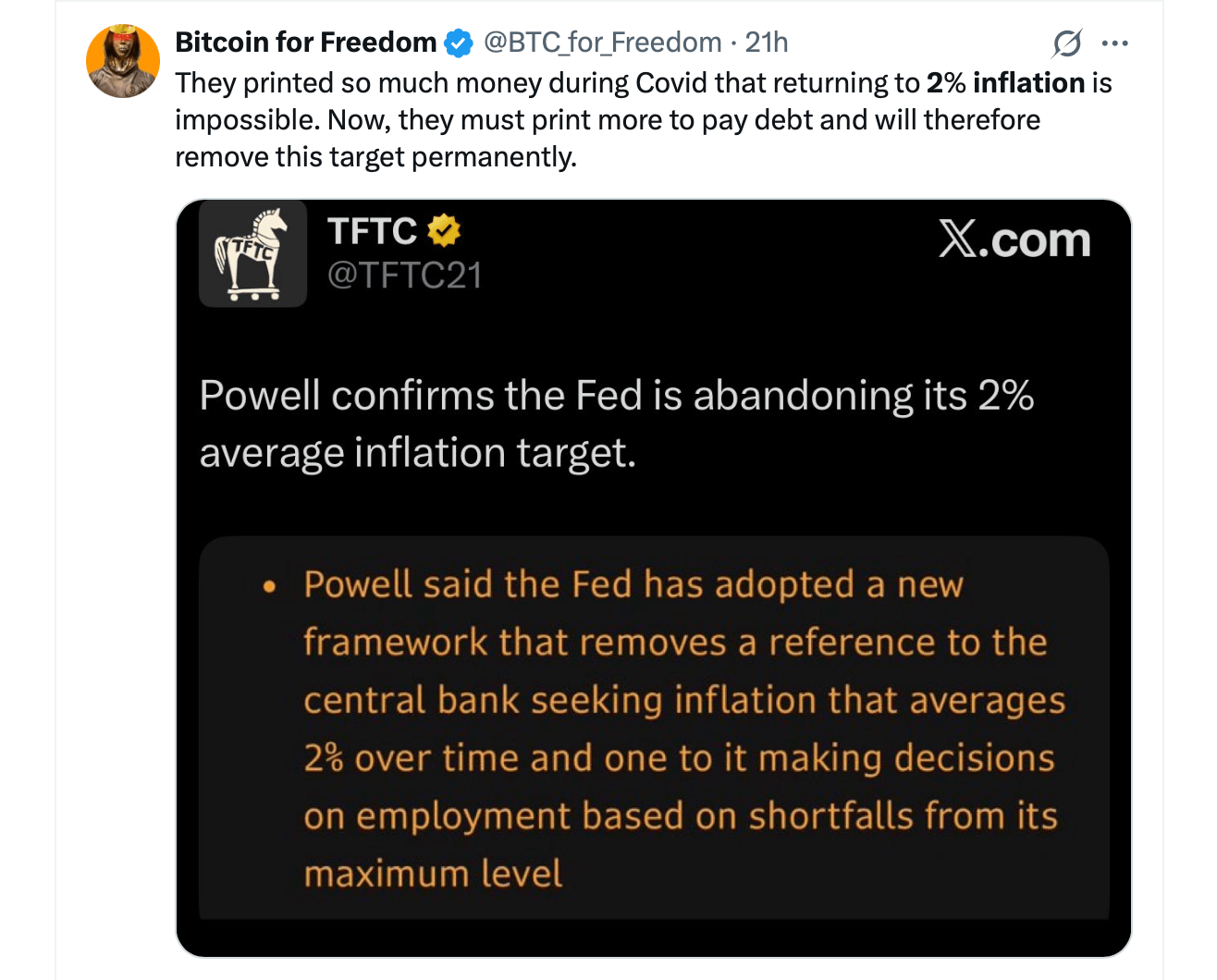
The Federal Reserve framework also removes language focused on employment “shortfalls” alone. That prior approach tilted toward boosting jobs when below sustainable levels while brushing off the risks of overshooting. In its place is a more even stance: maximum employment is now defined as the highest level consistent with price stability, judged through a wide range of indicators in an uncertain environment.
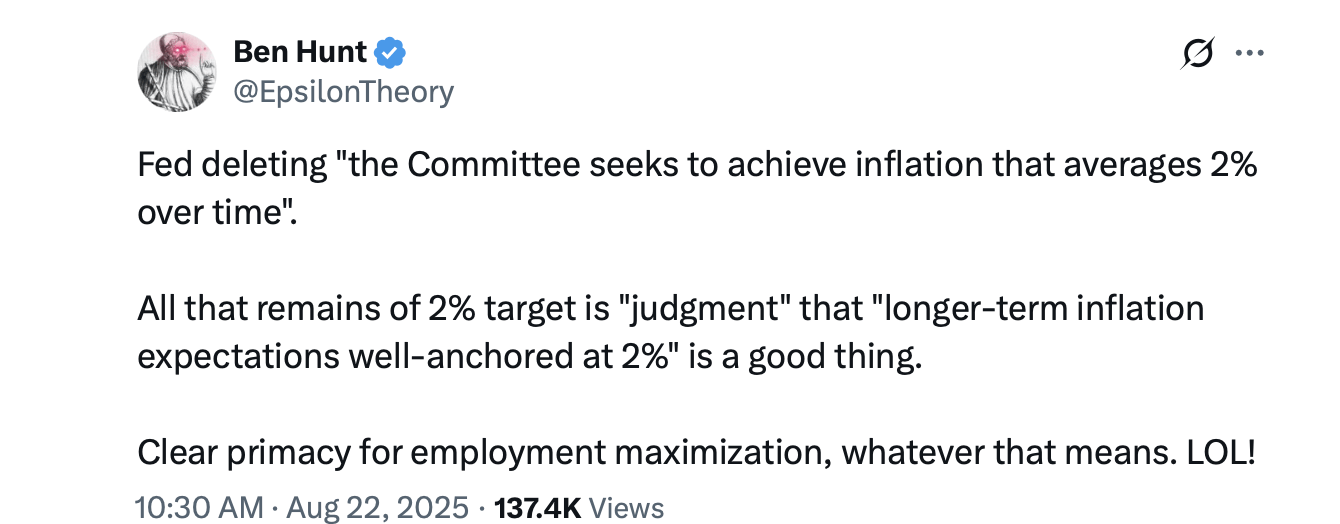
Powell noted that the 2020 design was tailored to a low-rate, low- inflation era following the Global Financial Crisis, but conditions shifted dramatically with post-pandemic inflation hitting four-decade highs. The refreshed framework aims to simplify communication, increase flexibility, and match today’s higher-rate environment, where inflation risks cut both ways. Of course, the inflation strategy news caused quite a stir on social media platforms like X.
The Fed strategy no longer spotlights the effective lower bound on interest rates as a central obstacle, instead applying across different conditions. The Fed emphasized it still has tools ready, including quantitative easing, should rates near zero. If employment and inflation objectives clash, a “balanced approach” will consider both the size of the gap and how quickly each can be resolved.
The changes arrive as Powell hinted that interest rate cuts could begin in September 2025, with inflation cooling and the labor market showing signs of slowing. The framework will be reviewed each year, with a broader public assessment set every five years.