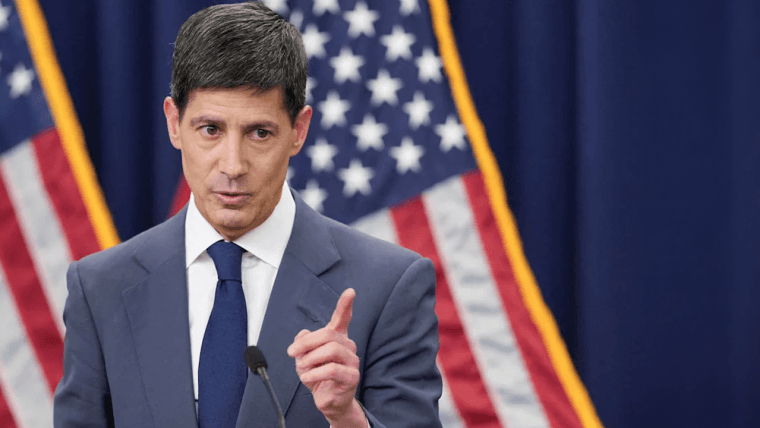



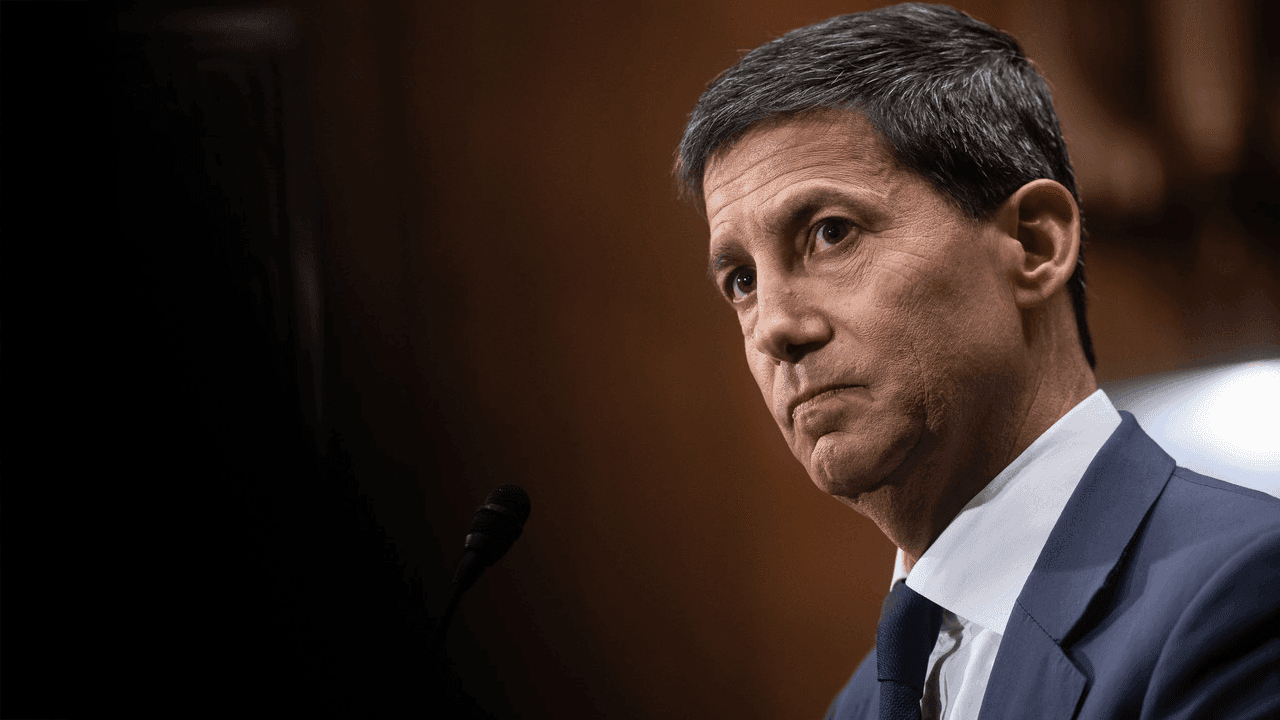
Federal Reserve Chairman Kevin Warsh used his debut press conference on June 17 to strip away decades of central bank communication habits, and markets spent the following day sorting out what that means for rates, risk, and bitcoin.
New Fed Chair Kevin Warsh Ditches Rate Signals, Bitcoin Slides as Nasdaq Bounces 1.5%
WRITTEN BY

SHARE
Key Takeaways
- Fed Chair Kevin Warsh and the rest of the board held rates at 3.50%-3.75% and eliminated forward guidance at the June 17 FOMC meeting.
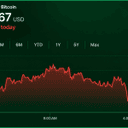
- Bitcoin dropped to an intraday low of $62,236 on Thursday, June 18, as risk assets repriced Fed uncertainty.
- Nine FOMC dot plot participants projected at least 1 rate hike by year-end 2026, with PCE seen at 3.6%.
Rates Hold, Statement Shrinks
The Fed held the federal funds rate at 3.50% to 3.75% on a unanimous 12-0 vote following the June 16-17 FOMC meeting. The Committee also reaffirmed its ample reserves policy, continuing the path set under his predecessor Jerome Powell, who left office in May.
What changed was everything else.
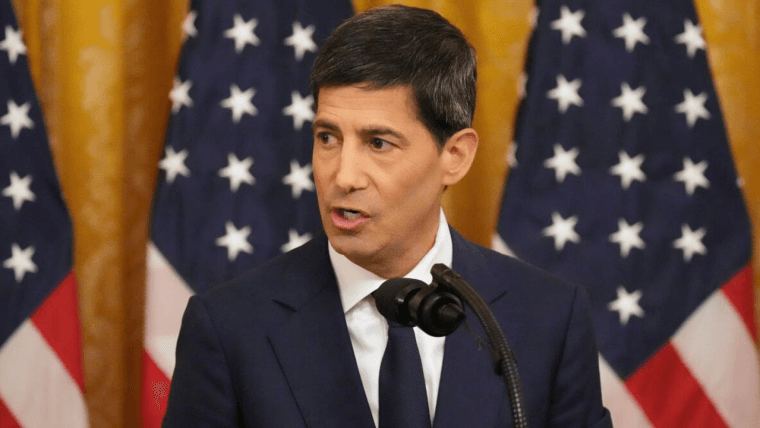
The policy statement issued after the meeting was one of the shortest in decades. Warsh described the new approach directly: “It’s a bit shorter, a bit simpler, and it dispenses with some older language. That statement just gives you the facts as best we can judge it.”
Forward Guidance Gone
The most immediate break from recent Fed practice was the removal of forward guidance entirely. Warsh addressed it plainly at the press conference: “We’ve dropped forward guidance.” He went further, saying that “as a general proposition, forward guidance isn’t the business we should be in.”
The shift is significant for markets that spent years reading Fed language for signals on rate timing. Without those signals, participants now have to price rate decisions based on incoming data rather than Fed telegraphing.
Nine FOMC members submitted dot plot projections leaning toward at least one rate hike by year-end. Warsh did not submit a dot, consistent with his long-standing skepticism of the Summary of Economic Projections format. He noted his colleagues submitted their forecasts “with pencils,” suggesting no firm commitments.
The median SEP projection has PCE inflation running at 3.6% this year, with the policy rate ending 2026 at 3.8%.
Five Task Forces, Starting This Fall
Warsh announced five new task forces covering Fed communications, balance sheet policy, data sourcing, productivity, and artifcial intelligence (AI), and inflation frameworks. He said work begins in the coming weeks, with initial findings expected in the fall and most conclusions by year-end.
The communications task force will likely revisit the SEP structure, press conference format, and the dot plot itself.
Market Reaction: Stocks Down, Then Up
Equities sold off immediately following the June 17 announcement. The S&P 500 fell approximately 1.21% to around 7,420. The Dow dropped roughly 507 points, or about 0.97%. The Nasdaq declined approximately 1.3%.
By midday June 18, markets were recovering. The S&P 500 was trading near 7,474 to 7,495, up 0.7% to 1.0%. The Nasdaq led with a gain of 1.3% to 1.5%. The Dow added a modest 0.25% to 0.3% after the prior session’s losses.
Analysts pointed to bargain hunting and easing oil prices as partial drivers of the rebound.
Bitcoin Feels the Pressure
Bitcoin did not bounce with equities. As of midday June 18, the price was below $63,000 and had touched an intraday low of $62,236 on Bitstamp. Crypto markets tend to react sharply to shifts in Fed rate expectations and policy uncertainty, and Warsh’s explicit removal of forward signals added weight to the short-term sell pressure.
Some onchain data, including whale holdings and long-term holder supply, continues to show underlying accumulation patterns. But price action near the $62,000 level reflects the broader unease that comes with a Fed regime that has stopped telegraphing its next move.
What’s Next
The next major macro input arrives later in June with the PCE inflation report, which will be one of the first data points on which Warsh’s new framework will be tested. Geopolitical factors tied to the Middle East conflict and oil prices remain in play.
Markets are adjusting to a Fed that says it will deliver price stability without telling anyone exactly when or how.
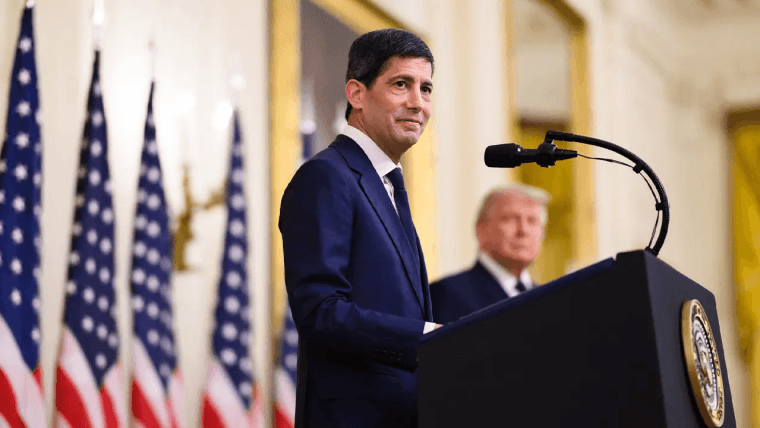
The Federal Reserve held interest rates steady on Wednesday under Chair Kevin Warsh, pairing a historic leadership moment with a…
Read Now: Kevin Warsh’s Fed Holds Firm as Energy Prices Lift Inflation