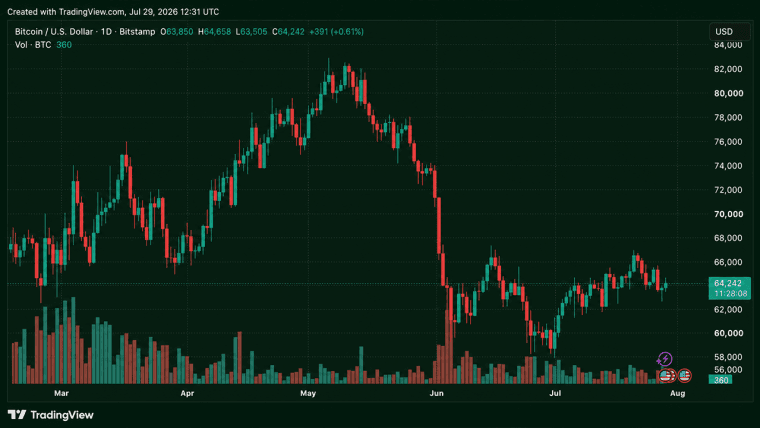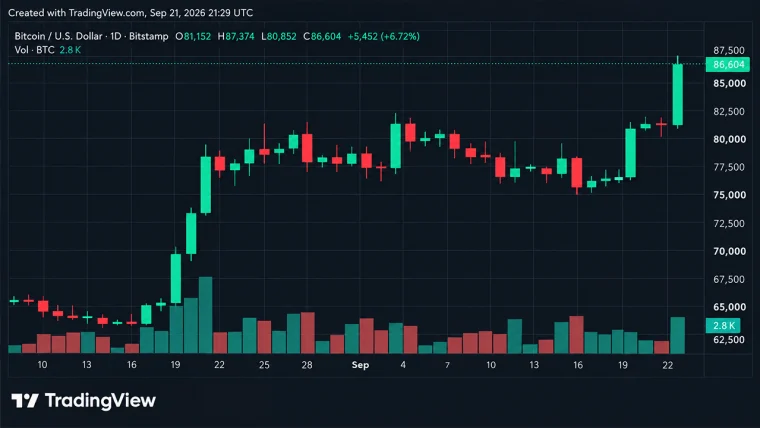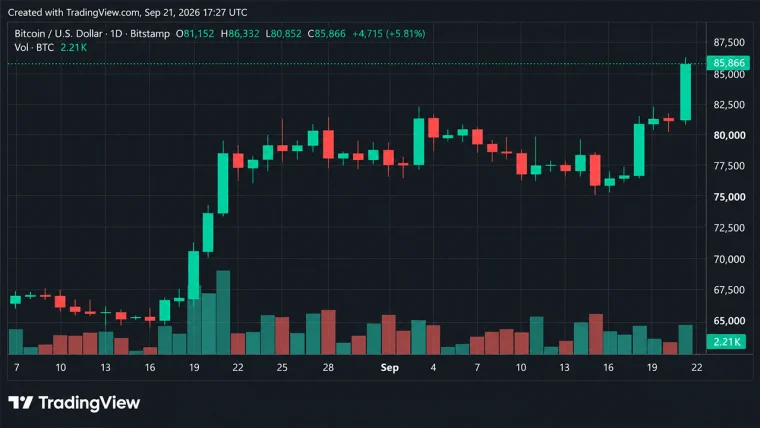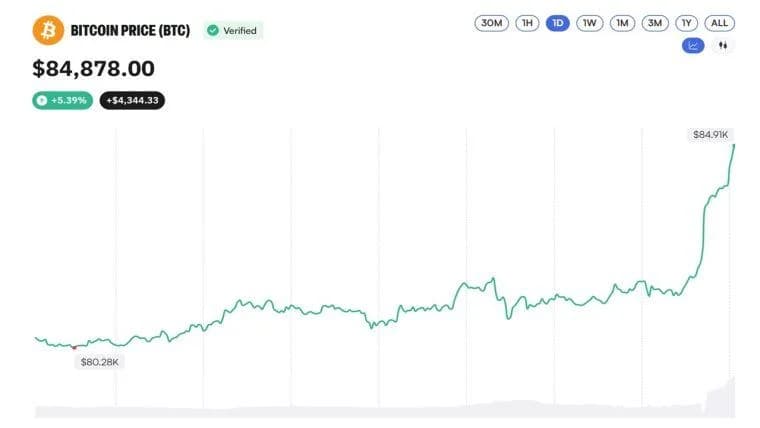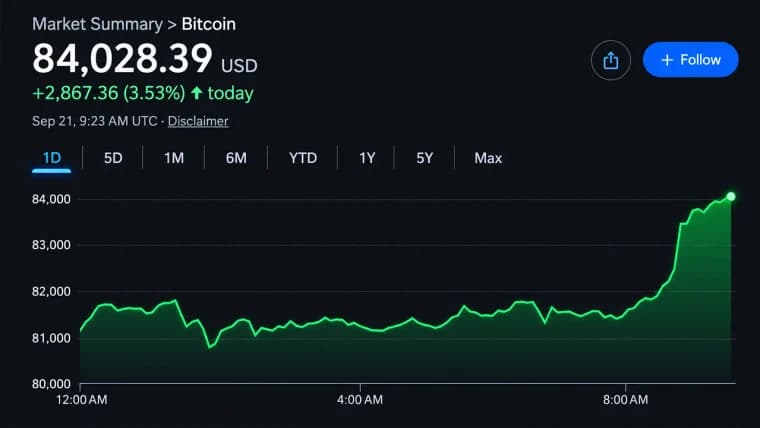

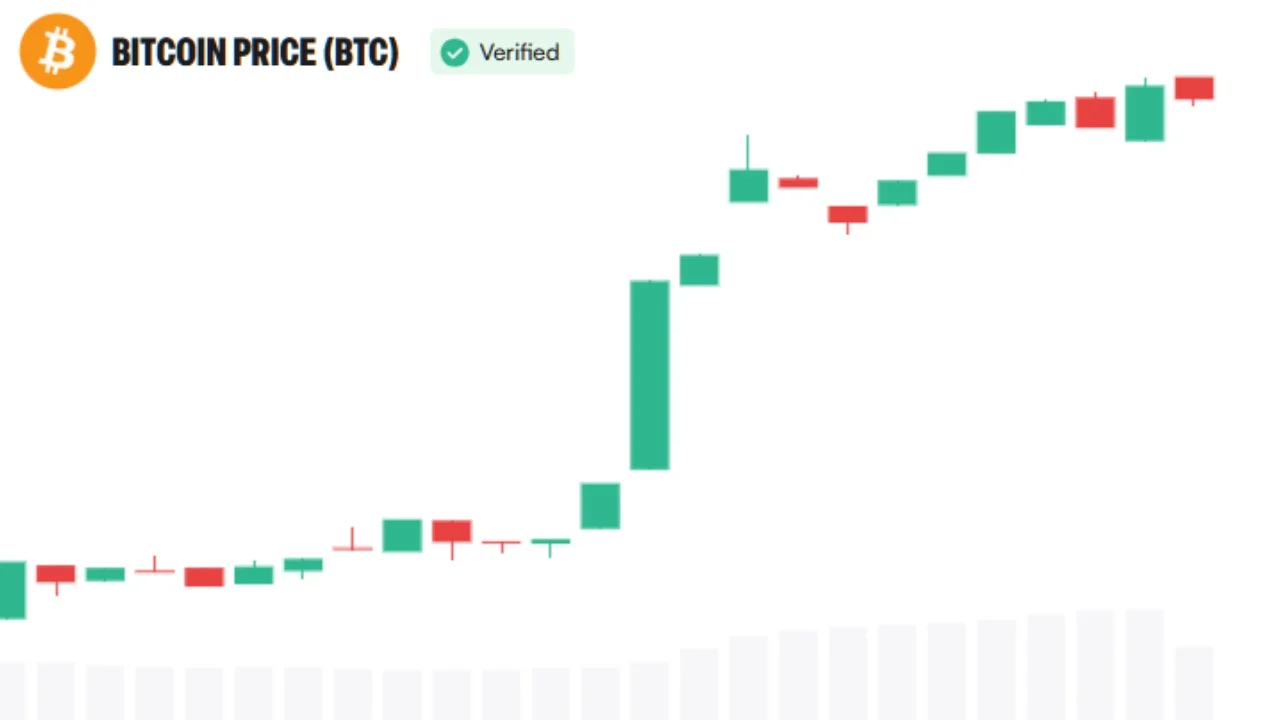
Bitcoin’s renewed advance reflects stronger institutional demand, according to Devere Group CEO Nigel Green, who predicts that bulls have regained control. His outlook follows a rebound in ETF inflows, despite uneven fund demand and a U.S. legislative setback.
Bitcoin Rally Has 'Serious Institutional Money' Behind It, Devere Says
WRITTEN BY

SHARE
Key Takeaways
- Green predicts institutional demand will sustain bitcoin’s recovery.
- Bitcoin ETFs drew $433 million Friday, ending the week with $6.1 million in net inflows.
- Green sees clearer regulation potentially attracting larger investors.
Green Sees Institutional Demand Supporting Bitcoin
Bitcoin’s recovery could gain durability from institutional allocations, according to comments Devere Group CEO Nigel Green issued Sept. 21. The financial advisory firm’s chief executive argued that purchases through regulated investment products signal a shift toward longer-term ownership, supporting his prediction that buyers have regained control of the market.
“The market’s momentum has flipped, and this time there’s serious institutional money behind it,” Green said, adding:
“Billions are flowing into regulated bitcoin products week after week. It’s patient capital that plans to stay, a very different animal from the leveraged speculation that fuelled past rallies.”
U.S. spot bitcoin exchange-traded funds (ETFs) attracted $433 million in net inflows on Sept. 18, following $159.5 million the previous session. However, those purchases, together with $159.9 million on Sept. 14, only narrowly offset withdrawals of $746.3 million on Sept. 15 and 16. Farside’s rounded daily figures show approximately $6.1 million in net inflows across the five trading days.
The recovery began Thursday, when bitcoin ETFs returned to positive flows after two consecutive sessions of withdrawals. Blackrock’s IBIT led that rebound, while ether and XRP funds continued losing money. The divergence showed that renewed demand for bitcoin products had not yet translated into consistent buying across the broader crypto ETF market.
Bitcoin’s Supply Argument Meets Higher Interest Rates
Concerns about currency purchasing power form another part of Green’s case, alongside his assessment of institutional buying. Bitcoin’s maximum supply of 21 million coins creates a predetermined issuance constraint. Green contrasted that structure with rising public debt and the competing demands facing central banks as they seek to contain inflation while supporting economic activity.
The monetary backdrop nevertheless became tighter when the Federal Reserve raised its benchmark target range to 3.75%-4% on Sept. 16. Policymakers approved the quarter-point increase unanimously and described inflation as elevated. Higher interest rates increase the returns available on interest-bearing assets, raising the opportunity cost of holding bitcoin, which does not itself pay interest.
A separate assessment from Grayscale characterized the latest increase as a limited adjustment within the current Fed cycle. The asset manager distinguished one or two potential increases in 2026 from the prolonged tightening that began in 2022. That interpretation complements Green’s view that demand can remain resilient despite higher rates, although both assessments represent market outlooks.
Regulatory Clarity Remains a Conditional Demand Driver
Clearer U.S. crypto rules could encourage pension funds and wealth managers to increase their exposure, Green argued. His forecast depends partly on large investors becoming more comfortable with the regulatory framework governing digital assets. That would extend the demand he associates with regulated bitcoin products into a wider pool of portfolio allocations.
The legislative backdrop includes a setback after senators failed to advance the CLARITY Act toward floor debate on Sept. 15. The procedural vote required 60 votes to move forward. Its failure left the proposed market-structure framework unresolved.
Green nevertheless expects a larger potential pool of buyers if regulation becomes clearer, while acknowledging that volatility and pullbacks will continue. “Once big allocators see rules they can work with, the next wave of demand could dwarf this one,” he described, elaborating:
“The crypto winter looks to be ending. Every dip that gets bought strengthens the case that the floor has moved higher.”
“Bitcoin is a permanent fixture in the global portfolio conversation, and the bulls know it,” the executive concluded.