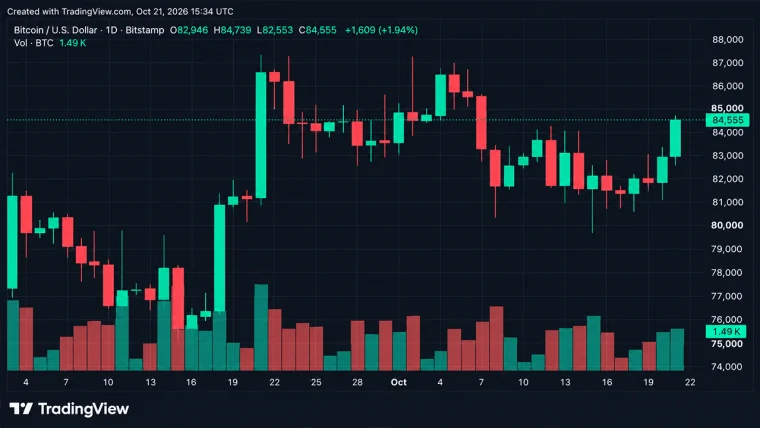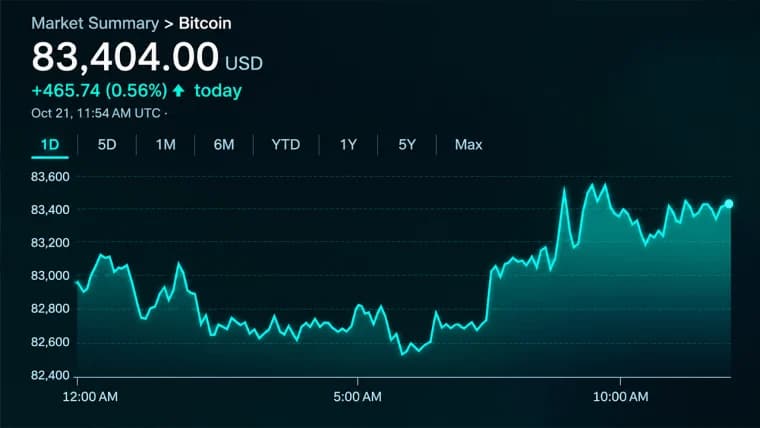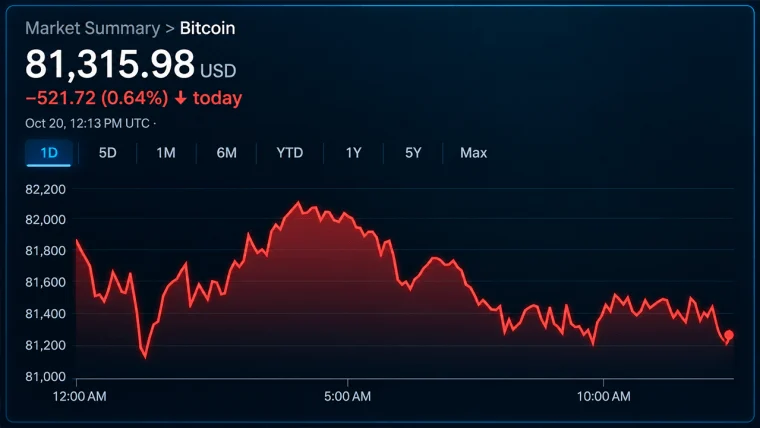



Bitcoin may struggle to break decisively above $80,000 as tighter U.S. monetary policy and the CLARITY Act setback weigh on near-term conditions. Coinshares sees both headwinds delaying a stronger crypto recovery.
Bitcoin Faces $80,000 Ceiling as Fed and CLARITY Risks Mount

This article was published more than a month ago. Some information may no longer be current.
WRITTEN BY

SHARE
Key Takeaways
- Coinshares sees a sustained bitcoin move above $80,000 as unlikely.
- The Fed raised rates as policymakers kept a restrictive outlook.
- The CLARITY Act setback adds uncertainty, particularly for altcoins.
Bitcoin’s $80,000 Breakout Faces a Tougher Fed
Bitcoin faces a more difficult path above $80,000 after the Federal Reserve raised interest rates and signaled that monetary policy could remain restrictive longer than markets previously expected, according to James Butterfill, head of research at digital asset manager Coinshares. His Sept. 17 market assessment identified the Fed and the CLARITY Act setback as the two main obstacles to a stronger near-term crypto recovery.
The analyst argues that the more significant signal came from policymakers’ rate projections rather than the increase itself. The Fed’s September projections put the median federal funds rate at 4.1% for both 2026 and 2027, compared with June projections of 3.8% and 3.6%, respectively. The Federal Reserve’s latest economic projections show a substantially higher expected rate path.
He said:
“This creates a difficult setup for bitcoin into year-end. In our view, a decisive break above US$80,000 is unlikely without either a meaningful improvement in the inflation outlook or a significant change in monetary policy expectations.”
The Federal Open Market Committee raised its target range by 25 basis points to 3.75%-4% on Sept. 16, marking its first increase since July 2023. The Fed returned to rate hikes after more than three years, while its statement described inflation as elevated and economic activity as expanding at a solid pace.
Inflation and Liquidity Keep Pressure on Bitcoin
The higher projected rate path could prolong conditions that Butterfill views as unfavorable for bitcoin, with the hawkish outlook supporting the dollar and short-dated yields and delaying a broader improvement in liquidity. The Federal Reserve and FOMC determine key U.S. interest-rate policy, with changes in rates affecting borrowing costs, financial conditions, and risk-sensitive markets.
Iran remains another component of the analyst’s outlook, with the analyst arguing that conflict-driven energy costs are contributing to inflation pressure and reducing the likelihood of a near-term policy shift. Under that scenario, he sees another rate increase later this year as increasingly plausible.
The resulting setup leaves bitcoin caught between a restrictive monetary environment and what Coinshares considers a still-intact longer-term monetary case. A meaningful decline in inflation or a shift toward easier monetary policy could alter that balance, while persistent price pressure could delay the return of the liquidity conditions that bitcoin typically responds positively to.
CLARITY Act Setback Adds a Second Headwind
Congress delivered another source of uncertainty on Sept. 15 when the Senate failed to invoke cloture on the motion to proceed to H.R. 3633, the Digital Asset Market Clarity Act. The Senate rejected the procedural motion in a 49-50 vote, leaving the proposed federal digital asset market structure framework stalled.
The analysis views unresolved ethics provisions involving elected officials and crypto-linked ventures as a central obstacle, but does not expect the legislation to disappear for years. Seven Democratic senators who opposed the cloture motion subsequently pledged to keep negotiating. The lawmakers described the vote as a setback rather than the end of the CLARITY Act effort.
The analyst noted that a revised version could return relatively quickly, potentially early next year. He also sees stablecoins as an important factor keeping the legislation relevant, particularly as issuers hold growing amounts of U.S. government debt.
Bitcoin More Insulated as Altcoins Face Greater Exposure
The regulatory setback is unlikely to affect every cryptocurrency equally, according to Butterfill. He stated:
“Bitcoin is relatively insulated because its regulatory status is already clearer. Ethereum and other altcoins are more exposed, particularly because much of the stablecoin payment infrastructure sits on Ethereum and similar networks.”
“The inability to distribute yield also reduces the commercial appeal for banks and other financial institutions, one of the reasons the issue has faced such strong resistance from incumbent finance,” the analysis adds.
That distinction is also reflected in arguments that bitcoin’s institutional development can continue without immediate congressional action. Strategy Executive Chairman Michael Saylor expects regulators and banks to keep expanding bitcoin infrastructure under existing law, even with the CLARITY Act stalled.
Butterfill sees a different potential catalyst in the Treasury market if rising yields eventually force a stronger policy response. He characterized aggressive liquidity intervention as a tail risk rather than his base case, but said such action could support both gold and bitcoin.
He remarked:
“For now, the picture remains relatively subdued. Hawkish monetary policy and the delay to CLARITY both argue against a major near-term breakout, with the heaviest pressure likely to remain on altcoins.”
“The longer-term regulatory and monetary backdrop remains constructive, but the timing has clearly moved further out,” the analyst concluded.

Following the failed Senate vote on Tuesday concerning the CLARITY Act, several high-profile individuals shared their two cents on the…
Read Now: SEC and CFTC Take the Wheel After CLARITY Vote Failure