


This week, the U.S. Securities and Exchange Commission (SEC) announced the attendees of a public roundtable that aims to discuss how traditional finance (TradFi), particularly American stocks, can trade 24 hours a day and seven days a week.
Blackrock, Nasdaq, Citadel to Join SEC's 24/7 Trading Roundtable
WRITTEN BY

SHARE
Key Takeaways
- The SEC’s Sept. 17 roundtable will look at what 24/7 trading could mean for U.S. stocks.
- Of the 27 TradFi firms joining the roundtable, 18 already have ties to crypto.
- Paul Atkins says any move toward 24/7 markets needs to expand access while still protecting investors.
Digital currencies have always traded 24/7/365 since the first bitcoin (BTC) exchanges were launched more than a decade ago, and now it seems that TradFi is ready to do the same. Last July, the SEC announced the public roundtable that would discuss the risks and benefits of 24/7 trading, and on Tuesday, the securities regulator revealed the agenda and named the speakers.
Wall Street’s Biggest Players Gather for the 24/7 Trading Push
The roundtable looks like the who’s who of today’s TradFi giants. SEC Chair Paul Atkins will deliver opening remarks alongside Jamie Selway, Director of the SEC’s Division of Trading and Markets. Roundtable panel one attendees include employees from Robinhood, NYSE, Blackrock, Virtu Financial, Cboe, BNY Pershing, UBS, FINRA, and Bruce Markets.
A second panel will include Jane Street, State Street, Samsung, while heavyweights like Charles Schwab, Nasdaq, Interactive Brokers, DTCC, Exegy, and MEMX will also take part. Then the third panel will have reps from OTC Markets Group, BNP Paribas, 24X, Invesco, Citadel Securities, Drivewealth, Blue Ocean, Citi, and ModernIR. 18 of the 27 TradFi companies are directly associated with cryptocurrency, digital assets or blockchain.
Crypto’s 24/7 Playbook Moves Closer to Wall Street
The news comes as TradFi assets such as stocks and commodities have become regularly tokenized on blockchain networks and are represented by crypto assets which trade 24/7/365. Back in July, SEC Chair Atkins noted that he was looking forward to this expansion.
“With the expansion to overnight trading, I’m excited at the prospect of U.S. equity markets aligning with those markets that already trade continuously and look forward to balancing round-the-clock trading with all-important investor and customer protections,” Atkins explained at the time.
Exchanges and Market Makers Eye the Fee Money in Round-the-Clock Trading
While Wall Street will be watching the SEC’s Sept. 17 public roundtable webcast closely, crypto industry executives will also be very interested. Regulators and market participants will likely discuss certain risky elements tied to 24/7 market action, including overnight action. Evening books beyond Wall Street’s regular operating hours are thinner, and spreads and depths widen or vanish.
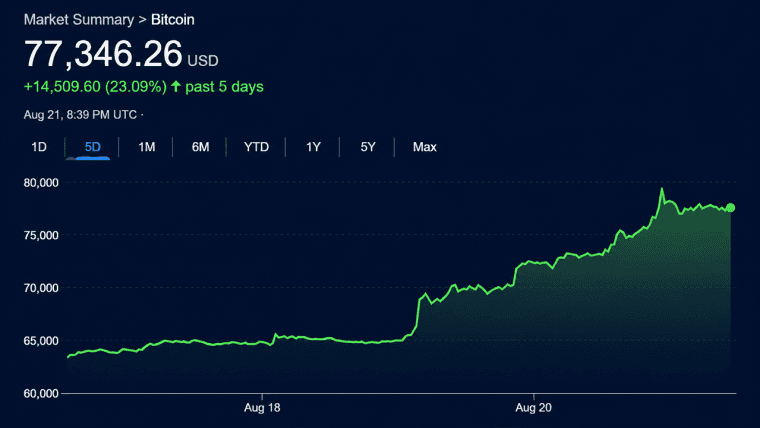
Crypto market watchers understand how surprise night movements and weekend pumps or dumps can happen on a dime. TradFi regulars do not. But they sure are eager to accept the money from fees that come in from this 24/7 method of trading. Crypto markets and signals like bitcoin’s price action often act as a barometer of things that happened in the macro environment, well before Wall Street opens.
In this case, if TradFi assets do the same, they too may act as barometers for future events.
According to reports, the U.S. Securities and Exchange Commission (SEC) is looking to update custody rules, and the regulator has…
Read Now: SEC Eyes Sweeping Crypto Custody Rewrite as White House Weighs In