The Zimbabwean government plans to launch what it calls a “structured currency.” Some commentators and social media users have expressed skepticism over the government’s latest currency plans.
Zimbabwe to Launch ‘Structured Currency’ Linked to Gold, Says Finance Minister

This article was published more than a year ago. Some information may no longer be current.
WRITTEN BY

SHARE
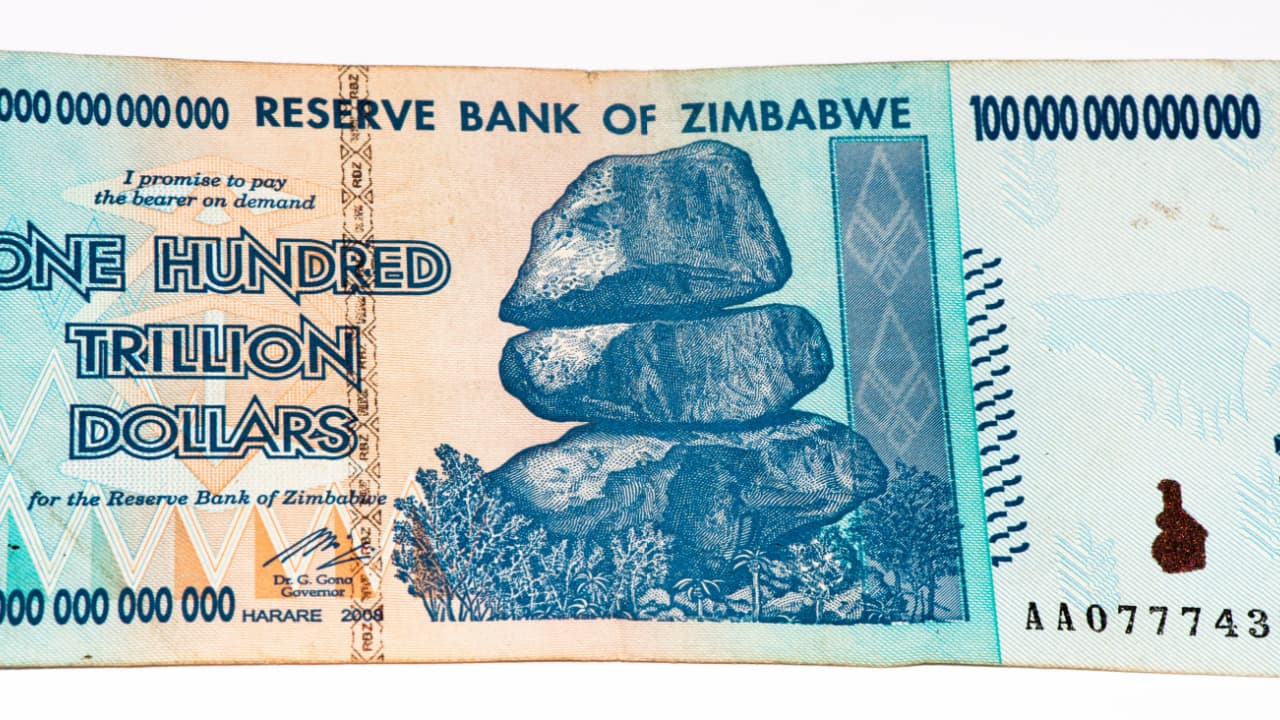
Zimbabwe’s Structured Currency
The Zimbabwean Finance Minister, Mtuli Ncube, has said his government plans to halt the local currency’s freefall by linking it to gold and establishing a currency board. Ncube said these measures could permanently end the local currency’s volatility.
Ncube’s remarks follow an announcement by Zimbabwean President Emmerson Mnangagwa of the government’s intention to launch a “structured currency.” At the time of Mnangagwa’s announcement, few details about this new iteration of the Zimbabwean currency and its roadmap were initially made public. However, the Reserve Bank of Zimbabwe later confirmed that work on the currency was ongoing.
The plan by Zimbabwean authorities to launch yet another currency comes just a few weeks after the Zimbabwean dollar (ZWL) reportedly fell by approximately 40% against the U.S. dollar. This plunge has reignited fears that the Zimdollar may eventually collapse, as it did in 2008 when the country went through its worst-ever hyperinflation period.
Commenting on his Ministry’s ongoing collaboration with the central bank, Ncube said:
“The idea going forward is to make sure that we manage the growth of liquidity which has a high correlation to money supply growth and inflation. The way to do that is to link the exchange rate to some hard asset such as gold,” Ncube reportedly said.
The Finance Minister suggested that the establishment of a currency board could be the solution. Ncube however still acknowledged that such a currency board will only work in an environment where the growth of domestic liquidity is “constrained by the value of the asset backing the currency.”
Economist Steve Hanke Unconvinced
Johns Hopkins Professor and currency board proponent, Steve Hanke, reacted to Ncube’s currency board remarks by revealing his lack of confidence in the Zimbabwean minister’s comments and announcements. Still, in his Feb. 12 post on X (formerly known as Twitter), he implied that the creation of a currency board was an idea he espoused more than 20 years ago.
#ZIMWatch🇿🇼:
Zimbabwe's Finance Minister Mthuli Ncube is considering the adoption of a currency board. Since we don't have any details, we don't know whether Ncube is playing games, or if he is for real.
The idea of a currency board for Zim was first established in my book…
— Steve Hanke (@steve_hanke) February 12, 2024
Some commentators and social media users have voiced skepticism over the government’s latest currency plans. They underscore the country’s lack of production as one factor that could undermine these plans. However, others like the social media user, Sheila Thompson, highlighted citizens’ distrust of monetary authorities.
“Until the Zimbabwean government repays the millions lost by pensioners and the funds in banks and savings, there will be no trust in their schemes to restore the Zimbabwean dollar,” Thompson wrote on X.
Others have questioned the efficacy of a currency board, citing the economic misfortunes of countries that have adopted such boards in the past.
Register your email here to get a weekly update on African news sent to your inbox:
What are your thoughts on this story? Let us know what you think in the comments section below.