


Wells Fargo, Intuit, and Arm Holdings are among six more companies objecting to having their shares traded as blockchain-based tokens, bringing the total number of corporate holdouts to 22 as Wall Street’s ambitious experiment with around-the-clock stock trading encounters mounting resistance.
Wells Fargo, Intuit Join Growing Corporate Revolt Against Tokenized Stock Plan: Reuters
WRITTEN BY

SHARE

Key Takeaways
- Wells Fargo, Intuit, and Arm are among six additional companies opposing the tokenization of their shares, Reuters reported, bringing the total to 22.
- Microsoft, McDonald’s, Google, and Goldman Sachs are among the other major companies objecting to OKXICE’s tokenized stock plans.
- Former New York Gov. Andrew Cuomo says some companies will embrace 24/7 blockchain-based stock trading, while others will wait to see how it develops.
More Firms Reject Stock Tokenization
The latest objections were disclosed in a regulatory document obtained by Reuters on Friday, adding to a growing list of major American companies challenging plans by cryptocurrency exchange OKX and Intercontinental Exchange (ICE)—the parent company of the New York Stock Exchange—to tokenize publicly traded equities.
The six additional objections bring the total to 22, up from 16 earlier this week. A Wells Fargo spokesperson declined to comment to Reuters, while representatives for Arm and Intuit did not immediately provide responses.
The dispute centers on OKXICE, a joint venture seeking to transform stock trading by offering blockchain-based representations of conventional shares that can be bought and sold 24 hours a day, seven days a week.
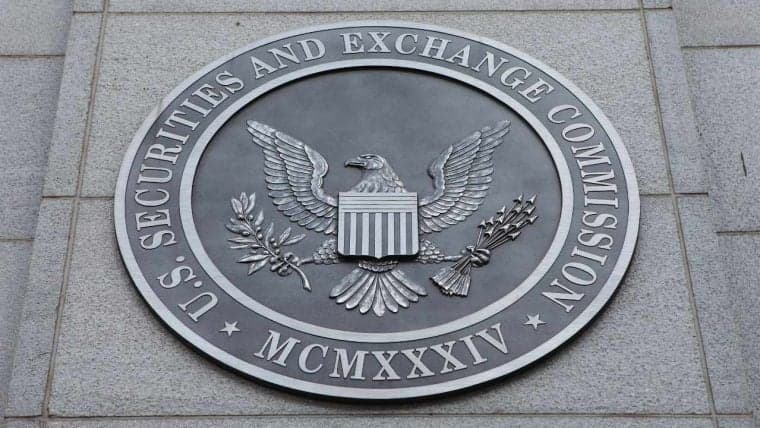
The venture initially proposed tokenizing shares of 63 stocks through a new regulatory framework introduced by the Securities and Exchange Commission (SEC) in September. The temporary exemption allows qualifying platforms to operate without meeting certain requirements imposed on traditional stock exchanges.
However, the framework includes a significant safeguard for publicly traded companies: Issuers must receive advance notice before their shares are tokenized by third parties, and can block those offerings by formally objecting.
The latest objections follow similar moves by some of corporate America’s biggest names.
As Bitcoin.com News reported earlier this week, Microsoft, Google parent Alphabet, Goldman Sachs, Qualcomm, Caterpillar, McDonald’s, and Western Digital joined the opposition in an Oct. 19 regulatory update. They followed an earlier group that included Broadcom, Verizon, UnitedHealth Group, CoreWeave, Rocket Lab, AppLovin, Cerebras Systems, Applied Digital, and Applied Optoelectronics.
While the objections have raised questions about corporate enthusiasm for blockchain-based securities, they do not necessarily indicate opposition to tokenization as a whole. Companies may instead be concerned about how their shares are represented and traded on platforms they do not control.
Of the 19 companies named to date in filings and media reports, 13 trade on the Nasdaq, while the rest trade on the New York Stock Exchange.
Last month, Nasdaq invested $100 million in Payward, the parent company of crypto exchange Kraken, with plans to launch their own joint tokenized securities venue (TSV) in 2027. Nasdaq-listed companies may be weighing that as they make their decisions, particularly following a Nasdaq FAQ released last month about the SEC’s innovation exemption, which advised companies about potential risks. It also added:
As an issuer ourselves, having carefully reviewed and weighed these current considerations of the Innovation Exemption, we intend for Nasdaq, Inc. (Nasdaq: NDAQ) to opt out of TSVs.
Cuomo Speaks Out on Corporate Pushback
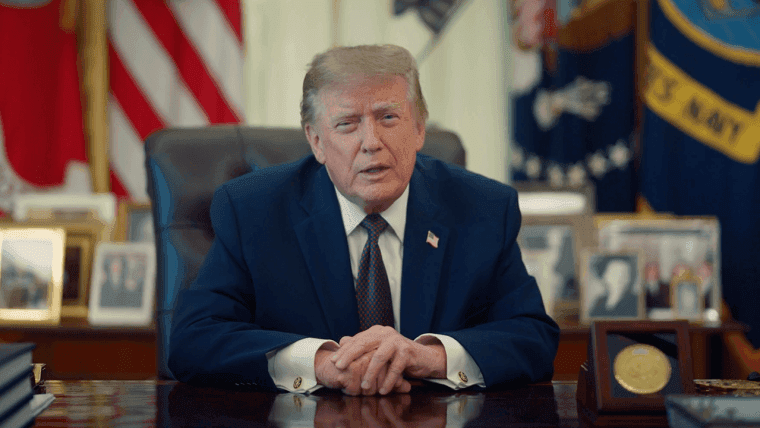
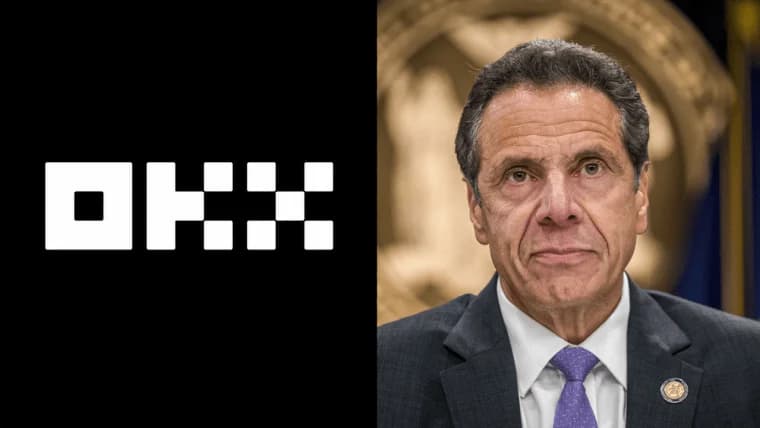
Former New York Gov. Andrew Cuomo, who sits on OKX’s board and co-chairs the OKXICE venture, addressed the growing resistance during an Oct. 20 press conference attended by Bitcoin.com News.
Cuomo characterized the SEC’s regulatory approach as an experiment in which some companies would embrace tokenization immediately while others would prefer to observe its development.
“There’ll be other companies that say: I want to be the first in the pool,” Cuomo told reporters.
He also questioned why American securities markets should remain restricted to conventional trading hours when investors increasingly operate across international borders.
“This is a 24-seven world,” Cuomo declared.
The former governor argued that tokenization could eventually make American equities more accessible to investors worldwide, while acknowledging that corporate participation would depend on individual preferences and confidence in the new market structure.
Under OKXICE’s proposed system, tokenized stocks would be backed by actual shares held through a registered broker-dealer, with investors retaining corresponding dividend and voting rights. Trading would take place through permissioned Uniswap v4 liquidity pools on OKX’s X Layer blockchain, using stablecoins for settlement.
Despite those safeguards, the expanding list of objections underscores a fundamental challenge for the emerging tokenized securities industry: Regulatory permission and technological capability alone may not be enough to persuade corporate America to participate.
For OKXICE, the immediate obstacle is no longer simply building a blockchain-based stock market, but convincing the companies whose shares would trade on it that the new system serves their interests.
Editor’s note: This story was updated after publication to add context about Nasdaq’s guidance to companies regarding tokenized stock venues, as well as Nasdaq’s investment in Kraken parent Payward. The headline was also clarified.
Former New York Gov. Andrew Cuomo says he saw cryptocurrency's potential back in 2011. Fifteen years later, he's helping OKX…
Read Now: Andrew Cuomo Revisits His 2011 Crypto Roots as OKX Rolls Out $500K Shield