The stablecoin usual usd (USD0) has experienced a $340 million contraction in its supply over the past four days. This decrease coincides with an 8% decline in the value of the project’s USD0++ token, the staking derivative of USD0.
Usual Money’s Protocol Changes Shake Staked USD0 and Governance Token Values

This article was published more than a year ago. Some information may no longer be current.
WRITTEN BY

SHARE

Redemption Policy Shift Sparks Decline in USD0++ Value
Throughout this past week, notable developments have emerged surrounding usual usd (USD0), its governance token USUAL, and USD0++. These events follow USD0’s ascent into the ranks of the top ten stablecoins by market capitalization. In a recent protocol update, the team modified the redemption pricing for USD0++. Previously, the token’s unstaking mechanism offered a 1:1 redemption ratio, but this changed with the latest adjustments.
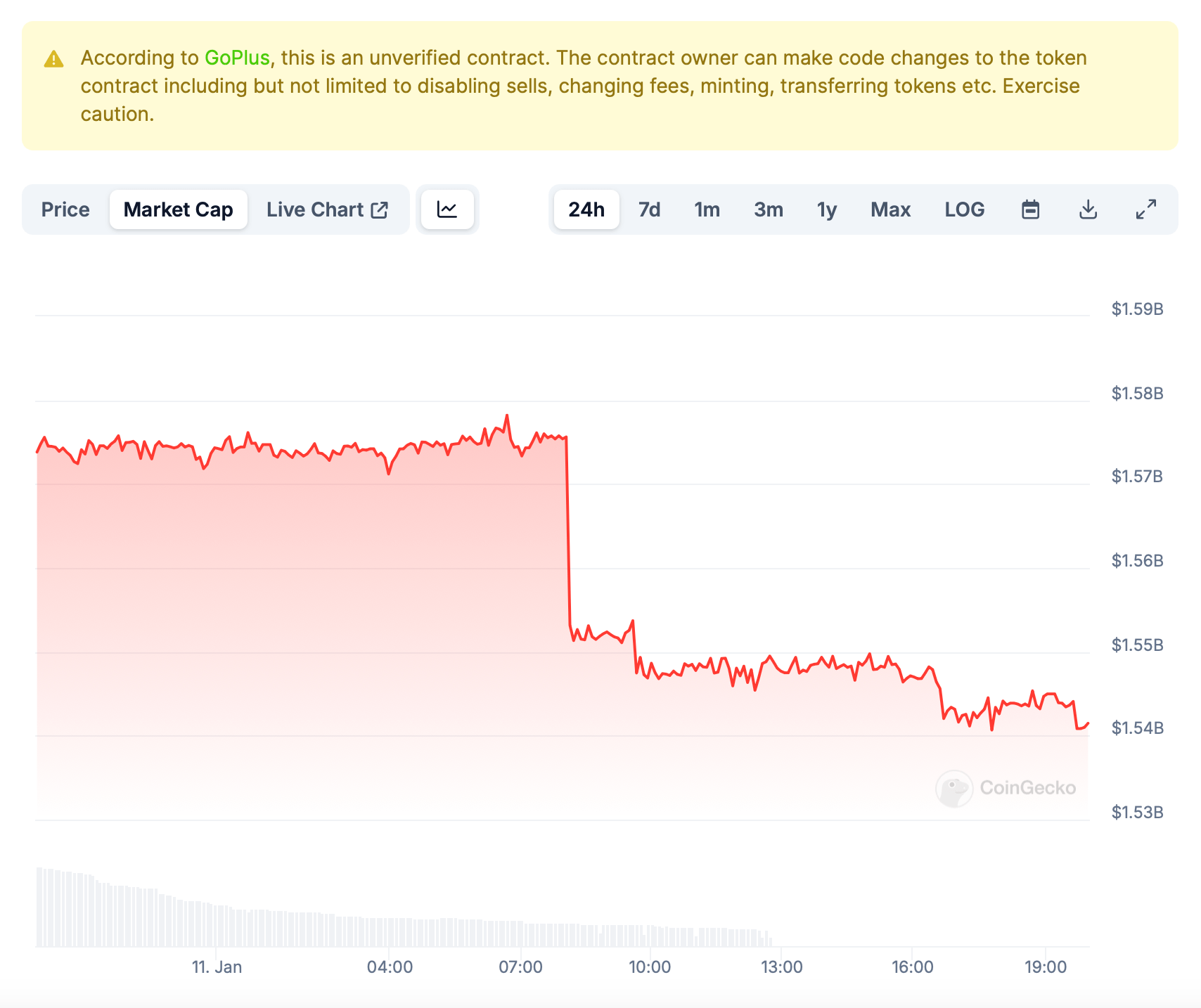
This revision spurred debate, triggering subsequent market activity. On Jan. 9, USD0++ declined by over 8%, falling below the anticipated $1 mark. According to Coingecko data, its value dipped to $0.905 per coin, and as of Jan. 11, 2025, it stands at $0.939. Meanwhile, the non-staked USD0 has maintained its $1 peg but has seen its market capitalization recede from a Jan. 7 peak of $1.88 billion to $1.54 billion—a $340 million reduction.
Additionally, the governance token USUAL has experienced declines, dropping 3.7% in the past 24 hours and 33.1% over the week. At $0.63 per token, with a circulating supply of 514 million, USUAL’s market valuation now rests at $328 million. These dynamics highlight the delicate interplay between stablecoins and their derivatives, as USD0++ functions as a staked variant of USD0 itself.
Such fluctuations underscore how protocol changes can rapidly influence market sentiment and valuations within the crypto and decentralized finance ( defi) realms. Despite the turbulence, USD0 retains its status as a top-ten stablecoin, holding a competitive position alongside First Digital’s FDUSD, which boasts a similar-sized market cap.