The U.S. Supreme Court ruled that the sweeping tariffs levied by President Donald Trump under the International Emergency Economic Powers Act (IEEPA) were illegal, as the President exceeded the law’s authority. In a dissenting opinion, Justice Kavanaugh stated that refunding these tariffs would be “a mess.”
US Supreme Court Strikes Trump's IEEPA Tariffs Down, Refund Process to Be a 'Mess'
WRITTEN BY

SHARE
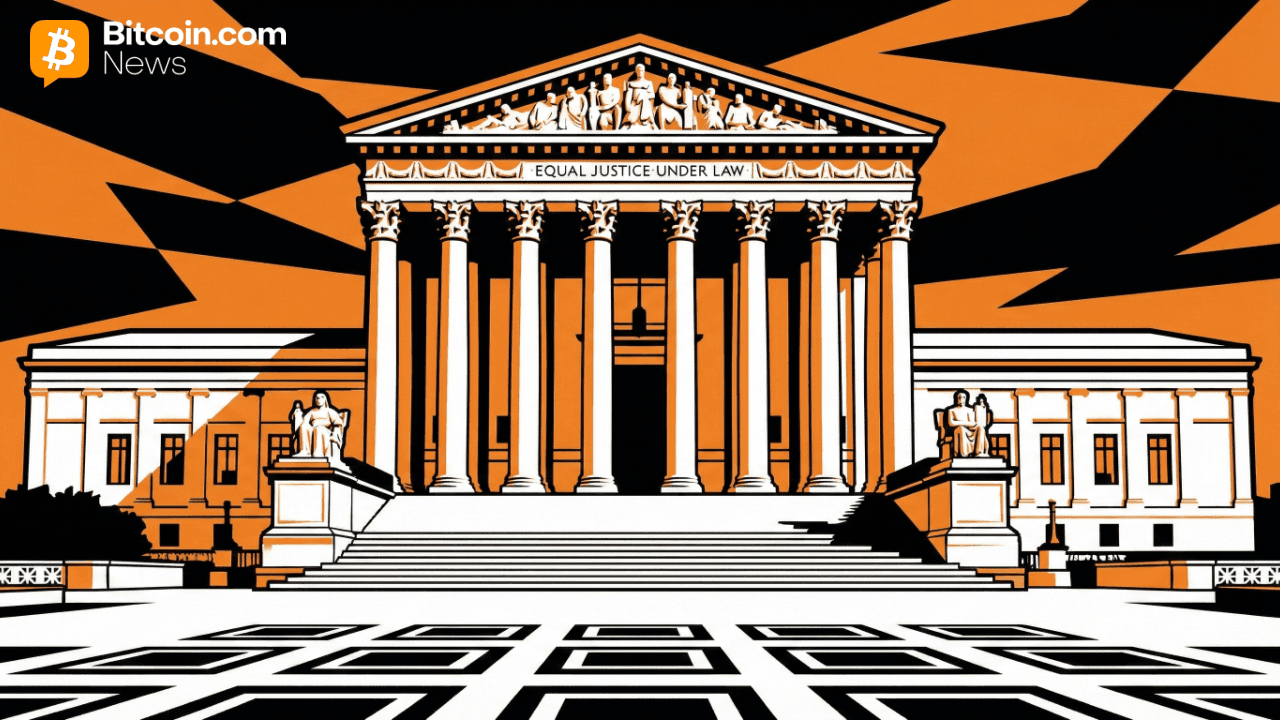
US Supreme Court Rules Trump Had No Authority To Issue Tariffs Unilaterally
A landmark decision on the power of U.S. President Donald Trump to unilaterally impose tariffs finally been issued.
The U.S. Supreme Court upheld the decision of a lower court on Friday, ruling that Trump exceeded the authority when implementing these tariffs unilaterally, as the International Emergency Economic Powers Act (IEEPA) makes no mention of tariffs and gives no powers to impose these levies on other nations.
Chief Justice John Roberts, in charge of writing the court’s opinion, stated that if the Trump administration were allowed to follow its current tariff agenda, it “would replace the longstanding executive-legislative collaboration over trade policy with unchecked Presidential policymaking.”
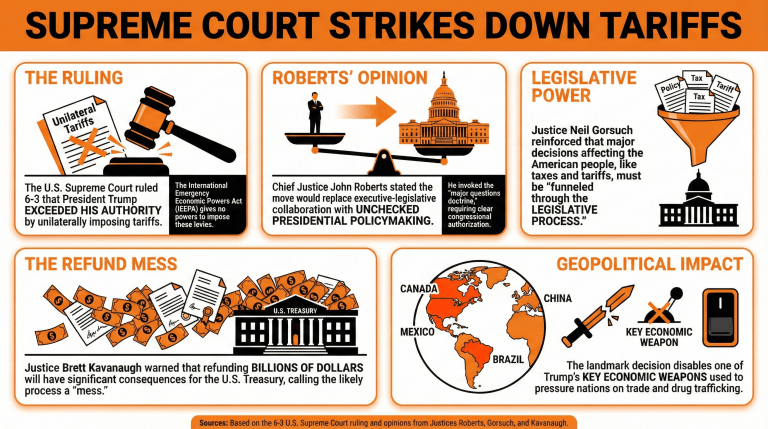
Furthermore, Roberts reinforced the relevance of the major questions doctrine, which ascertains Congress’s regulatory prevalence over the action of federal agencies, stressing that Trump “must ‘point to clear congressional authorization’ to justify his extraordinary assertion of the power to impose tariffs.”
In a concurring opinion, Justice Neil Gorsuch also reinforced Congress’s role in the tariff process, stating that “most major decisions affecting the rights and responsibilities of the American people (including the duty to pay taxes and tariffs) are funneled through the legislative process for a reason.”
Justice Brett Kavanaugh, who dissented, stressed that tariff refunds would be an issue in the near term, as the court did not give a clear ruling on how this process would be conducted. “Refunds of billions of dollars would have significant consequences for the U.S. Treasury… But that process is likely to be a ‘mess’,” he concluded.
The 6-3 ruling disables one of Trump’s key economic and geopolitical weapons, as he had used tariffs to move political adversaries to collaborate on trade and drug trafficking issues, putting pressure on countries like China, Canada, Mexico, and Brazil.
Tariff King Strikes Again: Trump Raises Tariffs on South Korean Imports to 25%
President Donald Trump announced a 10% tariff increase on South Korean imports arriving in the U.S., including cars, lumber, and…
Read Now

Tariff King Strikes Again: Trump Raises Tariffs on South Korean Imports to 25%
President Donald Trump announced a 10% tariff increase on South Korean imports arriving in the U.S., including cars, lumber, and…
Read NowTariff King Strikes Again: Trump Raises Tariffs on South Korean Imports to 25%
Read NowPresident Donald Trump announced a 10% tariff increase on South Korean imports arriving in the U.S., including cars, lumber, and…
FAQ
-
What did the Supreme Court rule regarding Trump’s tariffs?
The Court ruled that Trump exceeded his authority by imposing tariffs unilaterally under the International Emergency Economic Powers Act. -
Who wrote the main opinion for the Court?
Justice John Roberts wrote the opinion, emphasizing the need for Congress’s collaboration in trade policy. -
What is the major questions doctrine?
It asserts that Congress must authorize major regulatory actions, including tariffs, stressing limits on presidential power. -
Will there be refunds for the tariffs?
Justice Brett Kavanaugh indicated that the process for refunds could be complicated and may have significant implications for the U.S. Treasury.