


The U.S. Department of Justice has launched a compensation process for victims of the $4 billion Onecoin fraud. More than $40 million in recovered assets will be distributed to eligible claimants.
US DOJ Opens Compensation for $4 Billion Onecoin Fraud Victims
WRITTEN BY

SHARE

Key Takeaways:
- U.S. DOJ launched claims for Onecoin victims, distributing $40 million from a $4 billion fraud case.
- The scam investment, which ran from 2014 to 2019, highlights risks, shaping stricter crypto enforcement.
- DOJ sets June 30 deadline, with partial payouts as more asset recovery efforts continue.
Onecoin Victims Can Now Claim Share of Recovered Assets
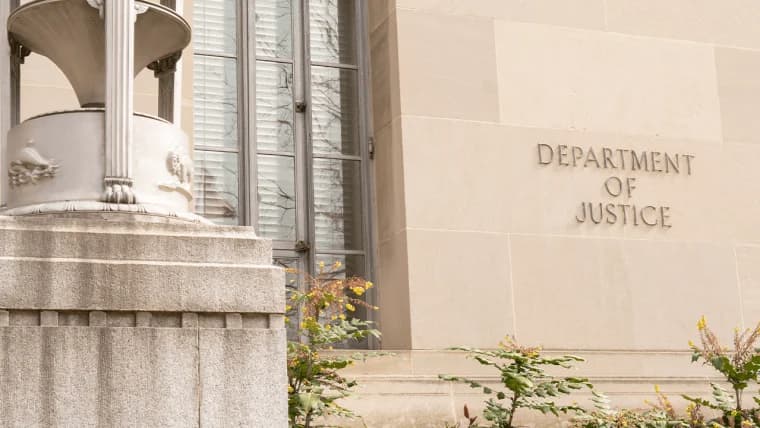
The U.S. Department of Justice has begun a formal process to compensate victims of the Onecoin crypto fraud, one of the largest scams in the history of digital assets.
The scheme, which ran from 2014 to 2019, defrauded investors of more than $4 billion worldwide. Prosecutors say Onecoin’s founders, Ruja Ignatova and Karl Sebastian Greenwood, promoted a fictitious cryptocurrency through a global multi-level marketing network, luring victims with false claims of high returns.
With criminal cases largely concluded, authorities have now moved to distribute recovered funds. More than $40 million in assets, seized through forfeiture proceedings, have been set aside for compensation.
Victims who purchased Onecoin during the scheme’s operation may apply for reimbursement through a remission process managed by the Justice Department’s Money Laundering and Asset Recovery Section. Applications must be submitted by June 30 through an official claims portal or by contacting the appointed administrator.
Officials cautioned that while the recovered funds represent progress, they are unlikely to fully cover losses given the scale of the fraud.
“Victims are at the core of everything we do at the Department of Justice. As we did in this complex investment fraud case, the Department pursues forfeiture to take the profit out of crime and then use that money to compensate victims wherever possible, ” said Assistant Attorney General A. Tysen Duva of the Justice Department’s Criminal Division.
Charges and Convictions for Onecoin Team
The case has spanned multiple jurisdictions and led to several high-profile convictions. Greenwood, a co-founder of Onecoin, pleaded guilty to fraud and money laundering charges in the United States and was sentenced to 20 years in prison, along with a $300 million penalty.
Irina Dilkinska, the scheme’s former head of legal and compliance, was sentenced in 2024 to four years in prison and ordered to forfeit more than $111 million. Other individuals linked to the operation have faced charges in Europe, including allegations of laundering hundreds of millions of euros tied to investor funds.
Ruja Ignatova, widely known as the “Cryptoqueen,” is still at large and is listed among the FBI’s top 10 most wanted fugitives. U.S. authorities continue to seek information on her whereabouts.
More recent prosecutions underscore the ongoing nature of the investigation. In 2024, William Morro was charged with conspiracy to commit bank fraud for allegedly helping conceal the origin of tens of millions of dollars linked to Onecoin through international transfers.

The group of local individuals that handled the Onecoin scheme in Cordoba, Argentina, received jail sentences of up to 9…
Read Now: Twelve Individuals Linked to Onecoin Sentenced in Argentina

For victims, the launch of the compensation process offers a rare opportunity for partial recovery in a case that left many financially devastated. It also highlights the challenges authorities face in unwinding large-scale crypto frauds, where funds are often dispersed across jurisdictions and hidden through complex financial structures.