


The U.S. Department of War has told lawmakers it needs $80 billion to cover the war in Iran and other bills, a request that deepens the deficit worries that bitcoin proponents cite as the asset’s reason to exist. Deputy Defense Secretary Stephen Feinberg relayed the figure to Congress in phone calls.
US Department of War Seeks $80 Billion for Iran War as Deficit Fears Boost Bitcoin's Case
WRITTEN BY

SHARE

Key Takeaways
An $80 Billion Ask
The U.S. Department of War, the rebranded Department of Defense, has informed lawmakers that it requires $80 billion to cover the cost of the war in Iran, along with a range of other bills. Deputy Defense Secretary Stephen Feinberg communicated the figure to members of Congress in phone calls earlier in the week, clarifying that the amount is not solely for the war effort.
According to reports, the sum also covers non-defense priorities such as farm and disaster relief, and a full supplemental request bundling those items could reach lawmakers within days. The ask comes as the conflict approaches its four-month mark, having begun in late February.
It is also a step down from earlier figures as the Pentagon initially floated a request of more than $200 billion, which met resistance from lawmakers wary of open-ended spending. In April, a defense official offered the first official estimate of the war’s cost at around $25 billion, a fraction of the new supplemental.
Bitcoin as a Wartime Hedge
For the crypto market, the significance lies less in the war itself than in what it does to the federal balance sheet. Each new supplemental adds to a deficit that bitcoin advocates point to as the core case for a fixed-supply asset. Bitcoin.com News reported that U.S. national debt has climbed past $39 trillion, eclipsing the size of the economy for the first time since the end of World War II, a milestone proponents argue validates bitcoin’s role as a hedge against currency debasement.
That argument has prominent backers, including Senator Cynthia Lummis, who has repeatedly tied bitcoin to the nation’s fiscal trajectory. Meanwhile, economist Peter Schiff has warned that debt could surge toward $50 trillion within a few years.
The logic is straightforward: when governments borrow heavily to fund wars and relief programs, central banks often help finance the load, raising the risk of inflation and pushing some investors toward scarce assets.
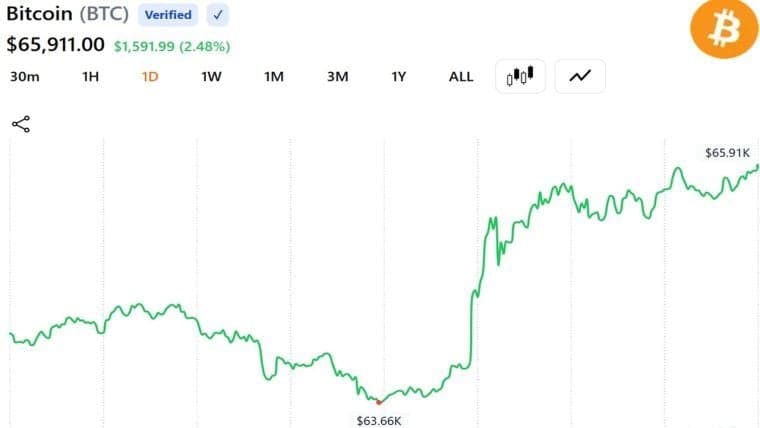
Bitcoin’s behavior during the Iran conflict has only sharpened the debate, with JPMorgan saying the war produced an unusual market split, and bitcoin showing signs of safe-haven demand even as gold and silver weakened under outflows and profit-taking. After initially falling about 8.5% when the conflict began, bitcoin rebounded roughly 11% from its opening-day lows, outperforming several traditional havens over the following weeks.
A Test of the Hedge Narrative
Not everyone is convinced bitcoin has earned its safe-haven status yet, with skeptics noting BTC still trades with risk assets much of the time and sold off sharply in the war’s opening hours. But its series of fast recoveries has lent weight to the view that bitcoin functions as a 24/7 liquidity pool that absorbs geopolitical shocks faster than slower-moving markets.
There is also a domestic political layer to this discussion. Lawmakers have pressed the administration for a comprehensive war-cost figure for months, and the supplemental will force that debate into the open ahead of the November midterm elections. How Congress responds (by trimming, approving or stalling the request) will shape both the deficit outlook and the broader risk backdrop that crypto trades against.

The U.S. national debt has officially surpassed $38.9 trillion, eclipsing 100% of the country's gross domestic product (GDP) for the…
Read Now: US Debt Nears $39T GDP Mark for First Time Since 1946, Validating Bitcoin