


Tyler Winklevoss, co-founder of Gemini, has publicly questioned the inclusion of XRP, solana (SOL), and cardano (ADA) in a proposed U.S. strategic crypto reserve.
Tyler Winklevoss Questions Suitability of XRP, SOL, ADA for US Crypto Holdings

This article was published more than a year ago. Some information may no longer be current.
WRITTEN BY

SHARE
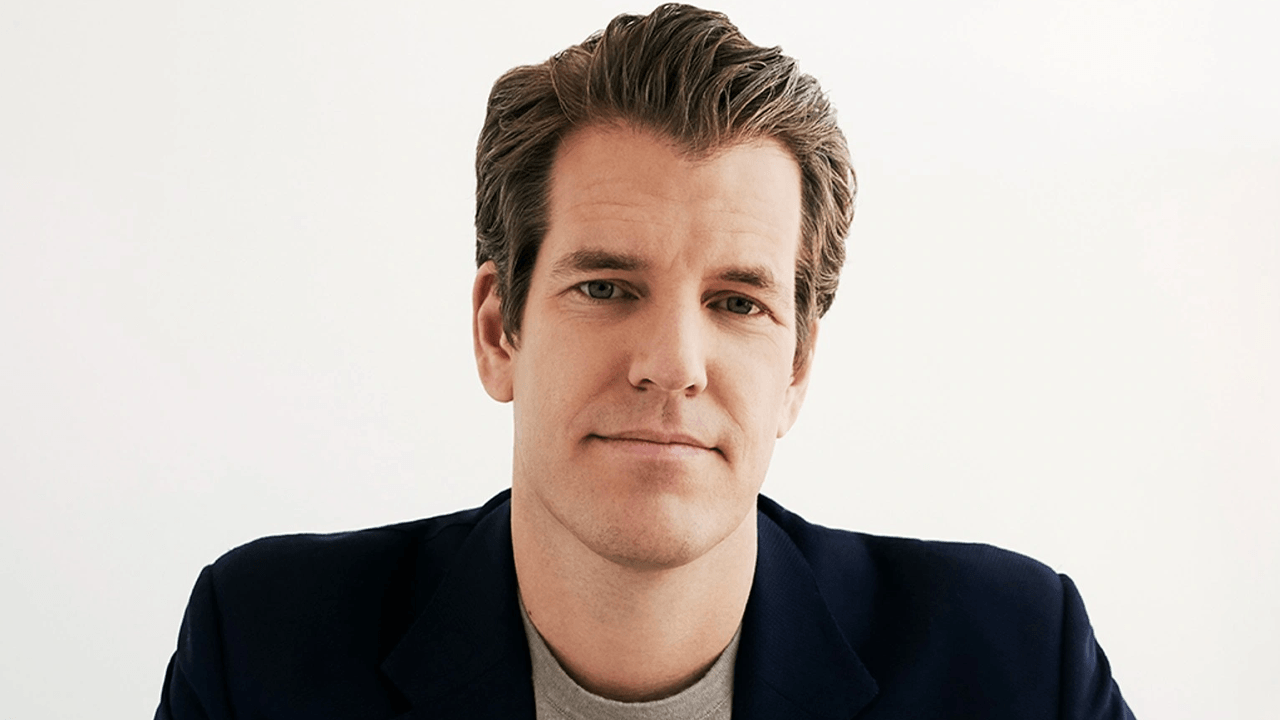
Winklevoss Criticizes Trump’s Proposed Crypto Reserve Inclusion of XRP, SOL, ADA Over Suitability
President Donald Trump, the 47th U.S. president, announced on March 2, 2025, that XRP, SOL, and ADA would join bitcoin (BTC) and ethereum (ETH) in his administration’s strategic crypto reserve plan, sparking a market rally. However, Tyler Winklevoss argues these altcoins lack the necessary attributes for such a critical government holding.
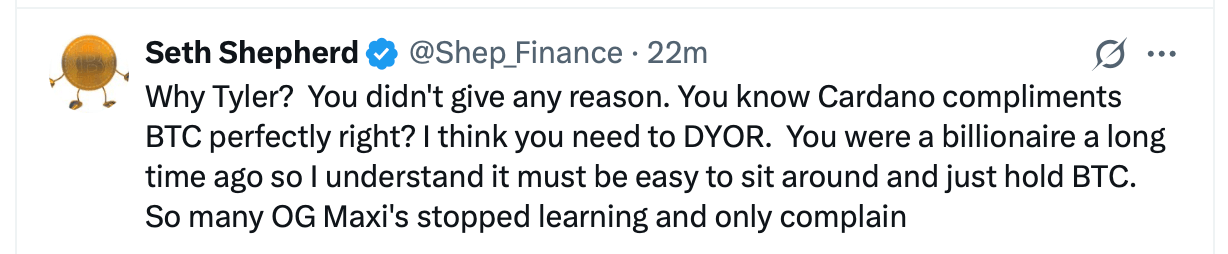
“I have nothing against XRP, SOL, or ADA but I do not think they are suitable for a Strategic Reserve,” Winklevoss stated. “Only one digital asset in the world right now meets the bar and that digital asset is bitcoin. Many of these assets are listed for trading on Gemini and meet our rigorous listing policy criteria, but with respect to a Strategic Reserve it is another standard. An asset needs to be hard money that is a proven store of value like gold.”
Ripple’s XRP has faced significant regulatory uncertainty due to its legal battle with the SEC, which alleged that XRP is an unregistered security. As of March 2025, the case remains unresolved, creating legal risks for government holdings.

While there has been speculation about a potential dismissal or settlement, no official confirmation has been made. Centralization concerns also persist, as Ripple Labs controls key nodes and a massive token supply, raising manipulation fears.
Solana’s network reliability is another hurdle. The blockchain has suffered multiple outages in the past, including a multi-hour downtime in January 2022. Staking power concentration in a few pools, as highlighted by data, challenges its decentralization. Additionally, many believe its ecosystem’s heavy focus on speculative projects like meme coins and non-fungible tokens (NFTs), conflicts with the stability required for a strategic reserve.
Additionally, people have said that Cardano’s slower development pace and smaller market cap ($34–40 billion as of March 2025) present liquidity and adaptability risks. Delays in feature rollouts and limited real-world adoption compared to ethereum (ETH) or bitcoin (BTC) add uncertainty. Tyler’s twin brother Cameron shared a very similar message.
“While I’m excited about a Strategic Reserve, I was surprised by the digital assets being contemplated,” Cameron wrote. “Bitcoin is the only asset that meets the bar for a store of value reserve asset. Maybe Ethereum. Digital gold and digital oil. Which mirrors America’s physical reserves of gold (Fort Knox, NY Fed, etc.) and oil (Strategic Petroleum Reserve). It’s possible other assets could make the grade in the future but it’s a very high bar.”
While Trump’s endorsement boosted prices, it does not address underlying worries people have. Winklevoss’s stance aligns with others simply favoring bitcoin and ethereum for their larger market caps, proven track records, and lower risk profiles. As debates continue, the focus remains on balancing innovation with the stability demanded of national reserves.