The top crypto asset opened the week on the back foot, sliding 2.5% against the greenback since Sunday evening, yet it’s still nursing a roughly 1.5% gain over the past seven days. Meanwhile, traders and onlookers alike are holding their breath as U.S. President Donald Trump dusts off tariff threats aimed at several European countries.
Trump's Tariff Talk and Policy Gridlock Push Bitcoin Lower as Markets Turn Defensive

This article was published more than a month ago. Some information may no longer be current.
WRITTEN BY

SHARE
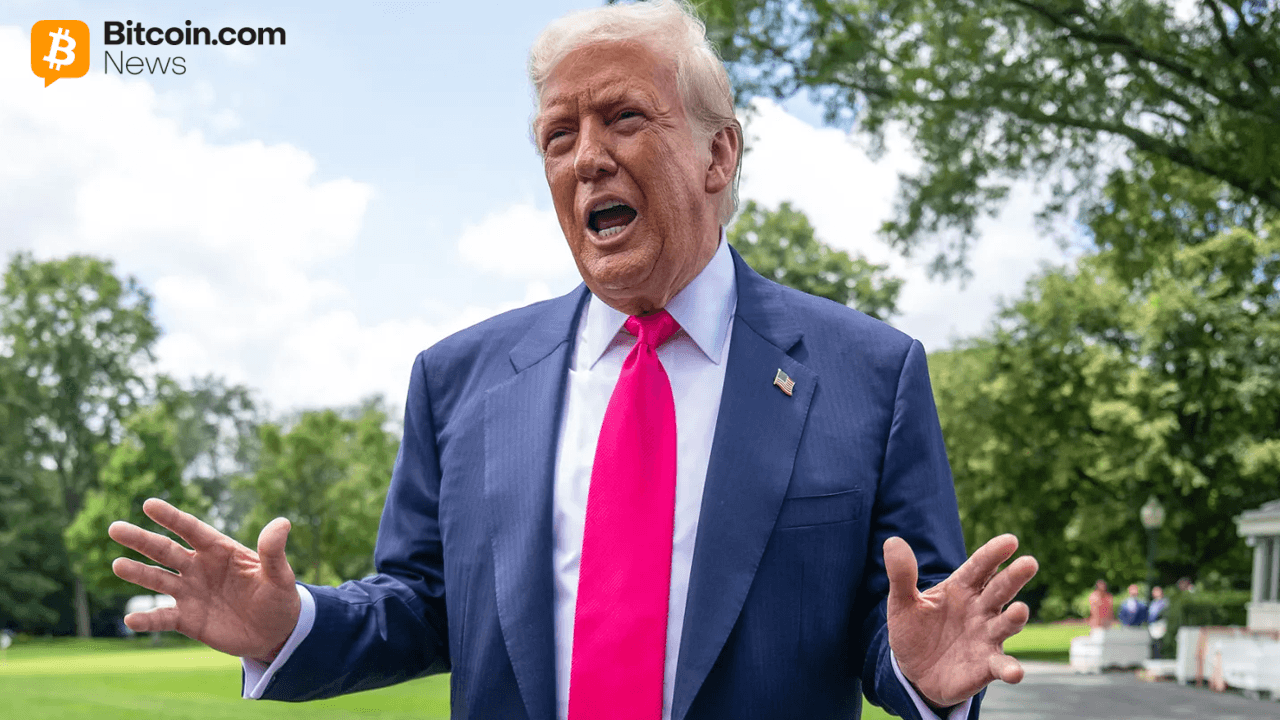
Trade Wars, Safe Havens, and a Bitcoin Pullback Shake Markets to Start the Week
“We have subsidized Denmark, and all of the Countries of the European Union, and others, for many years by not charging them tariffs, or any other forms of remuneration,” Trump wrote on Truth Social on Saturday, pushing back against resistance to his proposed acquisition of Greenland. That rhetoric sent money scurrying toward traditional hideouts, with gold and silver catching the bid.

Reuters reports that EU leaders plan to hash out their options at an emergency summit in Brussels on Thursday. The report noted that Danish Foreign Minister Lars Lokke Rasmussen said, “The U.S. is also more than the U.S. president. I’ve just been there. There are also checks and balances in American society.” The standoff between Trump and multiple European governments has breathed new life into the “Sell America” trade, leaving the dollar bruised.
Also read: XRP Drops Hard as Key Zone Breaks During Broad Crypto Sell-Off
On top of that, some argue the broader crypto market has taken a knock from the CLARITY Act hitting a wall. Simon Peters, crypto analyst at Etoro, pinned part of bitcoin’s slide on the legislation being put on ice. “The CLARITY Act, which is intended to create a clear regulatory framework for digital assets in the US, has seen key players in the crypto industry withdraw their support, with the offering of yield on stablecoins being at the centre of the disagreement,” Peters said in a note to Bitcoin.com News.
Peters added:
“Banks have argued that allowing yield on stablecoins could draw deposits away from traditional bank accounts creating financial stability concerns, whilst key crypto players have argued that traditional finance is aiming to kill competition by prohibiting this.”
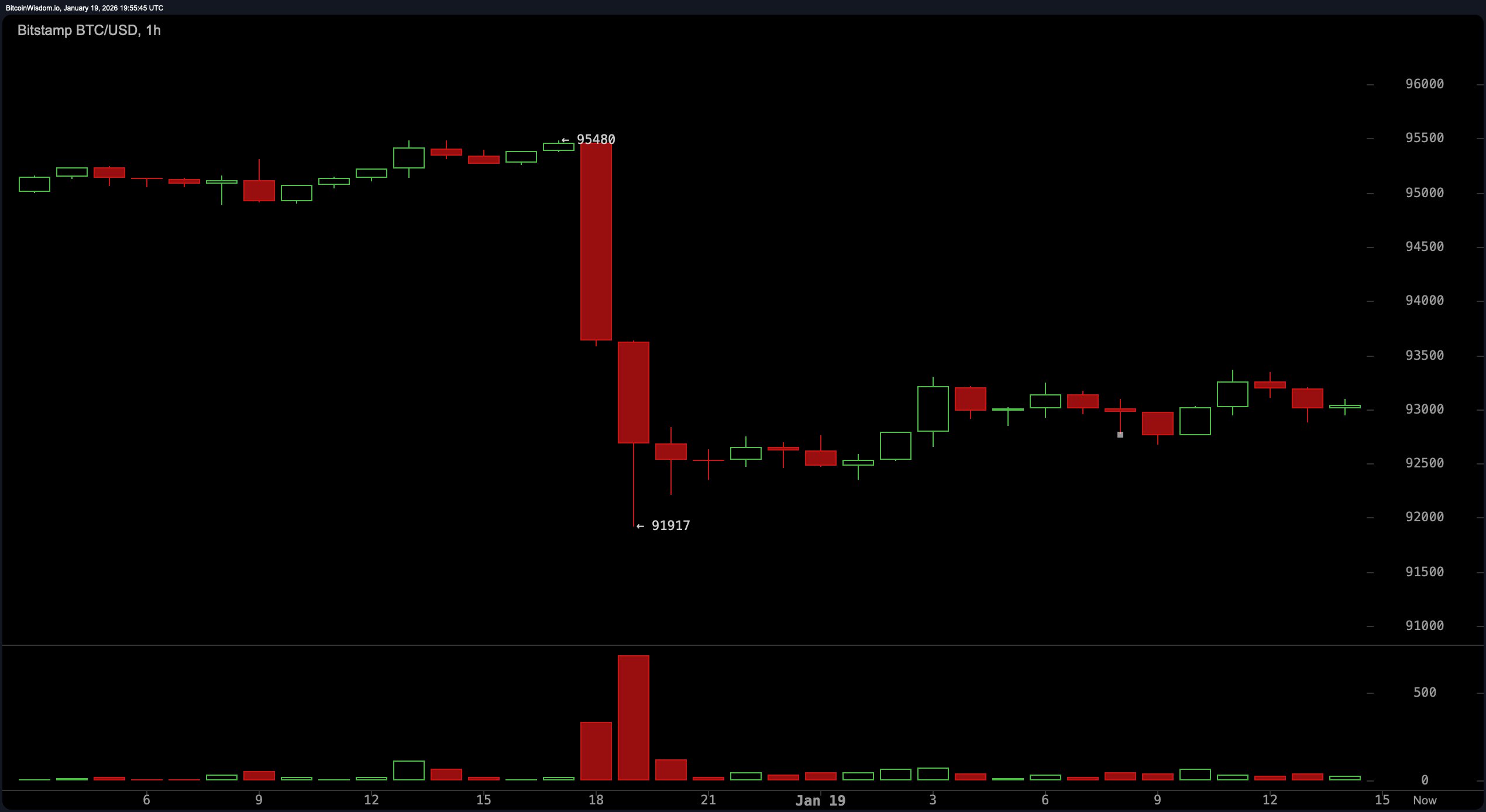
Bitcoin spent Sunday afternoon loitering near $95,000 before slipping in the evening to below $92,000. At press time at 2:45 p.m. Eastern, BTC was gliding along at $92,998 per coin. Trading activity has picked up as weekend-thin liquidity faded, with volume now clocking in at $44.66 billion.
Options data, logged by coinglass.com, points to a cautiously constructive bias, as call contracts maintain a slight advantage over puts in both open interest and 24-hour turnover. Figures show calls represent about 56.9% of total open interest versus 43.1% for puts, hinting that longer-dated bets still favor higher prices.
Short-term action is more evenly split, though, with calls accounting for roughly 50.7% of daily volume, a sign that traders are hedging and testing both sides. The heaviest clustering sits around key strikes near $90,000, $100,000, and $105,000.
FAQ ❓
- Why did bitcoin dip at the start of the week? Bitcoin slipped as Trump’s tariff threats revived the “Sell America” trade, pressured the dollar, and coincided with stalled U.S. crypto legislation.
- What is the “Sell America” trade? The “Sell America” trade reflects investors cutting exposure to U.S. assets amid trade tensions, policy uncertainty, and political risk.
- How did Trump’s comments affect global markets? Trump’s tariff rhetoric pushed capital toward safe havens like gold and silver while weighing on the greenback and risk assets.
- What role did the CLARITY Act play in crypto sentiment? The CLARITY Act’s delay added regulatory uncertainty, dampening confidence across crypto markets.