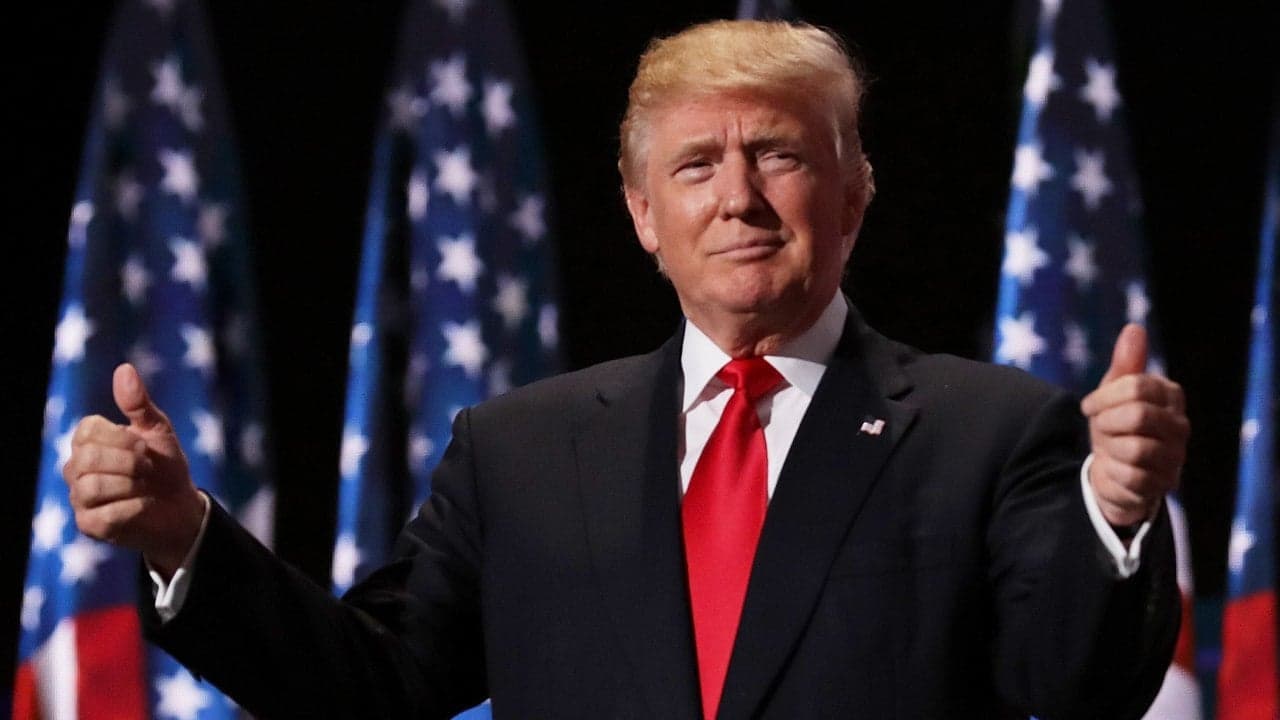
In a lively exchange on Fox & Friends this week, former U.S. President Donald Trump floated an intriguing idea: doing away with income taxes entirely.
Trump’s No-Income-Tax Vision: What America Looked Like Without Income Taxes

This article was published more than a year ago. Some information may no longer be current.
WRITTEN BY

SHARE
‘There is a Way’: Trump’s Nostalgic Call for Ending Income Taxes
During the television segment, Donald Trump took a nostalgic trip down memory lane, recalling a time when Americans didn’t have to fork over part of their earnings. A spirited group of Bronx barbers raised the topic, asking the former president what he thought about the prospect of eliminating federal income taxes.
“There is a way. There is a way,” Trump insisted on the show. “In the old days, when we were smart, when we were a smart country in the 1890s and all, this is when the country was relatively the richest it ever was. It had all tariffs. It didn’t have an income tax.”
Trump’s idea is to leverage funds received from tariffs instead of collecting income tax. “Okay, now we have income taxes and we have people that are dying, they’re paying tax and they don’t have the money to pay the tax,” Trump told the man at the barbershop. “You know, in the old days, 1890, 1880, we had so much money they had to set up committees, blue-ribbon committees, how to spend our wealth. We had no idea how to spend, it was so much money.”
The former President added:
Then we went to the income tax system and the rest is sort of history. But no, there is a way. I mean, if we, if what I’m planning comes out — it’s a great question, by the way.
Mainstream media giants like the New York Times and Newsweek wasted no time in declaring Trump’s tax ideas economically flawed. But Trump did present hard facts: Prior to income taxes introduced in 1913, the U.S. economy thrived, largely thanks to federal revenue from tariffs and excise taxes. Of course, back then, the federal government had fewer responsibilities and, as a result, a lighter budgetary load.
Economist and staunch gold advocate Peter Schiff weighed in on the matter. “Now Donald Trump is advocating eliminating the income tax completely and replacing it with tariffs, which was how the federal government was funded prior to 1913. In fact, the 16th Amendment was ratified precisely to replace tariffs on the middle class with income taxes on the rich. However, in 1913, the federal government spent less than 2% of GDP.”
Schiff added:
Today it spends over 24% of GDP. It’s impossible to fund the massive federal government we have now with the indirect tax system we had then. If Trump wants to return to the tax system we had prior to 1913, he would need to eliminate all the government programs enacted since then. That would really make America great again.
The New York Times claims that “both liberal and conservative experts have dismissed [Trump’s] idea as mathematically impossible and economically destructive.” History, however, paints a different picture. From the late 1700s through the early 1900s, America saw the birth of industrial powerhouses and booming sectors like railroads, steel, and oil. Visionary entrepreneurs, including Andrew Carnegie, John D. Rockefeller, and Cornelius Vanderbilt, built vast empires, driving America’s economic ascent.
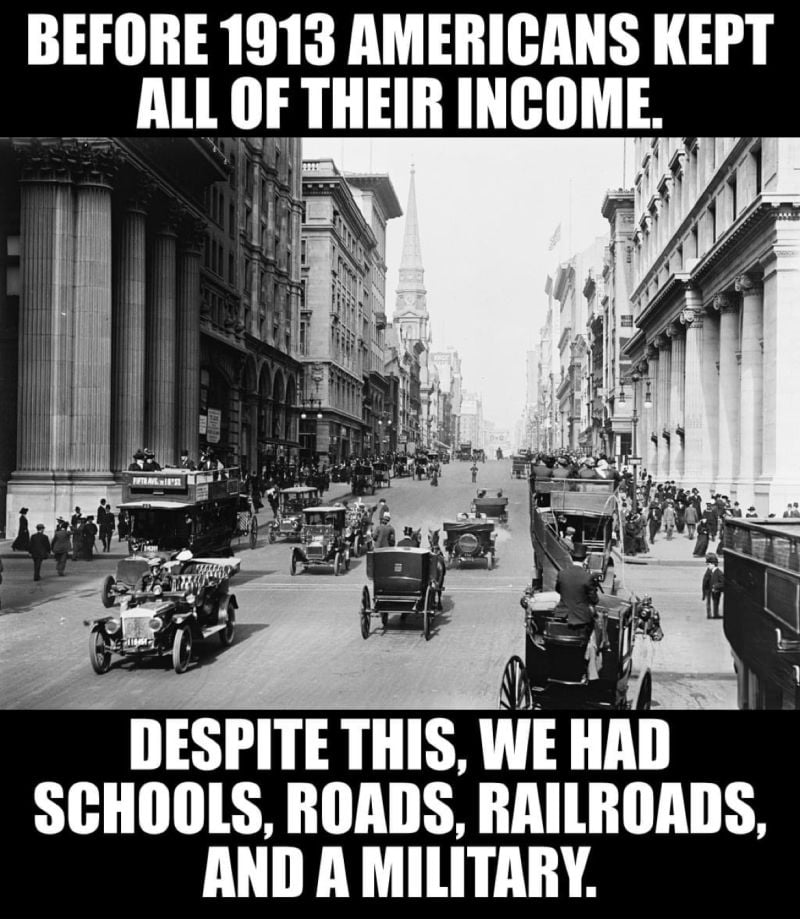
At the time, the U.S. had a surplus of wealth as Trump described. During this income tax-free era, profits flowed back into innovation and expansion, spurring job creation and productivity. With no income tax, entrepreneurs had more reason to dream big. Individuals and businesses could reinvest their earnings in ventures, new technologies, and emerging industries. Charitable efforts also thrived more so than today, with private citizens and companies leading the charge to help those in need.
Back then, massive infrastructure projects like railroads were largely funded privately or by local governments—not through federal taxation. They had schools, roads, hospitals, and all the amenities modern times offer. The U.S. was also on the classical gold standard for much of the 19th century, which helped stabilize the currency and reduce inflationary pressures. The free market further fueled economic growth, with the government’s role in economic planning kept minimal.
Trump’s comment about tax struggles strikes a chord today, as income and other taxes create financial strains for low- and middle-income Americans. Trump’s point about blue-ribbon wealth committees holds weight, reflecting how, as the economy grew, the U.S. had to decide how best to deploy surplus funds, particularly for infrastructure projects. By the 1890s, the U.S. was emerging as an economic superpower, propelled by rapid industrialization, westward expansion, and vibrant private investment.
What mainstream media and traditional economists often overlook is that the U.S. economy once thrived without income taxes, thanks to limited government intervention, free markets, entrepreneurial drive, privately-led infrastructure, and sound money policies. This environment fostered growth by letting individuals and businesses reinvest earnings into productive opportunities. Americans today shoulder a heavy tax load, with many government services—like the welfare state and perpetual wars—raising moral questions about their necessity. Trump’s statement resonates with the Libertarian view that a well-functioning society doesn’t have to rely on income taxes from its citizens.