U.S. President Donald Trump disclosed over the weekend that certain electronic devices will be exempt from the ongoing tariffs imposed on China. This move is likely to ease the concerns of technology firms that have been engaged in a logistical tug-of-war, shipping components across borders under increasing pressure.
Trump Tariff Relief Covers Consumer Tech; Bitcoin Miners May Face Classification Hurdles
WRITTEN BY

SHARE
U.S. Spares Electronic Devices From China Tariffs, but ASIC Miners Left in Regulatory Limbo
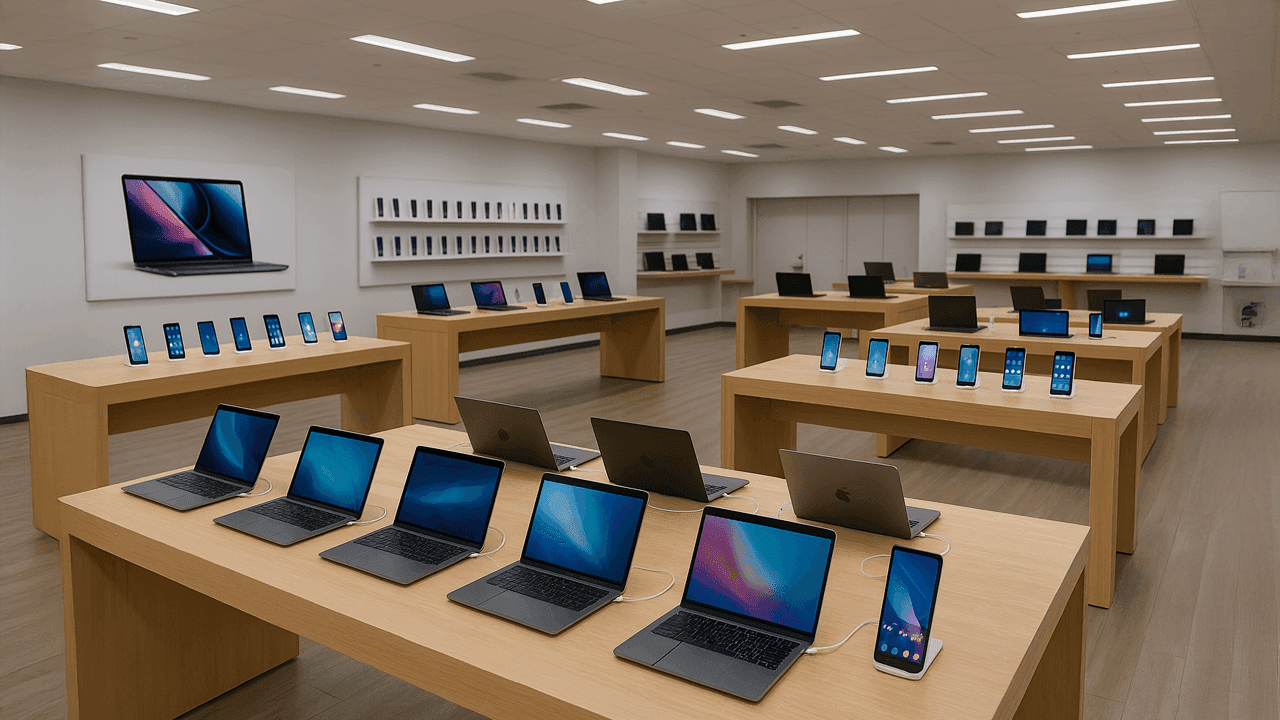
The relief follows the administration’s decision to grant tariff exclusions for a broad selection of electronic devices, including smartphones, personal computers, semiconductor hardware, flash drives, and television displays. Just two days prior, Bitcoin.com News reported that bitcoin ( BTC) mining operations were rushing to transfer ASIC machines into the U.S. before the tariff measures took effect.
These miners weren’t the only ones making swift logistical decisions. Reports noted that Apple relocated approximately 600 tons of iPhones and related products from India and China to the United States in March. According to the U.S. Customs and Border Protection (CBP), electronics and semiconductors fall under specific classification codes. These include computers (8471), smartphone components (8517.13.00), routers (8517.62.00), solid-state drives (8523.51.00), and display monitors (8528.52.00).
Further entries for semiconductors extend to transistors, LEDs, photovoltaic cells (8541 series), and integrated circuits (8542). Equipment used in chip manufacturing is listed under code 8486, while parts and subcomponents fall under 8473.30 and 8541.90.00. However, application-specific integrated circuit (ASIC) miners designed for bitcoin mining do not align with these particular CBP categories.
Instead, they are assigned to HTSUS code 8543.70.99, designated for “electrical machines and apparatus, having individual functions.” This code reflects the dedicated nature of ASIC mining units, tailored exclusively for cryptocurrency processing and characterized by proprietary chipsets. Historically, ASIC devices have been placed under CBP codes associated with communications tools, most notably under 19 USC 1595a(c)(2)(A).
This has led to enforcement actions against ASIC deliveries from manufacturers such as Bitmain, with authorities citing regulatory noncompliance. The rationale stems from the notion that bitcoin miners qualify as communications equipment due to their alleged potential to emit unintended radiofrequency noise capable of interfering with telecom systems and other electronic infrastructure.
This has resulted in agencies like CBP misclassifying such devices and, in some instances, seizing units under statutes governing unauthorized communications hardware. Mining professionals argue that such classifications are unfounded.
While ASIC miners have received less-than-favorable classifications in the past, some bitcoin advocates hold the belief that ASICs, along with graphic processing units (GPUs), could find themselves encompassed by Trump’s recent exemption. One particular X user delved into the topic with the artificial intelligence (AI) chatbot Grok, which suggested that, ostensibly, both ASICs and GPUs might qualify for an exemption from reciprocal tariffs.