As of Feb. 28, 2025, reports say U.S. President Donald Trump is considering tariffs on the United Kingdom as part of his broader trade policy agenda, though no definitive measures have been enacted.
Trump Mulls Tariffs on UK Amid Trade Deficit Disputes, Seeks Negotiations

This article was published more than a year ago. Some information may no longer be current.
WRITTEN BY

SHARE
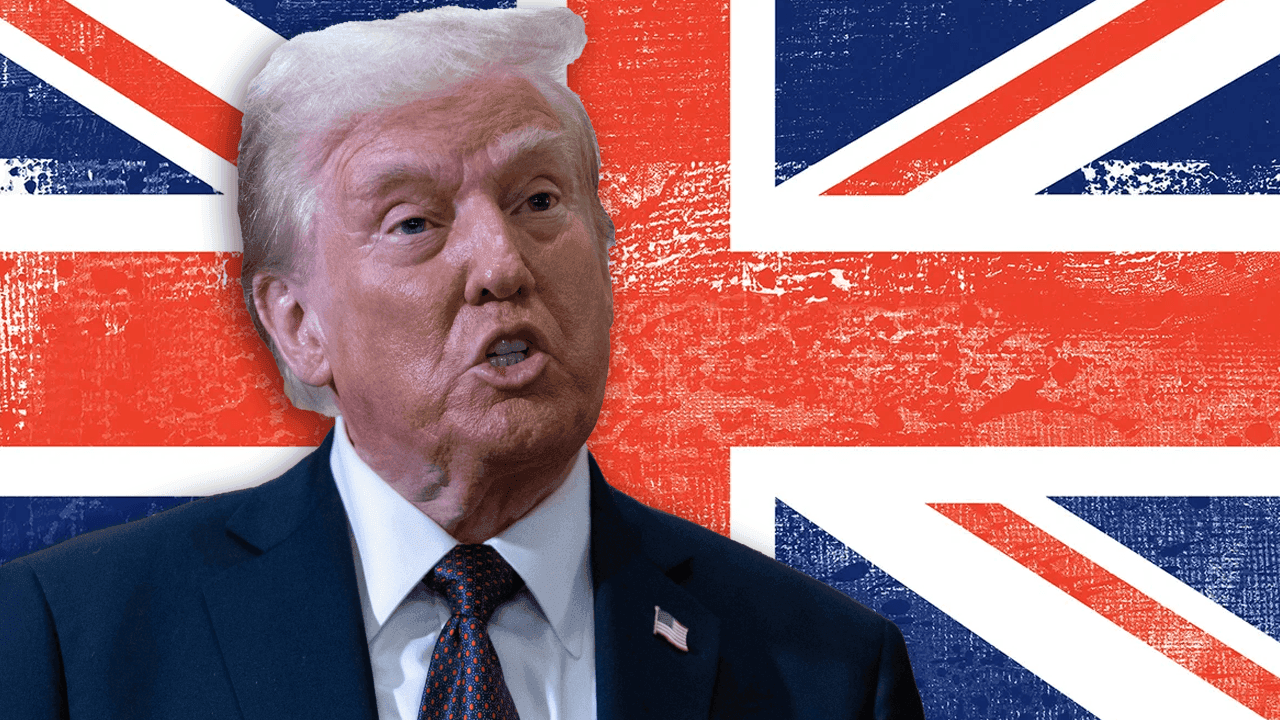
Tariff Threat Looms Over UK as Trump Pushes Aggressive Trade Agenda
President Trump has prioritized tariffs to address trade imbalances, imposing a 25% levy on Mexican and Canadian goods—temporarily paused after negotiations—and a 10% tariff on Chinese imports in early February 2025. He has also threatened the European Union (EU) with tariffs, citing a $162 billion trade deficit and accusing the bloc of restricting U.S. goods. Trump’s campaign pledges included sweeping tariffs of 10% to 20% on all imports, with rates up to 60% for China.
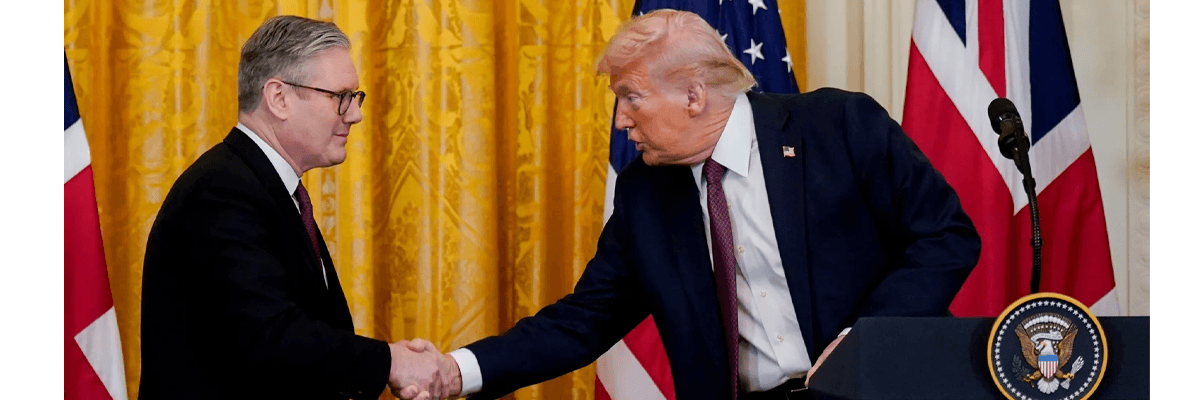
The UK’s status remains uncertain. Trump has struck a conciliatory tone toward Prime Minister Keir Starmer, saying Britain has a “very good chance” on trade and he expressed optimism a “real trade deal where the tariffs wouldn’t be necessary.” Their rapport, highlighted by the duo’s recent meeting, contrasts with his criticism of the EU, which he labeled an atrocity. Despite floating tariffs during a late February press conference with Starmer, Trump has delayed formal action.
Trade data discrepancies complicate the issue. UK figures showed a £71.4 billion goods surplus with the U.S. in 2023, while U.S. data claimed a $14.5 billion surplus. By late 2024, UK reports indicated a rare £164 million deficit, which British officials hope could deter tariffs. Trump, however, has inconsistently cited a “huge” deficit while signaling openness to negotiations.
A mid-February 2025 White House proposal to target countries with Value Added Tax (VAT) systems added complexity. The UK’s 20% VAT applies domestically, but Trump’s team argued it disadvantages U.S. exports. Analysts warn reciprocal tariffs could push effective rates above 21%, alarming UK exporters in automotive (£6.4 billion in 2023 exports) and pharmaceuticals (£8.8 billion).
The UK faces significant economic risks. The National Institute of Economic and Social Research projected Trump’s tariffs could cut 2025 GDP growth by 0.1%, with broader trade wars potentially spiking borrowing costs. A 2022 U.S.-UK deal suspending steel tariffs expires March 31, 2025, raising stakes for renewed talks.
UK leaders are leveraging Brexit’s bilateral flexibility to seek exemptions or a new pact, though concessions like accepting U.S. agricultural imports may be required. Starmer advocates a fair and balanced approach. As deadlines near, the UK aims to avert escalation amid high diplomatic and economic stakes.
Bitcoin ( BTC) has fluctuated wildly and dropped below $80,000 on Thursday amid Trump’s tariff threats, reflecting market uncertainty. While his pro- crypto pledges drove a December 2024 and January 2025 peak, fears of dollar strength and trade-driven economic risks pressured prices. Some argue BTC could hedge inflation if tariffs weaken fiat currencies, but bearish sentiment dominated by late February, with BTC prices crashing to $78,197 per coin as investors weighed conflicting risks.