U.S. President Donald Trump accused Beijing of currency manipulation to offset tariff impacts, warning that the practice may backfire on the oil-importing Asian nation.
Trade Tensions: Trump Claims China’s Currency Manipulation to Mitigate Tariff Impact May Backfire
WRITTEN BY

SHARE
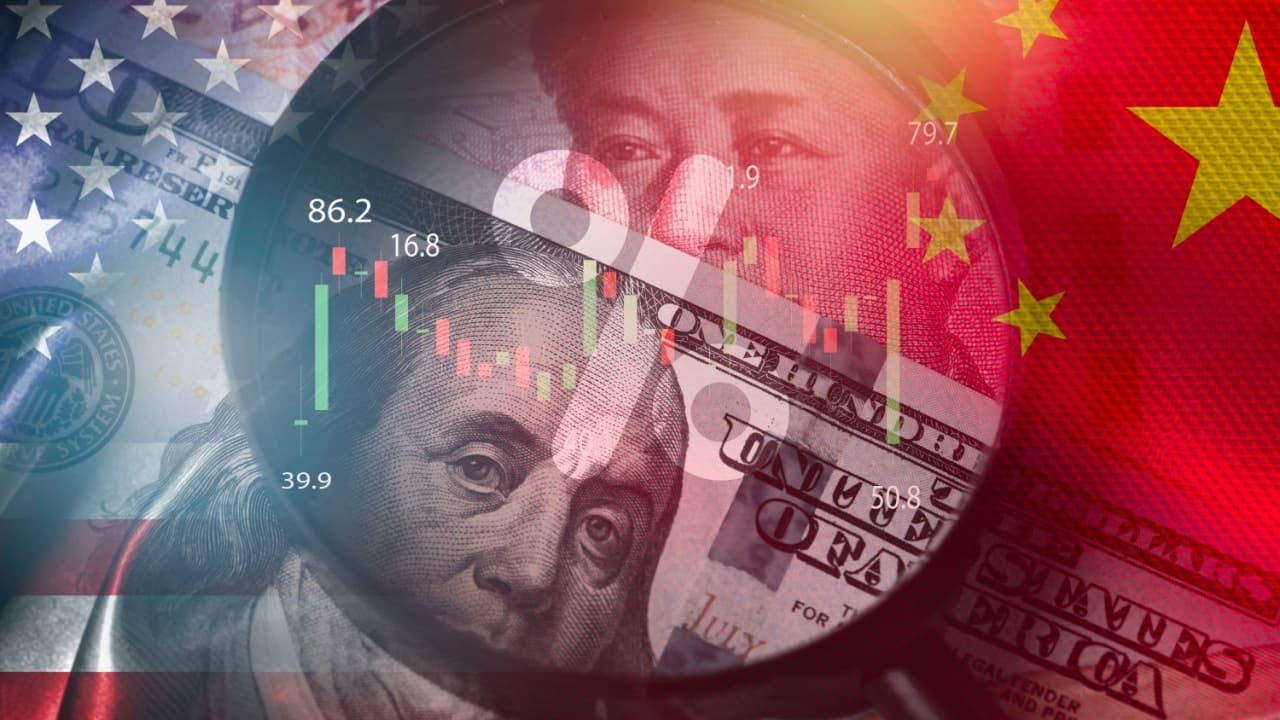
Offshore Yuan Falls to 7.42 per Dollar
With just hours before the United States’ latest retaliatory tariffs against China were set to take effect, U.S. President Donald Trump accused Beijing of manipulating its currency to soften the impact of the punitive tariffs. Speaking at a National Republican Congressional Committee event on April 8, Trump assailed this policy, which he said makes it difficult for the U.S., without elaborating how.
The U.S. President made the comments as China’s yuan neared its lowest exchange rate versus the dollar in 17 years. According to a Nikkei Asia report, the onshore yuan, which trades within a 2% range of a reference rate fixed by China’s central bank, fell to 7.35 per dollar in morning trading on April 9. The freely trading offshore yuan, on the other hand, had dropped to a low of 7.42 per dollar a day earlier.
Although the People’s Bank of China (PBOC) reportedly sets the currency’s exchange rate, also known as the reference rate, in line with economic fundamentals, critics believe it began setting a weaker rate after Trump imposed a 34% “reciprocal” tariff on Liberation Day.
In response, China imposed its own 34% reciprocal tariff on American imports, which Trump countered by imposing an additional 50% tariff. Trump’s latest tariff means Chinese imports into the U.S. will be subject to an effective tariff of 104%.
China Currency Manipulation Allegations
Meanwhile, Trump criticized China’s alleged currency manipulation tactics. He suggested the approach could backfire for China, which imports a significant amount of oil.
“But in the end, it’s not good because they have to buy oil. We don’t need oil and gas, we have more than any other country, [but] they have to buy it and that’s where it hurts them,” Trump said.
The allegations that China is manipulating its currency have long strained its relations with the United States. Successive U.S. governments resorted to various measures, including threats to declare China a currency manipulator, as part of efforts to pressure Beijing to abandon the practice.
In 2019, the U.S. government, then under President Trump, labeled China a currency manipulator after the Chinese yuan fell in value against the U.S. dollar. It was the first time the U.S. had made such a designation since 1994. It is not clear what measures the Trump administration will take to punish China for engaging in the practice this time around.