


Strategy’s bitcoin positioning drew heightened attention as Michael Saylor’s latest signal reinforced expectations of continued accumulation. The update underscored how investors interpret these cues as indicators of potential balance sheet expansion and sustained institutional demand.
'Think Even Bigger': Michael Saylor’s New Signal Hints at Another Massive Strategy Bitcoin Buy
WRITTEN BY

SHARE

Key Takeaways:
- Strategy doubled down on bitcoin, signaling aggressive accumulation intent.
- Michael Saylor’s cue fueled expectations of a major treasury expansion move.
- Outlook points to Strategy pressing larger, conviction-driven bitcoin buys.
Saylor Signal Puts Strategy’s Bitcoin Purchase Cycle Back in Focus
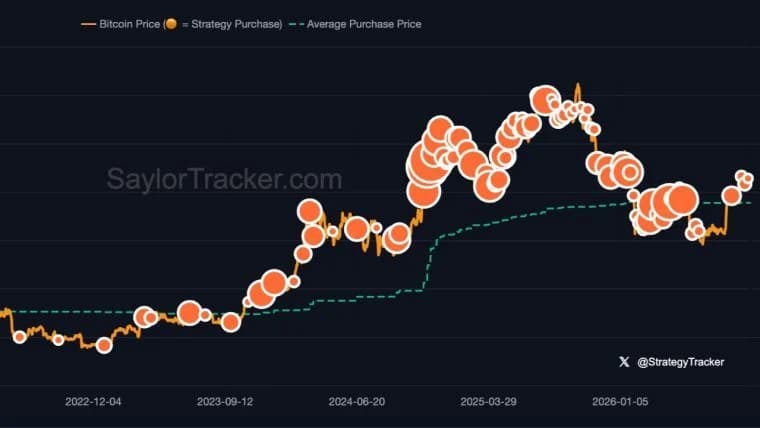
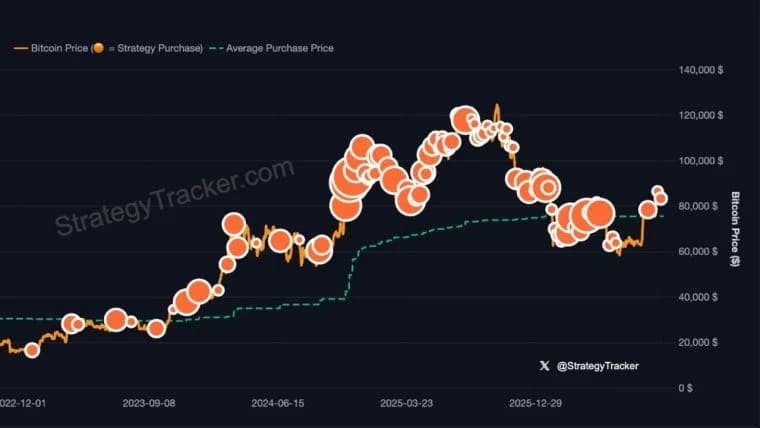
Corporate bitcoin treasury strategy remained in focus April 19 after Strategy Inc. (Nasdaq: MSTR) Executive Chairman Michael Saylor shared his signature orange-dot bitcoin chart on social media platform X, a signal markets frequently interpret as pointing to a large-scale purchase ahead. The visual quickly captured market attention, as participants view it as an informal indicator of potential balance-sheet expansion. It also reinforced the company’s position at the center of institutional bitcoin allocation trends.
Saylor wrote: “Think Even Bigger.” The image attached to that message showed bitcoin reserve value at about $59 billion, holdings of 780,897 BTC, and an average cost of $75,789 per bitcoin. Those figures aligned with a Strategy dashboard that listed a bitcoin price of $75,789, offering a clearer snapshot of how the company frames treasury scale and market exposure.
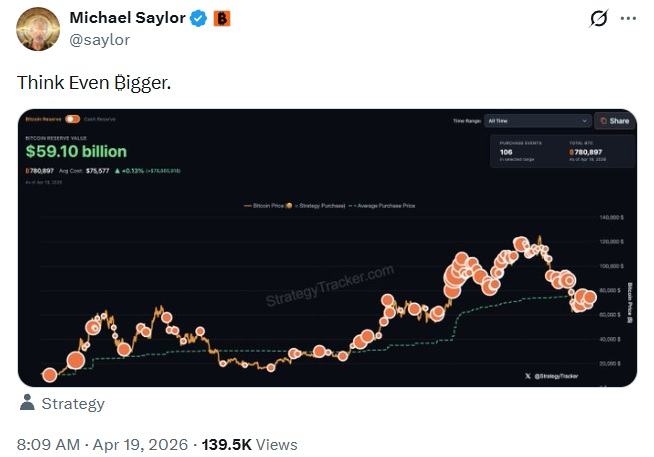
The same dashboard placed MSTR at $166.52, up 11.80%, while market capitalization reached $57.752 billion and enterprise value stood at $75.059 billion. Taken together, the chart and dashboard indicate that Saylor was again using a familiar visual cue, rather than a formal company statement, to shape investor expectations around another possible purchase cycle.
Strategy Balance Sheet Points to Capacity for Another Bitcoin Buy
The balance sheet details added weight to that interpretation. Strategy’s dashboard showed $2.25 billion in USD reserves against $8.254 billion in debt, with net leverage at 10%. The display also listed bitcoin per share at 205,812 sats, mNAV at 1.27, and annual dividends of $1.237 billion. Those figures matter because they show how the company presents itself as both an operating business and a leveraged bitcoin treasury vehicle. The reserve value also sat above the equity market capitalization shown on the panel, underscoring how much of the stock’s story now depends on bitcoin scale, capital access, and shareholder exposure metrics.
The broader signal centered less on an immediate transaction and more on discipline around capital deployment. Market participants often interpret Saylor’s posts as timing indicators, particularly given Strategy’s history of executing purchases during periods of dislocation. Last week, the company disclosed the acquisition of 13,927 BTC for roughly $1 billion following a similar signal, bringing total holdings to 780,897 BTC and reinforcing the link between such messaging and subsequent execution. With leverage at 10% and liquidity still present, the company retains capacity to scale its position, suggesting any future allocation would likely be deliberate, size-driven, and aligned with prevailing market conditions rather than reactive.

Strategy’s latest signal is fueling expectations of renewed bitcoin accumulation as volatility and geopolitical tension heighten focus on institutional demand…
Read Now: Michael Saylor’s ‘Think Bigger’ Signals Mega Bitcoin Buy as Global Tension Shakes Markets