


Bitcoin briefly surged past $90,000 on Jan. 28 before retreating to trade between $89,300 and $89,600, with market cap peaking at $1.78 trillion.
Supply Squeeze: Bitcoin Reclaims $90,000 as Binance Inflows Hit 4-Year Low

This article was published more than a month ago. Some information may no longer be current.
WRITTEN BY

SHARE

Contradicting ETF Trends
Bitcoin briefly surged past the $90,000 milestone Jan. 28, fueled by reports that bitcoin transfers to Binance—the world’s largest cryptocurrency exchange—have plummeted to a monthly average of 5,700 BTC. This marks a four-year low in exchange inflows. Following an intraday low of $87,000, the rally represented a 2% jump, though the asset faced immediate resistance.
After breaching $90,000, bitcoin retreated and oscillated between $89,300 and $89,600, with daily trading volume remaining relatively subdued below $50 billion. At its intraday peak, bitcoin’s market capitalization swelled by approximately $40 billion, reaching a total valuation of $1.78 trillion by 1 p.m. EST.
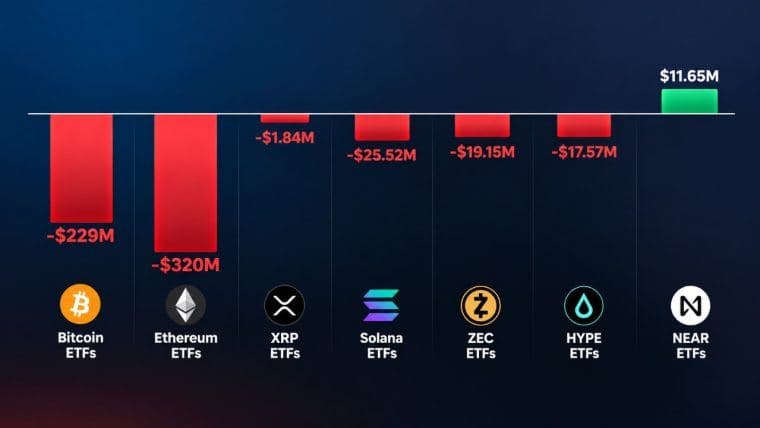
This price recovery occurred despite cooling interest in spot bitcoin exchange-traded funds. Following a meager $6.86 million in net inflows Jan. 26, the sector flipped red. Data shows a net outflow of $147.37 million, with Blackrock’s IBIT leading the exodus with $102.81 million in redemptions. In recent weeks, these institutional outflows have typically served as a leading indicator for downward price trends, making today’s resilience particularly notable.
Read more: Bitcoin Stalls at $89K as Consolidation Continues: Will the ‘February Factor’ Break the Deadlock?
A Structural Shift Toward Long-Term Holding
The market’s positive reaction is largely attributed to the collapse in Binance transfers, which have dropped by more than half from their historical average of 12,000 BTC. In on-chain analytics, a decline in exchange deposits typically suggests that investors are moving assets into cold storage, signaling high conviction and a preference for long-term holding over immediate selling.
What makes this supply squeeze significant is its timing. Bitcoin is currently recovering from a 30% drawdown since its Oct. 6 all-time high of just above $126,000. Analysts suggest this is not just a momentary blip; according to social media commentator Darkfost, the trend is becoming a permanent fixture of the market.
“For several months now, inflows have remained consistently below the historical average of 12,000 BTC,” Darkfost noted on X, the platform formerly known as Twitter. “This suggests the current dynamic is becoming structural rather than temporary.”
As of Jan. 28, bitcoin’s technical landscape presents a tug-of-war between short-term bearish exhaustion and long-term structural strength. While the “Binance supply crunch” provides a fundamental floor, the charts suggest that $90,000 remains a formidable psychological and technical barrier.
Technical Indicators: A Tug-of-War
Bitcoin is currently trading just below its 50-day exponential moving average and 200-day exponential moving average on several timeframes. On the daily chart, price action is “sandwiched.” Staying above the $84,000 to $87,000 support zone is keeping the long-term bullish structure intact, but failing to close decisively above the $91,400 moving average keeps the bears in control of the immediate trend.
Traders are watching for a reclaim of the $95,000 level, which would signal a shift back to a “strong buy” regime. The relative strength index is currently hovering around 64.5, which is in neutral-to-bullish territory.
Overall, the indicators suggest that bitcoin is in a consolidation phase. While the low exchange inflows are preventing a crash, the lack of aggressive ETF buying is preventing a “moonshot.” The market is currently waiting for a catalyst—likely the upcoming Federal Reserve policy decision—to decide which way the wedge breaks.
FAQ ❓
- Why did bitcoin surge past $90,000? A sharp drop in Binance inflows to a four‑year low fueled the rally.
- What happened after the $90,000 breakout? Bitcoin retreated to trade between $89,300 and $89,600 with subdued volume.
- How are ETFs impacting bitcoin’s trend? Spot Bitcoin ETFs saw $147M in net outflows, led by Blackrock’s IBIT redemptions.
- What levels are traders watching now? Support holds at $84K–$87K, while reclaiming $95K could trigger a strong buy signal.