Sonic has introduced USSD, a network-native dollar stablecoin designed to serve as the primary liquidity layer across its ecosystem. Built using Frax infrastructure and backed by institutional-grade assets, the token aims to simplify cross-chain liquidity and strengthen DeFi activity on the network.
Sonic Launches USSD Stablecoin With Institutional-Grade Backing
WRITTEN BY

SHARE

USSD Stablecoin Aims to Anchor Sonic’s On-Chain Economy
Sonic has unveiled USSD (US Sonic Dollar), a network-native USD stablecoin designed to serve as the primary liquidity layer for its growing DeFi ecosystem. Built using Frax’s GENIUS-compatible frxUSD infrastructure, the new stablecoin blends permissionless on-chain functionality with institutional-grade reserve backing.
The project’s core objective is to make stable liquidity within the Sonic ecosystem more predictable, composable, and portable across blockchains. USSD is already live on Sonic and supports cross-chain minting from more than 10 different networks, enabling users to bring dollar liquidity directly into the ecosystem.
The token is designed to function as a dependable on-chain dollar that can power trading pairs, lending markets, derivatives platforms, and payment rails throughout the network.
To maintain price stability, USSD is backed 1:1 by high-quality short-duration USD assets held with regulated custodians. The reserves include tokenized U.S. Treasury products issued by major institutions such as Blackrock (BUIDL), Superstate (USTB), and Wisdomtree, with additional providers expected to join the reserve pool over time.
The design also emphasizes accessibility. Users can mint USSD through non-custodial smart contracts by depositing supported assets, including USDC, USDT, PYUSD, and USDB, without paying minting fees. Treasury-based assets such as BUIDL, USTB, and WTGXX are also accepted as collateral.
A key feature of the stablecoin is its cross-chain minting and redemption model, which allows liquidity to move efficiently between ecosystems. Users can deposit assets on one chain and receive USSD directly on Sonic, helping reduce the fragmentation that often limits DeFi liquidity.
Reaction to the launch of USSD has been mixed. Luis Sonic, a contributor at Sonic Labs, tweeted, “USSD is the first official step in Sonic‘s vertical integration. The best part? Yield flows back into the ecosystem to support buybacks and ecosystem incentives.”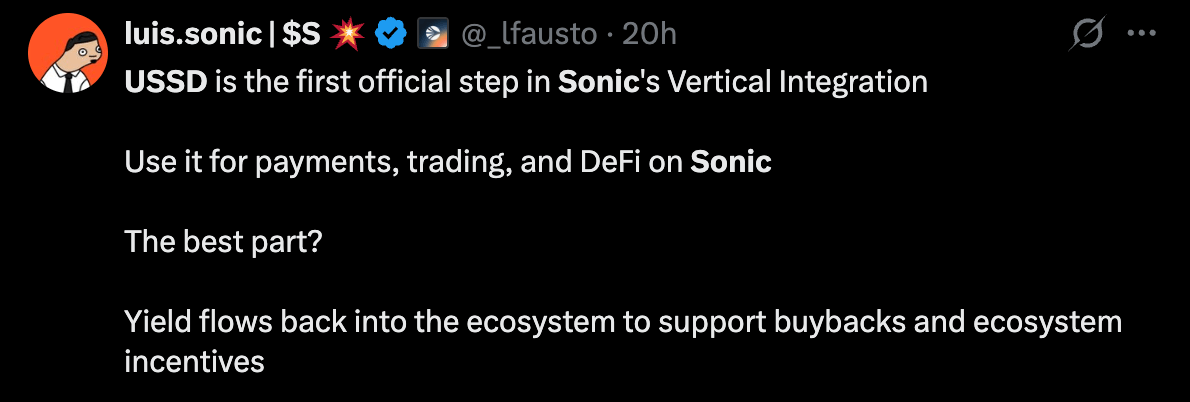
Silver Swap, a decentralized exchange ( DEX) on Sonic, commented, “Will this help the network? Just seems like another pointless thing coming to Sonic. Team has shown zero competence when it comes to running the chain.”

As competition among blockchains intensifies, control over a native stablecoin may increasingly determine where liquidity, and ultimately, users choose to settle.

Sonic Integrates Bubblemaps V2 to Enhance Onchain Intelligence
Responding to the surging demand for transparency in decentralized finance (DeFi), Sonic Labs is boosting its onchain intelligence by integrating…
Read Now

Sonic Integrates Bubblemaps V2 to Enhance Onchain Intelligence
Responding to the surging demand for transparency in decentralized finance (DeFi), Sonic Labs is boosting its onchain intelligence by integrating…
Read NowSonic Integrates Bubblemaps V2 to Enhance Onchain Intelligence
Read NowResponding to the surging demand for transparency in decentralized finance (DeFi), Sonic Labs is boosting its onchain intelligence by integrating…
FAQ 💰
- What is USSD and where can it be used?
USSD is Sonic’s native USD-pegged stablecoin designed for payments, trading, lending, and DeFi applications across the Sonic ecosystem and connected chains. - What backs the USSD stablecoin?
USSD reserves consist of short-duration U.S. Treasury products and USD-based assets from institutions like BlackRock, Superstate, and WisdomTree. - Can users mint USSD outside the Sonic network?
Yes. The stablecoin supports cross-chain minting from more than 10 networks, including ecosystems connected to Ethereum-compatible chains. - Why is this important for global crypto markets?
A network-native stablecoin can deepen liquidity and strengthen DeFi activity, potentially attracting developers and capital from regions such as North America, Europe, and Asia’s major crypto hubs.