Solana co-founder Anatoly Yakovenko warned at the All-In Summit 2025 that rapid advances in quantum computing could force Bitcoin to migrate to new cryptography by 2030 or risk security failures.
Solana Co-Founder Warns: Bitcoin Faces Quantum Risk if Developers Fail to Act by 2030
WRITTEN BY

SHARE
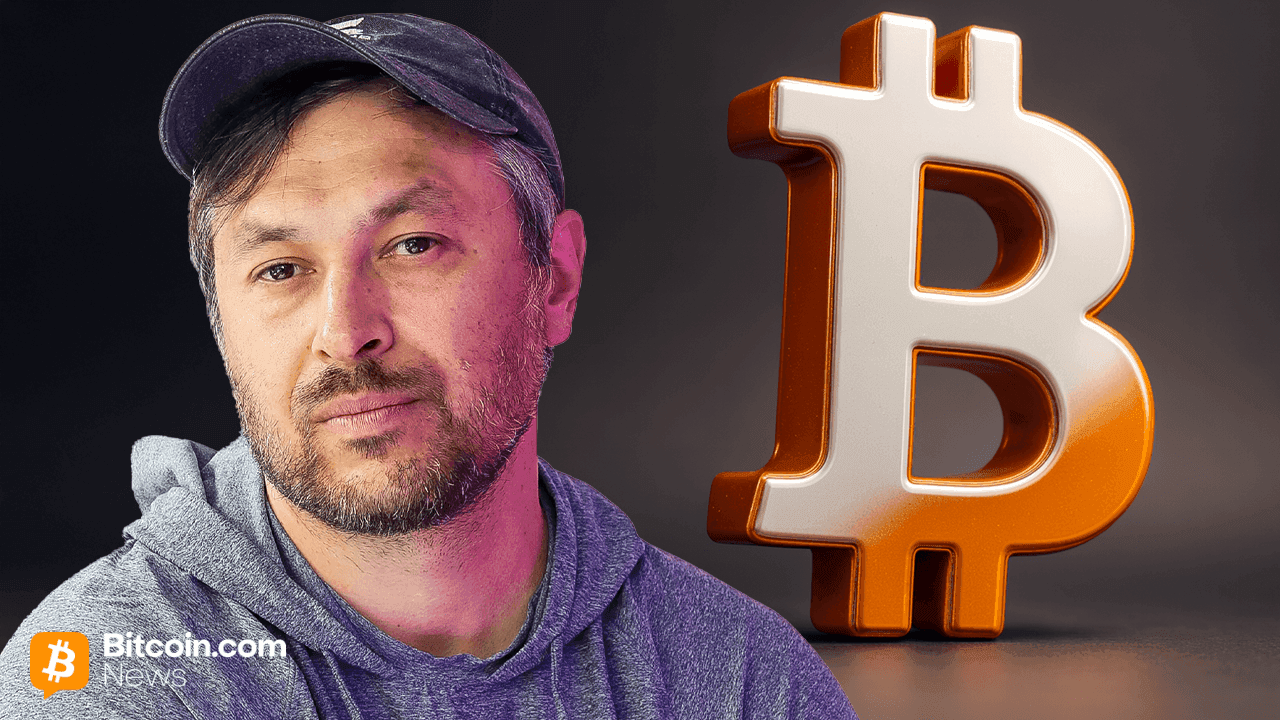
Yakovenko: Watch Apple and Google for the Signal, It’s Time to Harden Bitcoin
Yakovenko, an engineer by training, said at the All-In Summit, there’s “a 50/50 chance that within five years there’s a quantum breakthrough—meaning you can run Shor’s algorithm,” which could compromise existing signature schemes that secure the Bitcoin network’s transactions. “We should migrate Bitcoin to a quantum-resistant signature scheme,” he said, adding that a practical signal would be Google and Apple deploying quantum-safe stacks, after which “it’s time to migrate.”
His remarks came during a wide-ranging interview about crypto’s next era, where he framed quantum computing as both an existential risk for today’s primitives and a potential economic catalyst comparable to artificial intelligence. For professionals in the field, he said, the risk merits planning; for the public, successful quantum systems could be “as big a wealth creator as AI.”
Yakovenko emphasized that Bitcoin’s resilience stems from simplicity—proof of work as “a masterpiece in elegance and simplicity.” But that strength, he argued, does not preclude the need to swap out vulnerable signatures if quantum machines capable of running Shor’s algorithm emerge this decade. The core network, he said, would likely endure a transition if stakeholders coordinate.
He described a plausible migration trigger: major platforms shipping quantum-resistant cryptography to billions of devices. If Apple and Google move, wallet and node software could follow with post-quantum schemes vetted by standards bodies, reducing the upgrade burden for users and developers.
Beyond quantum risk, Yakovenko discussed stablecoins and tokenized treasuries, predicting the internet could become one of the largest holders of U.S. debt as dollar-pegged tokens proliferate on public blockchains. He framed Solana as an execution layer built for low-latency markets, with regulated incumbents potentially integrating by running nodes as interfaces to on-chain settlement.
The interview also touched on decentralized finance (DeFi), real-world assets (RWAs), and creator economies, but Yakovenko returned to the quantum timeline: if credible breakthroughs arrive before 2030, he said, a Bitcoin upgrade path should already be in motion to protect bitcoin (BTC) holders and preserve the protocol’s settlement guarantees.