


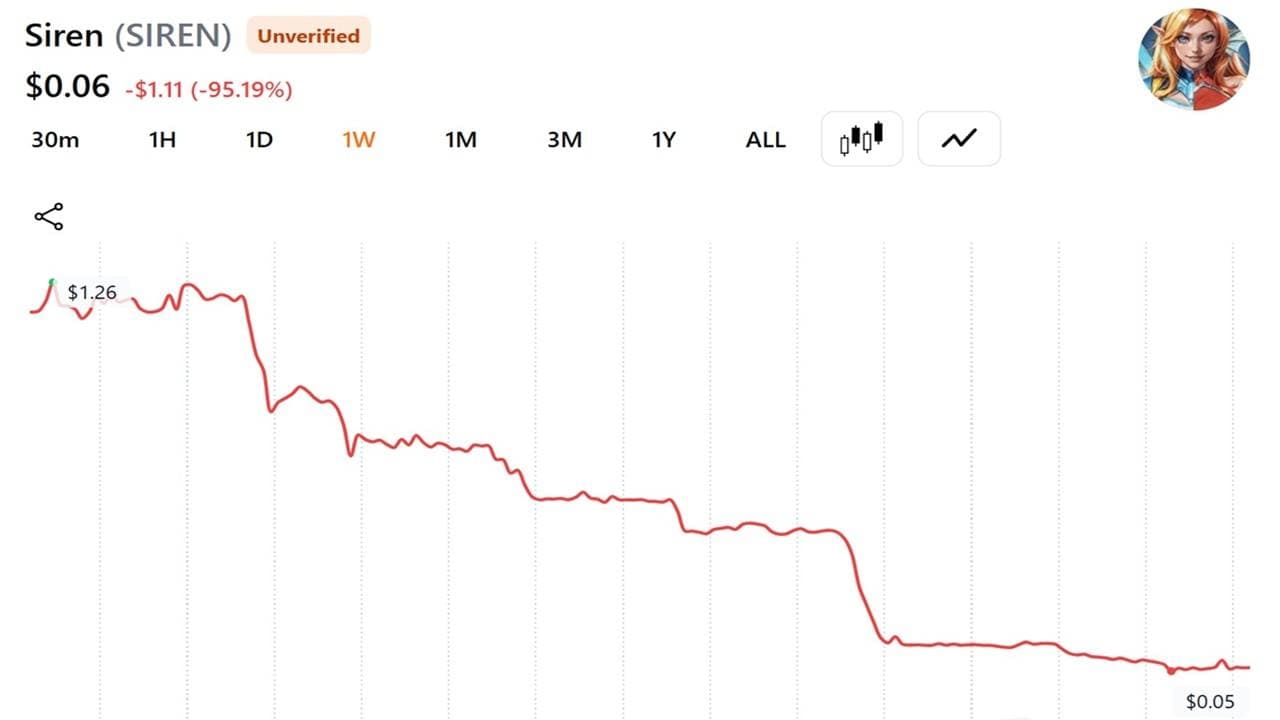
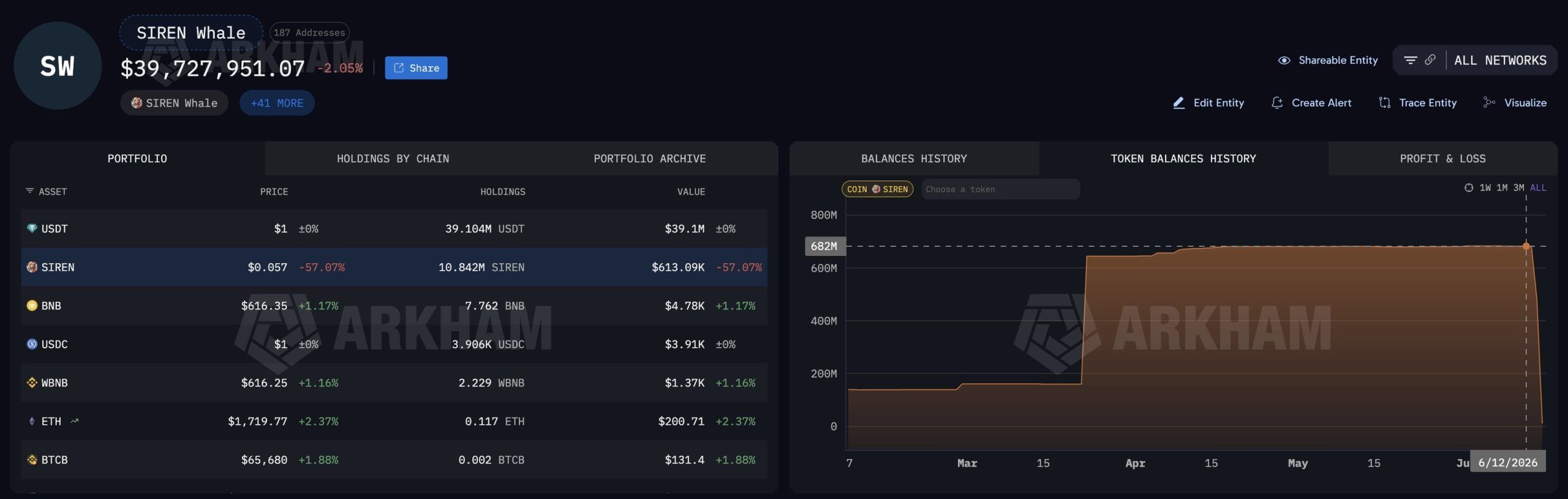
The price of SIREN cratered more than 95% after a single whale offloaded about 670 million tokens (roughly 92% of the currency’s total supply) over two days, cashing out an estimated $64.8 million in stablecoins.
SIREN Token Collapses as Whale Dumps 92% of Total Supply for $64.8 Million
WRITTEN BY

SHARE
Key Takeaways
One Wallet, a 95% Collapse
A lone whale sold roughly 670 million SIREN, or about 92% of the token’s total supply, in just two days, sending its price down more than 95%. In exchange, the seller received 64.8 million USDT, a dollar-pegged stablecoin issued by Tether.
Of that haul, 25.7 million USDT was deposited to exchanges, typically a precursor to further selling, while 39.1 million USDT remained onchain. The concentration of supply in a single wallet left the token acutely vulnerable to exactly this kind of cascade.
The collapse capped a spectacular round trip for SIREN, an artificial-intelligence-themed memecoin, which had surged thousands of percent before its market capitalization unwound from about $1.7 billion to roughly $102 million (a decline of around 96% from its year-to-date high).
Anatomy of a Supply Shock
Onchain investigators flagged extreme concentration ahead of the crash, with some estimates putting as much as 94% of SIREN’s supply in a single entity’s control. When that holder began selling, the thin order book offered little support.
The most acute leg of the drawdown saw SIREN fall about 75% in 24 hours on June 13, dropping to around $0.126. The selling pressure routed large transfers to exchanges such as Bitget and triggered more than $2.4 million in long liquidations as leveraged bulls were wiped out. Trading volume spiked to roughly $191 million amid the panic.
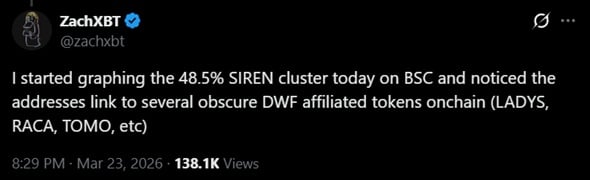
For a token whose supply was so tightly held, the episode followed a familiar pump-and-dump template, in which a dominant holder distributes into retail demand before the price implodes.
A Tale Seen by Memecoin Traders Before
The SIREN unwind has once again brought to light the risks associated with low-float, high-concentration tokens, i.e. assets where one address controls the overwhelming majority of its supply. Concentrated ownership has repeatedly amplified volatility across the memecoin sector, turning thinly traded tokens into vehicles for sudden, total drawdowns.
With the bulk of SIREN’s supply now liquidated and tens of millions in USDT already parked on exchanges, the token’s path forward looks bleak. The next thing traders will watch is whether the remaining 39.1 million USDT will signal more selling to come and whether any genuine demand remains for a token that just shed close to its entire value.

Blockchain investigator ZachXBT has renewed his assault on Bitget, accusing the exchange of knowingly enabling market makers to run supply…
Read Now: ZachXBT Names RAVE, RIVER, SIREN, and LAB as Victims of Bitget-Enabled Market Maker Fraud