


The SEC proposed specialized exemptions for certain crypto investment contracts, including a pathway for offerings reaching $75 million annually. The plan also introduces a conditional safe harbor and federal disclosure requirements.
SEC Proposes New Crypto Rules With a $75 Million Offering Path
WRITTEN BY

SHARE
Key Takeaways
- Crypto startups could raise up to $5 million during a period of up to four years.
- Eligible issuers could raise up to $75 million in 12 months.
- A safe harbor could end investment-contract treatment.
SEC Sets Two Exempt Offering Routes
The Securities and Exchange Commission (SEC) announced Aug. 18 that Regulation Crypto Assets would create specialized federal offering routes for certain crypto investment contracts. The proposal seeks to reduce fundraising barriers, strengthen consistent investor safeguards, and discourage issuers from moving transactions offshore while Congress develops a lasting crypto market structure.
Under the SEC’s detailed exemption structure, a one-time startup exemption would permit offerings totaling $5 million during a period lasting up to four years. A separate fundraising exemption, modeled partly on Regulation A, would establish a $20 million Tier 1 limit and a $75 million Tier 2 limit during each 12-month period.
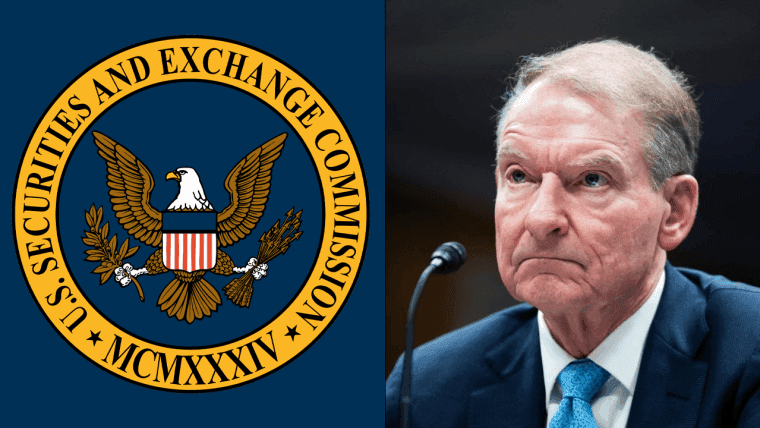
SEC Chairman Paul S. Atkins described the safe harbor as a continuation of the agency’s March interpretation and an element of its domestic capital strategy:
“In line with the Commission’s earlier interpretative guidance, this proposal would also allow for a safe harbor once an issuer has completed or permanently ceased all essential managerial efforts that it represented or promised it would take under an investment contract.”
Atkins had outlined the developing fundraising and startup exemptions months before publication, identifying the same $5 million and $75 million pathways. His Aug. 18 statement framed the formal proposal as a route for entrepreneurs to raise capital under federal securities laws while keeping crypto innovation and market activity in the United States.
Disclosures and Safe Harbor Define Eligibility
Both exemptions would require issuers to provide investors with principles-based narrative disclosures, while the fundraising route would add public offering materials, financial-condition information, and ongoing reports. Tier 2 issuers would also need audited financial statements, and every issuer relying on either exemption would remain subject to federal antifraud and antimanipulation provisions.
The proposal builds upon the SEC’s March crypto interpretation, which applies the Howey test and distinguishes a crypto asset from an investment contract involving that asset. The interpretation classifies digital commodities, digital collectibles, digital tools, stablecoins, and digital securities while explaining how issuer promises and essential managerial efforts can determine securities-law treatment.
That earlier framework established conditions connecting crypto assets to investment contracts, including an investment of money in a common enterprise and expected profits tied to issuer-led work. The proposed safe harbor would apply after an issuer completes or permanently ends every promised essential managerial effort and is not making and does not intend to make any new representations or promises involving such work.
An issuer seeking the safe harbor would need to file a public certification and provide supporting analysis. The distinction is significant since tokens can carry different legal and economic rights, ranging from access or governance functions to regulated securities claims. Satisfying the safe harbor would mean the covered investment contract had ceased and the underlying crypto asset was no longer subject to that contract.
State Preemption and Investor Protections
The proposal would define “qualified purchaser” under the Securities Act of 1933 and preempt state registration and qualification requirements for exempt Regulation Crypto Assets offerings. Federal securities registration would still apply unless an offering qualified for an exemption, reflecting the broader distinction between registered offerings and exempt crypto fundraising.
Neither offering route would be exclusive, allowing eligible issuers to use other Securities Act exemptions when available. The startup route would require public filings at the beginning and end of a period lasting up to four years, while its temporary relief would cover the interval in which managers work toward completing their promised essential efforts.
State preemption would also cover certain secondary transactions involving covered investment contracts initially sold under the proposal or another federal exemption. That treatment would continue only while the issuer met applicable filing, information, or periodic reporting duties. Senate Democrats previously questioned comparable crypto exemptions, arguing that reduced oversight could weaken protections for retail investors in secondary markets.
The rulemaking advances the SEC’s wider 2026 capital-markets agenda, which includes clearer crypto rules, tokenized securities, and expanded capital-raising options. Regulation Crypto Assets remains a proposal and would not alter existing requirements until adopted in final form. Public comments will be accepted for 60 days after the proposing release appears in the Federal Register.
As far as digital asset regulation is concerned, the U.S. Securities and Exchange Commission (SEC) is not waiting around for…
Read Now: SEC, CFTC Forge Their Own Crypto Paths as CLARITY Act Stalls Out