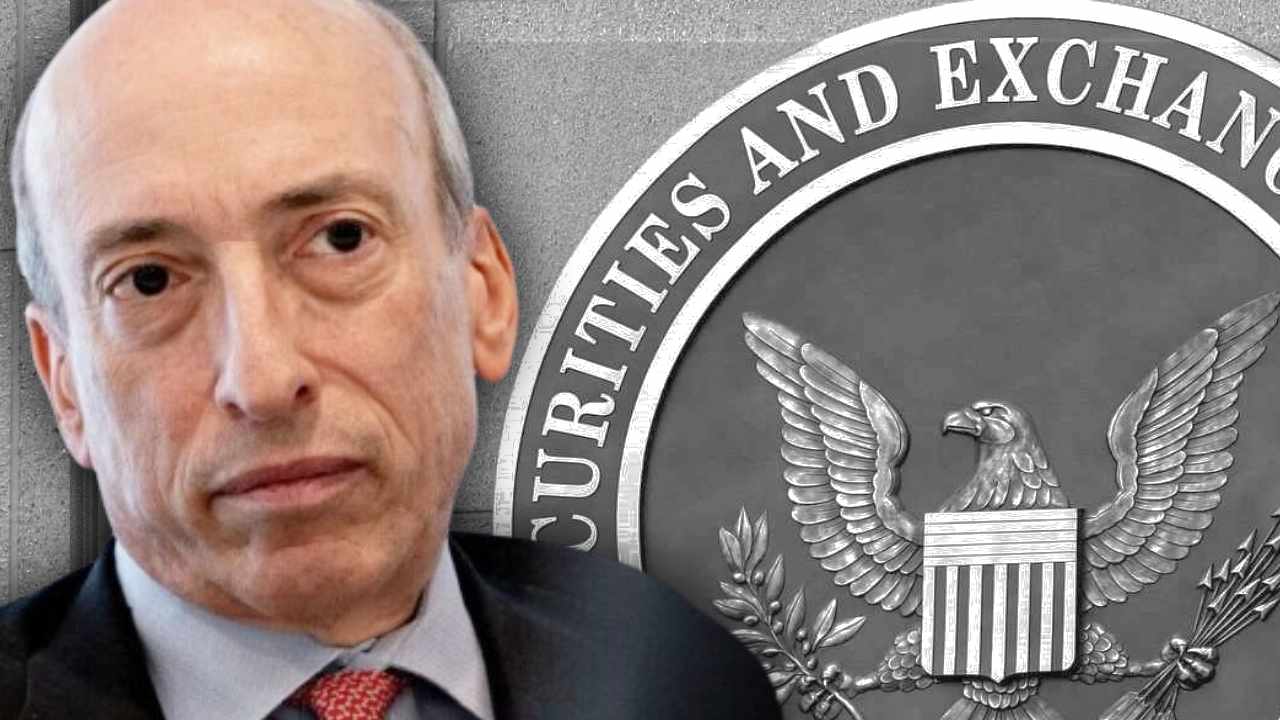
U.S. Securities and Exchange Commission (SEC) Chairman Gary Gensler has strongly opposed the crypto bill Financial Innovation and Technology for the 21st Century (FIT21) Act ahead of the House vote. He stressed that “many players in the crypto industry don’t play by the rules,” leading to “widespread fraud, bankruptcies, failures, and misconduct.”
SEC Chair Gensler Opposes Crypto Bill FIT21 Citing Regulatory Loopholes and Increased Risks to Public

This article was published more than a year ago. Some information may no longer be current.
WRITTEN BY

SHARE
Gensler Strongly Opposes FIT21 Act
U.S. Securities and Exchange Commission (SEC) Chairman Gary Gensler released a statement on Wednesday regarding the Financial Innovation and Technology for the 21st Century (FIT21) Act, which is set for a House vote today. Representative Patrick McHenry, chair of the House Financial Services Committee, described the legislation as a comprehensive overhaul of the market structure for cryptocurrencies.
Gensler argued that the rules already exist but “Many market participants in the crypto industry, however, have shown their unwillingness to comply with applicable laws and regulations.” He stressed:
Widespread noncompliance has resulted in widespread fraud, bankruptcies, failures, and misconduct.
Addressing the FIT21 Act specifically, Gensler warned that it “would create new regulatory gaps and undermine decades of precedent regarding the oversight of investment contracts, putting investors and capital markets at immeasurable risk.”
Firstly, he cautioned that the bill proposes removing blockchain-recorded investment contracts from the definition of securities, exempting them from many federal laws. Secondly, he voiced concerns that the bill lets crypto issuers self-certify as “decentralized,” classifying them as “digital commodities” outside SEC oversight. He noted that given the SEC’s resource constraints and over 16,000 crypto assets, it’s improbable that the agency can review these within the required 60-day window, potentially allowing many crypto assets to avoid even minimal oversight proposed by the bill.
Thirdly, Gensler claimed that the bill replaces the Supreme Court’s Howey test, which uses economic realities to determine if investments are securities, elaborating:
The bill’s result would be weaker investor protection than currently exists for those assets that meet the Howey test.
Next, Gensler explained that the bill reduces SEC protections for crypto investment contracts that still fall under the SEC’s remit, increasing risks for the American public compared to previous standards. In addition, “the bill specifically excludes crypto asset trading systems from the definition of an exchange,” he continued, adding that these “ crypto trading platforms would be able to legally comingle their functions in a way that fosters conflicts of interest, may allow trading against their customers, and reduces custody protections for their customers.”
Moreover, Gensler explained that the bill introduces a regulatory exemption for any group labeled as “ Decentralized Finance,” without regard to potential conflicts of interest. The bill also proposes a new framework exempting crypto securities from current offering restrictions under Regulation A and D, allowing non-accredited investors to buy crypto assets up to 10% of their net worth or annual income without requiring issuer disclosures, potentially increasing risk for ordinary investors, Gensler said.
The SEC chairman further asserted that the bill’s self-certification process poses a significant risk to investor protection, potentially destabilizing the entire $100 trillion capital markets. “What if perpetrators of pump and dump schemes and penny stock pushers contend that they’re outside of the securities laws by labeling themselves as crypto investment contracts or self-certifying that they are decentralized systems?” he asked. “The SEC would only have 60 days to contest their self-certification.” Gensler opined:
The crypto industry’s record of failures, frauds, and bankruptcies is not because we don’t have rules or because the rules are unclear. It’s because many players in the crypto industry don’t play by the rules.
“We should make the policy choice to protect the investing public over facilitating business models of noncompliant firms,” the SEC chairman concluded.
What do you think about the concerns raised by SEC Chair Gary Gensler regarding the FIT21 bill and the crypto industry? Let us know in the comments section below.