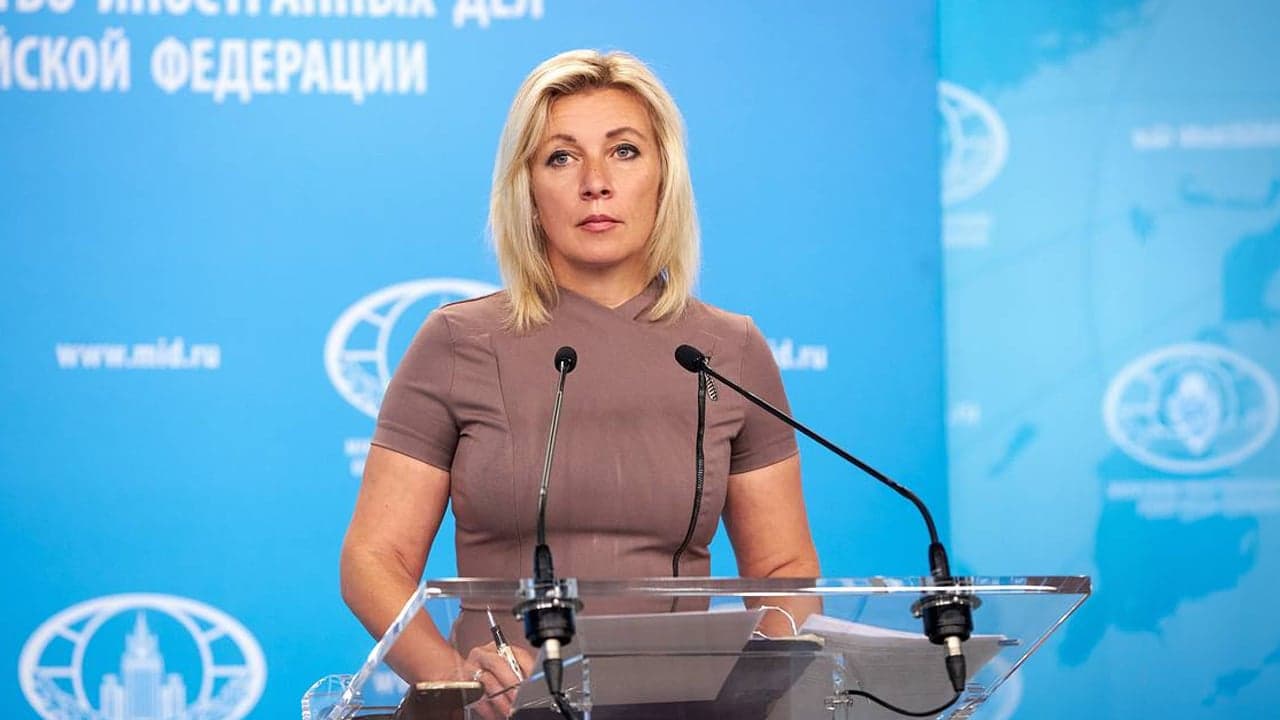
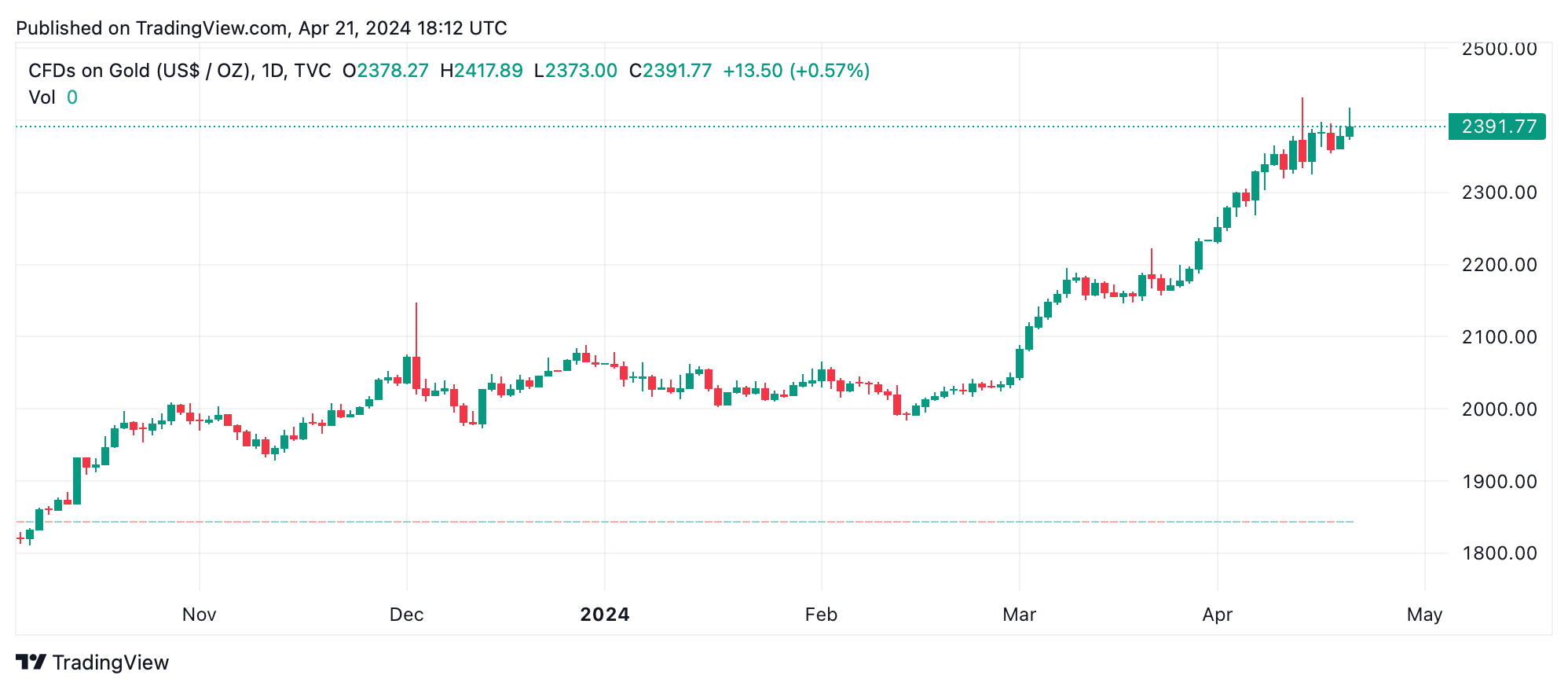
Amid ongoing global tensions, the price of gold remains robust at $2,391 per troy ounce, while bitcoin continues to trade at a 12% deficit from its peak value. Recently, the U.S. House of Representatives approved a series of funding bills for Ukraine, Israel, and Taiwan. Following the bill’s passage, Russian Foreign Ministry spokeswoman Maria Zakharova cautioned the U.S. that such financial support would only exacerbate the existing hostilities.
Russia Warns US of Further Aggravation After Funding Bill Passes Amid Heightened Geopolitical Strife

This article was published more than a year ago. Some information may no longer be current.
WRITTEN BY

SHARE
Stable Gold, Volatile Bitcoin; Russian Foreign Ministry Issues U.S. Funding Warning
The macroeconomic climate has recently favored gold and silver, providing a boost to these metals. Bitcoin (BTC), in contrast, has experienced volatility following an Iranian drone attack on Israel and further price declines after Israeli countermeasures. Meanwhile, gold briefly peaked at over $2,400 per ounce before stabilizing at approximately $2,391.
Currently, geopolitical tensions are intense, fueled by several factors. The intensifying conflict between Russia and NATO over Ukraine has disrupted global commerce, supply networks, and financial markets. Compounding these tensions are the escalating strategic rivalries between the U.S. and China, affecting trade, technology, and policy disagreements concerning Taiwan.
Additionally, this week witnessed the U.S. House of Representatives endorsing bills to finance Ukraine, Israel, and Taiwan with $95 billion. These bills also sanction the seizure of Russian assets in the U.S., marking the first such measure since the 1979 Iranian hostage crisis. Following the legislation’s approval, Maria Zakharova of the Russian Foreign Ministry voiced concerns that this funding would intensify global divisions.
“Military aid to the Kiev regime is direct sponsorship of terrorist activities, funds sent to Taiwan is interference in the internal affairs of China, while aid sent to Israel is a straight way to unprecedented escalation of a conflict in the region,” Zakharova stated on Telegram. “The U.S. is ready to pump Ukraine with weapons so that Kiev could fight to the last Ukrainian,” she added. The foreign aid bill will next be presented to the U.S. Senate, where it is anticipated to be approved next week, before being forwarded to President Joe Biden for his signature.
In light of recent geopolitical developments and congressional actions in the U.S., gold has maintained its allure as a steadfast asset amidst global uncertainty. Its current price elevation still signals a clear trend toward safety in times of conflict. Meanwhile, the future impact of these events on bitcoin remains shrouded in ambiguity. Without clear indicators, it is uncertain how BTC will navigate the turbulent waters stirred by heightened geopolitical tensions, marking a period of pronounced uncertainty for digital assets.
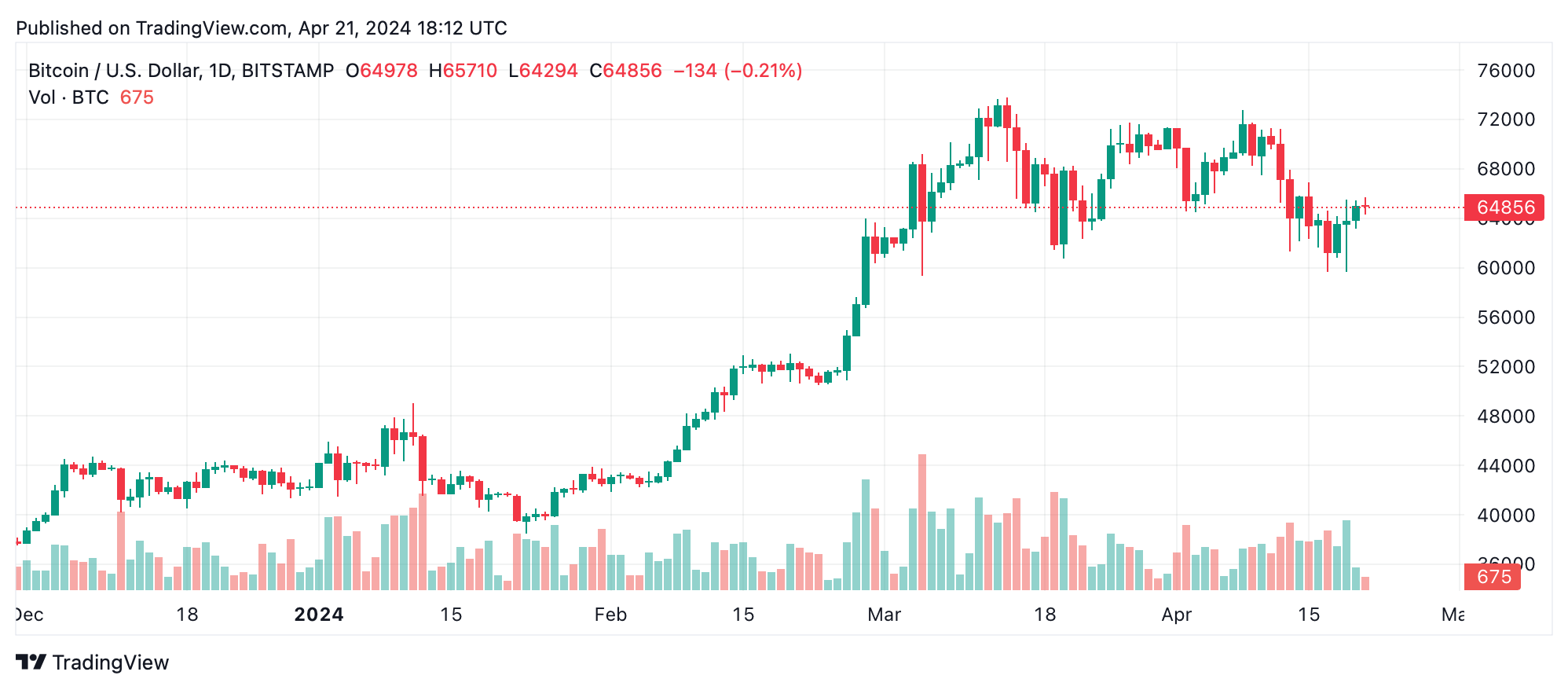
Meanwhile, advocates for bitcoin maintain that BTC is a prudent option amidst escalating global tensions. “If you are selling bitcoin because of geopolitical unrest or the threat thereof, you still don’t fully understand bitcoin,” James Lavish wrote on April 18. On the same day, the X account operated by The Kobeissi Letter queried, “Why do you think bitcoin, which is historically a safe haven asset, is being sold every time geopolitical tensions worsen?” “It is not historically a safe haven asset, lmao,” analyst Joe Consorti countered.
What do you think about the geopolitical strife worldwide and the reactions from gold and bitcoin? Share your thoughts and opinions about this subject in the comments section below.