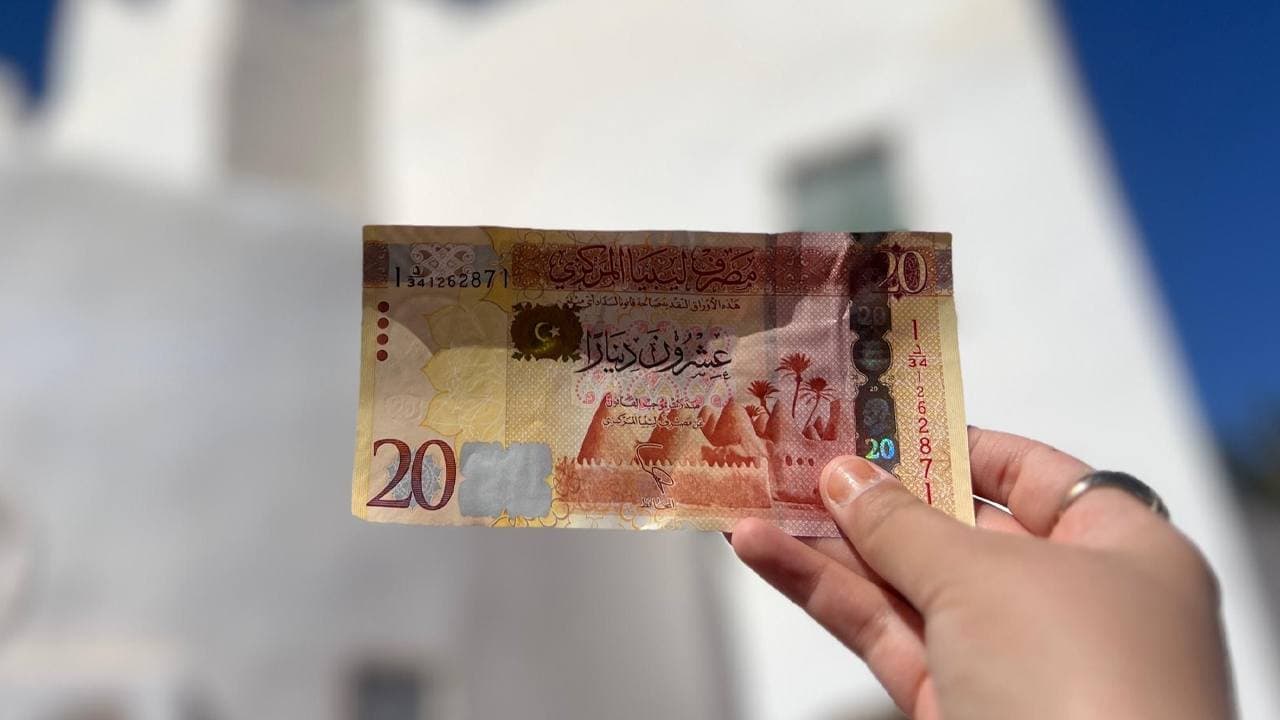
The Libyan dinar’s recent devaluation has been blamed on a flood of illicit banknotes exchanged for U.S. dollars. A report identified the Russian state money printer as a potential source of the banknotes, which the Central Bank of Libya has labelled counterfeit.
Russia-Linked Banknotes Blamed for Libyan Dinar Plunge

This article was published more than a year ago. Some information may no longer be current.
WRITTEN BY

SHARE
Russia Linked to Illicit Libyan Banknotes
A June 24 Reuters report said the deluge of illicit Libyan banknotes exchanged for real U.S. dollars caused the local currency—the dinar’s devaluation. The banknotes, branded counterfeit by the Central Bank of Libya (CBL), were reportedly printed in Russia. After their importation into the war-torn country, the banknotes are transferred to eastern Libya. In the past, banknotes imported from Russia have been used to fund infrastructure projects.
According to the report, citing CBL and diplomatic sources, the banknotes are believed to have financed Russian mercenary activity in the region and the Sahel. The Russian state money printer Goznak is named as a possible source of the illicit currency. In addition to the CBL and diplomatic sources, The Sentry, an international investigative group, similarly detected the counterfeit banknotes.
Neither the CBL nor the Libyan National Army, which controls eastern Libya, has commented on the allegations, the report said.
Libya descended into chaos after the 2011 ouster of longtime ruler Moammar Gadhafi. The so-called National Transitional Council, a loose coalition of rebel groups, filled the power vacuum but ultimately failed, leading to the proliferation of armed militias. The Islamic State later gained a foothold, prompting outside intervention.
A government of national unity formed in 2020 has failed to end hostilities or unify the country’s east and west.
Meanwhile, the Reuters report revealed that Russia, through Goznak, supplied billions of dinars to the eastern Libya government and its allied commander, Khalifa Haftar, before the formation of the unity government. The practice reportedly stopped after a ceasefire deal.
Register your email here to get a weekly update on African news sent to your inbox:
What are your thoughts on this story? Share your opinion in the comments section below.
Bitcoin.com News is seeking a News Writer to produce daily content on cryptocurrency, blockchain, and the digital currency ecosystem. If you are interested in becoming a key member of our innovative global team, apply here.