Russia and Indonesia are moving toward ruble-rupiah trade settlements as sanctions and Russia’s SWIFT exclusion drive efforts to establish sustainable, dollar-free financial systems.
Russia and Indonesia Actively Discuss Mechanisms to Ditch US Dollar

This article was published more than a year ago. Some information may no longer be current.
WRITTEN BY

SHARE
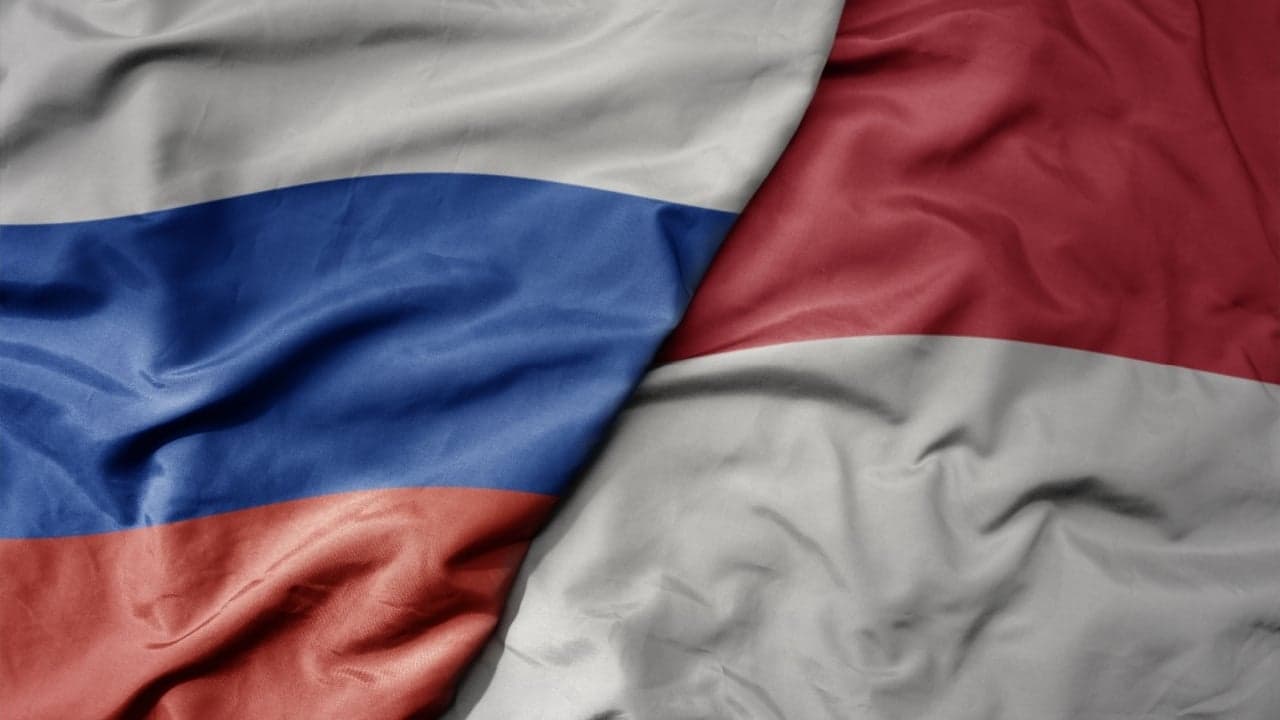
Indonesia-Russia Trade Sees Shift to Ruble and Rupiah Settlements
The global trend of reducing dependence on the U.S. dollar in international trade is gaining momentum, with nations increasingly exploring alternatives. Indonesia and Russia have engaged in discussions on using their respective currencies, the rupiah and ruble, for bilateral transactions.
Russian Ambassador to Indonesia Sergei Tolchenov revealed that financial institutions in both countries are actively investigating mechanisms to facilitate this shift. This effort aligns with a broader movement within the BRICS bloc, which now comprises Brazil, Russia, India, China, South Africa, Indonesia, Egypt, Ethiopia, Iran, and the United Arab Emirates (UAE). Tolchenov stated in an interview with The Jakarta Globe this week:
Russia’s exemption from SWIFT has made it very difficult for us to use financial settlements in American dollars.
Expanding on the challenges posed by Russia’s removal from SWIFT, he added: “This is why we need to find appropriate ways of using national currencies. Russian and Indonesian financial institutions are working on that.”
The removal of Russian banks from the dollar-based SWIFT system, prompted by sanctions related to the Russia-Ukraine conflict, has pushed Moscow to prioritize alternative trade mechanisms. Russia has increasingly focused on utilizing local currencies in transactions, particularly with BRICS nations. Tolchenov highlighted ongoing collaboration between private businesses, financial institutions, and central banks to establish practical solutions, stating:
Businesses would want to have independent and sustainable channels of financial settlements.
The desire to reduce reliance on the U.S. dollar stems largely from the use of sanctions as a geopolitical tool. The dollar’s dominance in global finance grants the United States significant leverage to enforce unilateral measures, often excluding targeted nations from international trade and financial networks. Additionally, many countries are wary of being overly exposed to U.S. monetary policies, which can lead to economic instability due to fluctuations in the dollar’s value. Transitioning away from the dollar offers these nations greater economic autonomy and a buffer against such risks.
Indonesia has already established agreements for local currency use with countries such as China, Japan, Malaysia, and Thailand. In 2024, Indonesia also signed a memorandum of understanding with India to facilitate trade in rupee and rupiah. Tolchenov expressed optimism that Indonesia’s membership in BRICS would help address payment-related challenges. Official reports show that Indonesia-Russia trade amounted to $3.1 billion between January and November 2024. Meanwhile, Russia has significantly expanded local currency trade with other BRICS members, with the ruble and Chinese yuan comprising 80% of its trade with China and 90% of its trade with India conducted in non-dollar currencies.