In the 12 hours following the introduction of the Runes protocol, bitcoin miners have collected substantial fees as the rush to mint runes now dominates block space. Presently, numerous runes exist on the Bitcoin blockchain, with several being offered on marketplaces such as Okx and Magic Eden.
Runes Proliferate on Bitcoin, Sparking New Token Sales on Specific Markets

This article was published more than a month ago. Some information may no longer be current.
WRITTEN BY

SHARE

The Runes Economy Has Been Born
Since their introduction at block height 840,000, runes have proliferated across the Bitcoin blockchain. The Runes protocol, a novel token standard, facilitates the issuance of fungible tokens on the Bitcoin blockchain. Unlike BRC20s, the Rune protocol distinguishes itself by attaching to an Unspent Transaction Output ( UTXO) through a protocol message that specifies the output, ID, and amount via the OP_RETURN function.
With the activation at block 840,000, the creation of runes has become a priority over traditional financial transactions. Platforms like Ord.io now display a filter showcasing hundreds of Rune-based inscriptions. Additionally, Ordiscan provides a Runes protocol explorer featuring uniquely named tokens such as “UNCOMMON•GOODS,” “DECENTRALIZED,” and “DOG•GO•TO•THE•MOON.”
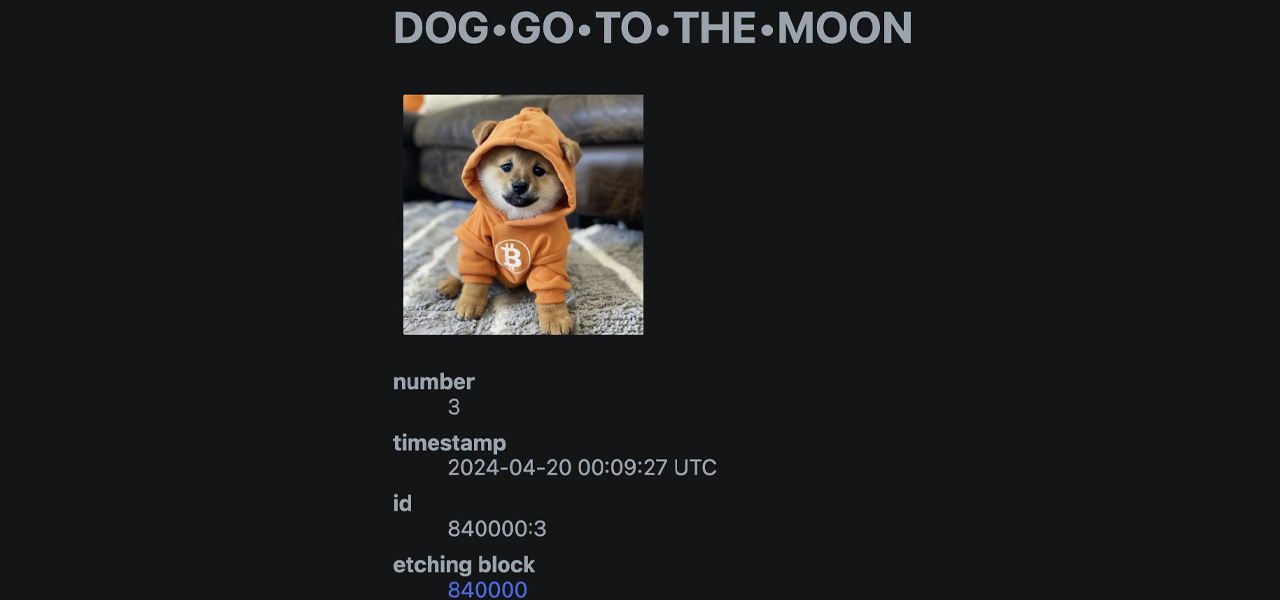
“DOG•GO•TO•THE•MOON” was developed by Ord.io’s founder Leonidas and inscribed in a transaction costing 1,258,757 sat/vB as Rune #3. This issuance saw the creation of 100 billion tokens, with 889,806 destined to be airdropped to holders of Runestone non-fungible tokens ( NFTs). Casey Rodarmor, originator of Bitcoin’s Ordinal theory and the mind behind the Runes protocol, inspired the inclusion of his name in several tokens.
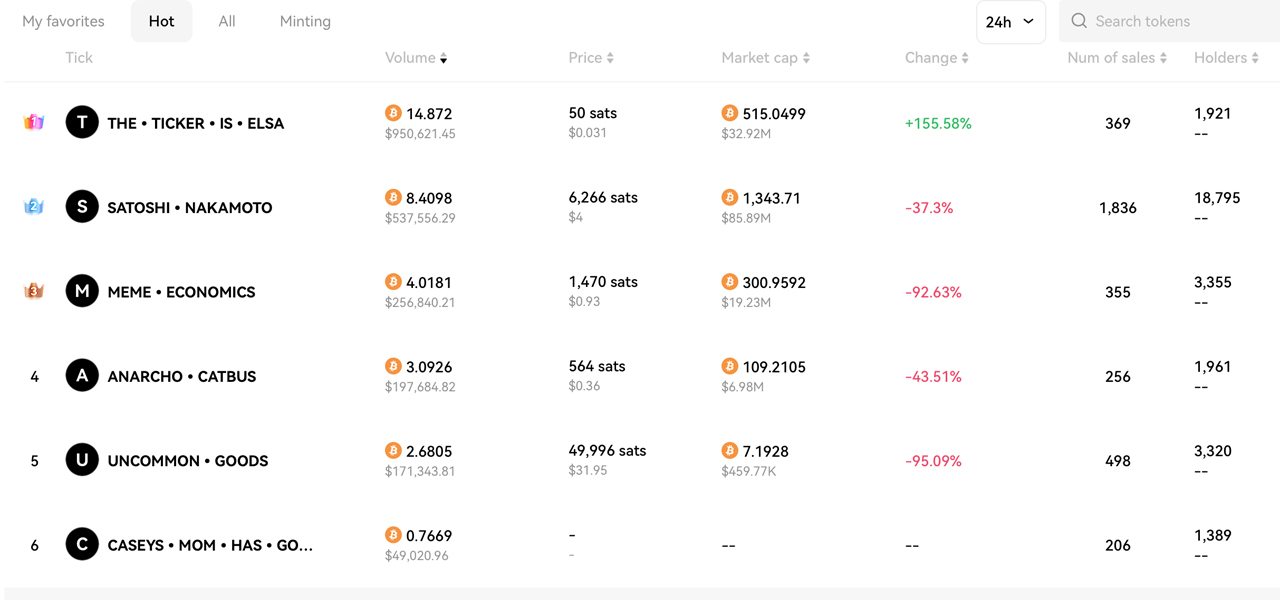
Runes are now being offered on NFT marketplaces that specialize in rare satoshis and Ordinal inscriptions. Currently, both Okx and Magic Eden feature runes, with Okx experiencing more dynamic listing and sales activities and Magic Eden’s coming soon. At present, a runes collection named THE•TICKER•IS•ELSA leads on Okx with a trading volume of 14.7631 BTC or $943,524, giving it a market valuation of $25 million at a price of $0.031 per token.
Another popular collection, SATOSHI•NAKAMOTO or Rune #6, follows closely with 8.24 BTC in trading volume. Each SATOSHI•NAKAMOTO coin trades at $4, and the token is held by over 18,000 owners. The UNCOMMON•GOODS tokens, attributed to Rodarmor, are exchanging hands at $31.95 each, with a total market capitalization just above $459,000.
The Runes protocol and its tokens are quite recent additions to the market, and the future of this trend remains uncertain. Substantial investments have been made in minting and securing early runes, driving BTC transaction fees to unprecedented levels, exceeding $245 per transfer. As the Runes protocol continues to integrate itself into the Bitcoin blockchain, its future impact remains a topic of fervent speculation. Anyone can explore runes on marketplaces and through platforms such as Ord.io, as well as the runes segment on Ordiscan.
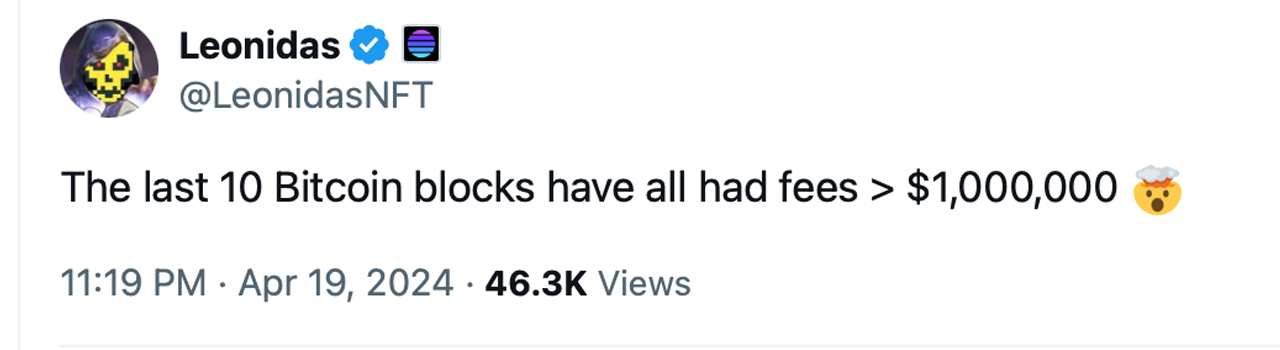
The protocol’s unique approach to token issuance has not only increased transaction fees but has also introduced a new layer of functionality and intrigue to the blockchain. Marketplaces that host runes now serve as pivotal arenas where the value and popularity of these digital assets will be tested. As collectors and traders navigate this evolving landscape, the enduring success of Runes hinges on their ability to maintain interest and utility in a rapidly changing market.
The Runes protocol has sparked debate and dissatisfaction regarding its impact on the fee market. At 10:15 a.m., tensions flared on an X Spaces broadcast titled “Sh**coin Apocalypse” concerning proposals to increase the block size as a solution to fee issues. Speakers on “Sh**coin Apocalypse” became noticeably agitated during discussions on block size adjustments, when anyone suggested such changes might ease the fee situation. However, by 10:20 a.m. on Saturday, any mention of block size enhancements was abruptly excluded from the dialogue.
What do you think about the debut of the Runes protocol? Share your thoughts and opinions about this subject in the comments section below.