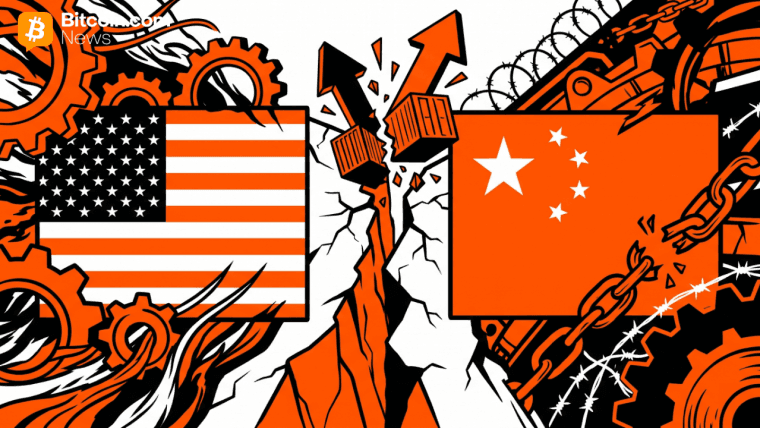



Economists are calling on China to curb the risks associated with holding over $3.3 trillion in its forex reserves. The concerns are directed at the possible measures the upcoming U.S. president might take against the country, including tariffs and unilateral sanctions.
Reserves Threatened: China Urged to Dedollarize Its $3.3 Trillion Forex Stash

This article was published more than a year ago. Some information may no longer be current.
WRITTEN BY

SHARE

China Must Dedollarize Forex Reserves to Reduce Risks
Economists have assessed China’s standing in the current international geopolitical situation, declaring their concerns about the level of reserves held in U.S. dollars. Zhang Ming, deputy director of the Chinese Academy of Social Sciences’ Institute of Finance and Banking, recently called on a pivot in management strategy of over $3.3 trillion in China’s forex reserves.
In a recently published article, Ming stated:
The management of these reserves faces significant challenges in maintaining and increasing their value. Particularly, China must address the financial risks associated with possible future sanctions from the U.S.
These worries have intensified with the looming US elections, fearing that a new president might take measures that might affect the solidity of these reserves. While China has not revealed recent statistics about the composition of its forex reserve, 55% was composed of U.S. dollars in 2019.
Russia has been affected by unilateral U.S. sanctions for its participation in the Ukraine conflict, with the European Union and the U.S. blocking over $300 billion in Russian assets. In April, Treasury Secretary Janet Yellen hinted at the enactment of similar sanctions of China dared act against Taiwan. “I think you should not doubt our ability and resolve to do the same in other situations,” she stressed.
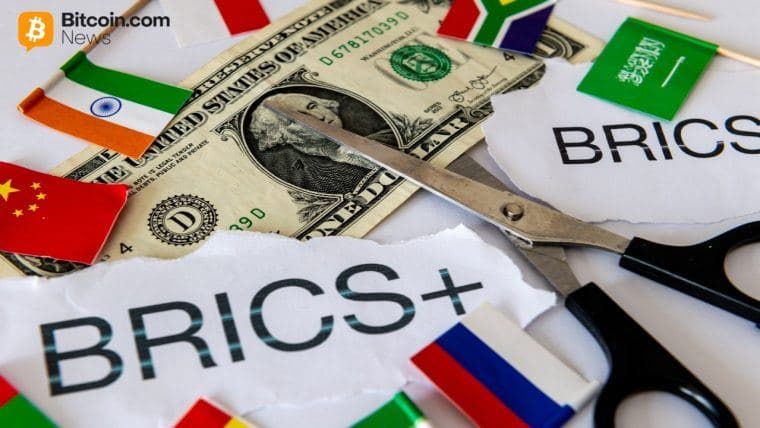
China and Russia, as part of the BRICS bloc, had been dedollarizing their exchanges, with most of their payments now settled in national currencies. In July, President Putin stated that over 80% of the Russian-Chinese turnover involved national currencies.
Read more: Putin on Dedollarization: 80% of Russia-China Trade in Rubles and Yuan
China has been dumping U.S. treasuries, reducing its exposure from over $1,300 billion to under $800 billion, with the steepest decline between 2021 and 2023. This leaves Japan, a natural U.S. ally, as the largest holder of these papers.