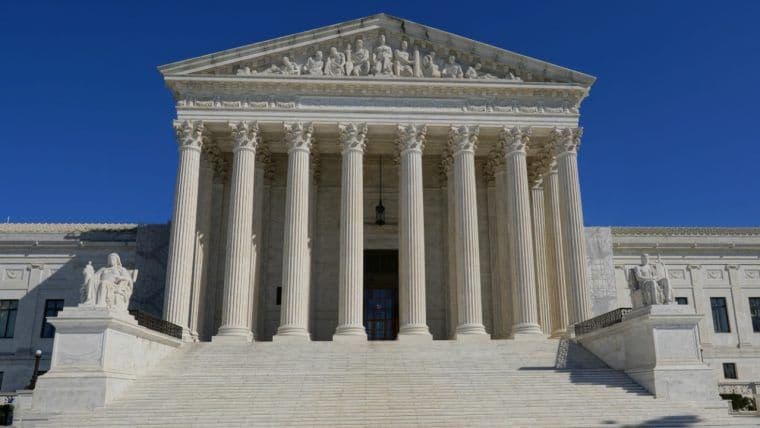



Wyoming voters pick a successor to Sen. Cynthia Lummis today, and Trump-backed Rep. Harriet Hageman is favored to inherit the seat of Washington’s loudest bitcoin advocate.
Who Replaces CLARITY Champion Cynthia Lummis: Trump Backs Hageman
WRITTEN BY

SHARE

Key Takeaways
- Hageman voted yes on the CLARITY Act, which passed the House 294-134 in July 2025.
- Fairshake reported more than $193 million in cash in January 2026 to spend on pro-crypto candidates.
- Lummis leaves the Senate in January 2027 with the CLARITY Act stalled after a 49-50 cloture vote.
Trump’s Election-Eve Push for Hageman
On the eve of the U.S. midterm elections, President Donald Trump threw his weight behind Hageman again, stating unequivocally:
“[She has] my Complete and Total Endorsement and will never let you down.”
Trump posted the same get-out-the-vote message for Republican candidates in state after state on Monday night.
He first endorsed Hageman in December 2025, following which she went on to win the August Republican primary with 62.7% of the vote against four challengers, setting up today’s race against Democrat James Byrd, a former state representative.
What makes the race matter beyond Wyoming is whose seat it is, i.e. Sen. Lummis, who built her career as crypto’s most visible ally on Capitol Hill. She said in December 2025 that she would not seek re-election. Her term ends in January 2027.
Hageman’s Crypto Voting Record
As Wyoming’s only member of the U.S. House, Hageman has a clear paper trail on digital assets given that in July of last year, she voted yes on the CLARITY Act, the market structure bill that would split crypto oversight between the Securities and Exchange Commission (SEC) and the Commodity Futures Trading Commission (CFTC). It passed the House 294-134.
The same day, she backed the GENIUS Act stablecoin bill, which cleared the chamber 308-122 and later became law. She also voted for the Anti-CBDC Surveillance State Act, which would bar the Federal Reserve from issuing a central bank digital currency (CBDC). That bill squeaked through 219-210.
A Senate That Has Stalled on Crypto
The CLARITY Act has not survived the upper chamber and a September cloture vote on the bill fell 49-50, 11 votes short of the 60 needed. No Democrats voted to proceed, while Polymarket cut the odds of the bill becoming law this year from 29.5% to 6.5% after the vote.
The administration, however, has since looked for workarounds, with Treasury Secretary Scott Bessent using Ripple’s Swell conference to usher in a Plan B for the stalled bill, suggesting the Treasury could fill gaps Congress has left open.
Crypto Money and the Bigger Picture
The industry has spent this cycle trying to change the Senate’s math. Fairshake, the crypto industry’s main super PAC, reported more than $193 million in cash on hand in January 2026, backed by large contributions from Coinbase, Ripple and a16z.
Wyoming is unlikely to be where that money is tested, though, as the national map looks different. Bettors on Kalshi and Polymarket favor Democrats to sweep both chambers, which means a safe Republican pickup in Wyoming could land in a Senate run by the party that blocked the CLARITY Act.
Markets are watching too, as bitcoin has fallen after three straight midterm elections, a pattern traders will test again as the results arrive tonight. Whoever wins Wyoming takes office in January with a record to defend, and with the bitcoin lobby’s top Senate ally walking out the door.
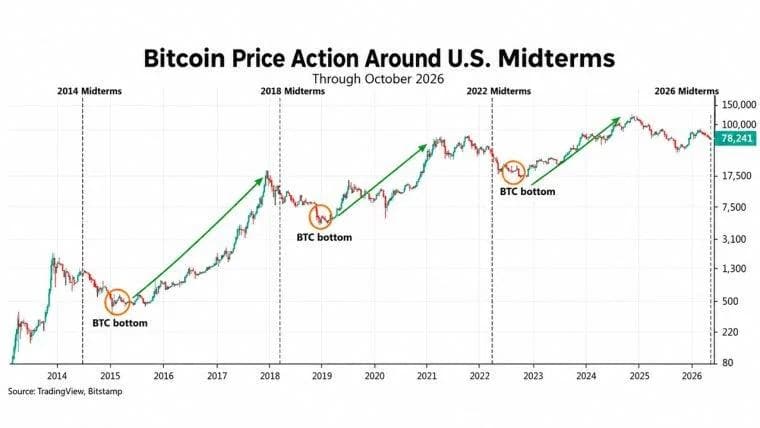
In each of the last three cycles, bitcoin bottomed 13 to 71 days after a U.S. midterm election. Americans vote…
Read Now: Bitcoin Price Fell After 3 Straight Midterms, and Tuesday Could Make It 4

About the author
WRITTEN BYShiraz JagatiCrypto Reporter
Shiraz is a journalist and analyst whose work has covered the digital asset arena and blockchain-related developments since 2016.