
SEC Chair Paul Atkins has asked staff to develop a proposal allowing investment advisers to self-custody crypto assets under certain conditions. The plan would also permit state trust companies to serve as custodians for advisers and regulated funds.
SEC Chair Pushes Crypto Self-Custody in New Regulatory Framework
WRITTEN BY

SHARE
Key Takeaways
- Atkins wants SEC rules to permit adviser self-custody under conditions.
- State trust companies could also qualify to hold crypto assets.
- Custody would become one pillar of a broader SEC crypto framework.
Atkins Wants Advisers to Self-Custody Crypto Assets
Investment advisers could gain a clearer path to holding crypto assets directly for clients under a regulatory proposal being developed at the Securities and Exchange Commission (SEC). Chairman Paul Atkins disclosed the initiative Sept. 14 during remarks at the Solana Policy Institute Summit, placing custody alongside two other major components of the agency’s emerging crypto framework.
Atkins said he has asked SEC staff to develop a proposal addressing whether advisers can directly custody crypto assets, including assets held for regulated funds, and whether state trust companies can serve as custodians. “As to self-custody, yes, because for too many assets a qualified third-party custodian simply does not exist yet,” the SEC chairman said. The initiative follows an SEC crypto custody rewrite that entered White House review in August.
The proposal would potentially resolve a long-running regulatory question over which institutions can hold digital assets for registered advisers and investment funds. In this context, self-custody refers to an adviser directly maintaining custody rather than requiring every asset to be placed with an outside qualified custodian. Earlier disagreements over crypto custody requirements showed how the treatment of state-chartered trust companies had become a central issue.
Crypto Issuance Rules Form Another Pillar
The custody initiative would operate alongside Regulation Crypto Assets, which the SEC proposed Aug. 18 to establish a tailored offering regime for certain investment contracts involving crypto assets. The Regulation Crypto Assets proposal includes exemptions that could permit offerings of up to $5 million over four years or as much as $75 million during each 12-month period, subject to disclosure and other requirements.
The proposal also contains a conditional safe harbor from the term “investment contract” in the definition of “security.” Atkins said a key question surfacing in public feedback is when a covered investment contract ceases to exist. The SEC chairman’s crypto exemptions initiative is designed to establish clearer pathways for projects seeking to raise capital using digital assets in the United States.
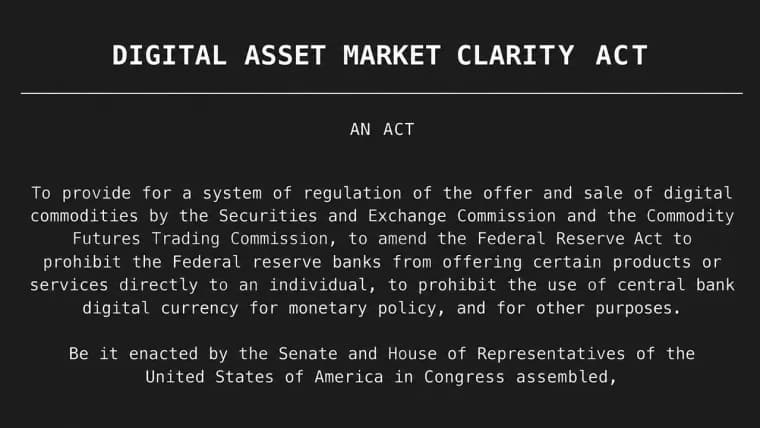
Atkins also urged Congress to advance the CLARITY Act, arguing that legislation could address questions surrounding when an investment contract involving a crypto asset ceases to exist. He separately emphasized that the SEC intends to continue its regulatory program regardless of the legislation’s outcome, positioning agency rulemaking and congressional market-structure legislation as separate tracks addressing parts of the broader U.S. crypto framework.
However, the Senate failed to advance the CLARITY Act on Sept. 15 after a cloture motion on the motion to proceed fell short of the 60 votes required. The vote was 49-50, leaving H.R. 3633 stalled before the Senate could begin formal consideration of the crypto market structure bill. The failed procedural vote followed unresolved disputes over ethics provisions, stablecoin-related issues, and other regulatory safeguards, leaving the legislation’s path forward uncertain.
Transfer-Agent Rules Complete Atkins’ Three-Part Framework
Modernizing transfer-agent requirements represents the third component of the framework Atkins outlined. The SEC’s transfer-agent modernization proposal would revise rules that have not been substantively updated since the late 1970s and early 1980s, including provisions addressing electronic communications, recordkeeping, blockchain technology, securities offerings, and share transfers.
Together, the initiatives would address how crypto assets are issued, transferred, and held under federal securities regulation. Atkins characterized Regulation Crypto Assets, transfer-agent modernization, and the planned custody framework as three pillars of a unified regulatory architecture. The custody component could be particularly significant for assets lacking suitable third-party custodians, where direct control of crypto assets depends on possession and management of the credentials used to authorize blockchain transactions.