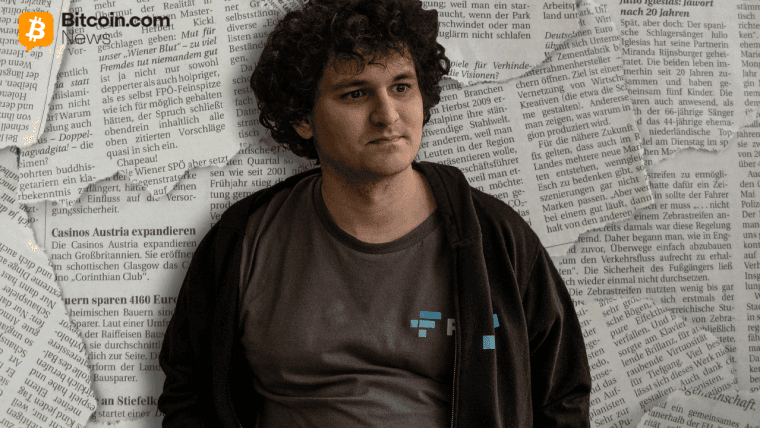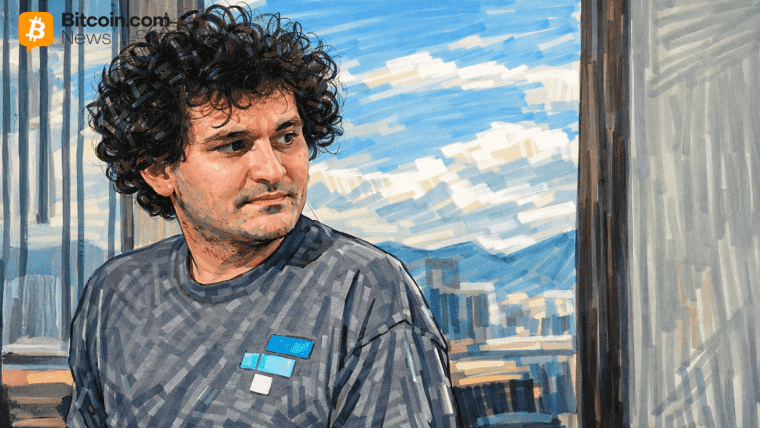



Sam Bankman-Fried has petitioned the U.S. Supreme Court to throw out his fraud conviction and the $11 billion forfeiture order attached to it.
Sam Bankman-Fried Takes His $11 Billion Fight to the Supreme Court
WRITTEN BY

SHARE
Key Takeaways
- The petition challenges a 25-year sentence and seven counts returned against Bankman-Fried in 2023.
- His Second Circuit appeal failed in June 2026 on the Supreme Court’s 2025 Kousisis ruling.
- The justices decide later in 2026 whether to hear the case, after a June 8 pardon bid stalled.
Two Asks, Not One
The latest filing does two separate things, namely:
- First, the conviction: Bankman-Fried’s lawyers argue the trial court improperly barred him from presenting evidence that FTX and Alameda Research, while temporarily illiquid, held enough assets to eventually make customers and investors whole.
- The second is money: They contend the $11 billion forfeiture order violates the Eighth Amendment’s excessive fines clause.
Either one succeeding would be significant, and together they could amount to an attempt to unwind the single largest fraud judgment in crypto history.

Bankman-Fried co-founded FTX, once among the largest cryptocurrency exchanges in the world, and is serving 25 years after a jury convicted him on seven counts of fraud, conspiracy and money laundering. The exchange’s November 2022 collapse exposed an $8 billion shortfall in customer accounts.
Why Kousisis Is the Hinge
In June 2026, a three-judge panel of the U.S. Court of Appeals for the Second Circuit affirmed the conviction. It leaned on Kousisis v. United States, a 2025 Supreme Court decision holding that conduct can constitute wire fraud even without intent to cause net economic harm. Per that notion, whether the victims ultimately got their money back is beside the point and the deception itself is the crime.
Bankman-Fried’s team is trying to turn that ruling around and their argument runs roughly as follows, i.e. if prosecutors do not need to prove economic loss to win a fraud conviction, then evidence of economic loss should not be admissible at trial either.
However, if prosecutors are allowed to put loss evidence in front of a jury anyway, the defense must be allowed to rebut it with evidence pointing the other way.
It is a symmetry argument, and it is the most credible thing in the filing. The weakness is that the Supreme Court decided Kousisis recently and decisively, and the justices rarely revisit their own reasoning within a year to help a defendant whose case it was used against.
The Other Track Already Failed
The courtroom is Bankman-Fried’s second route. He formally submitted a presidential pardon application to the U.S. Department of Justice’s Office of the Pardon Attorney on June 8, requesting a pardon after completion of sentence, a designation that restores certain civil rights without shortening the term. President Donald Trump publicly rejected the idea twice, citing the scale of the fraud.
The U.S. Senate then removed any ambiguity by unanimously approving S.Res. 772, a bipartisan resolution opposing any pardon or commutation for the former FTX chief. Bankman-Fried’s parents had pushed the campaign publicly after Trump commuted Ross Ulbricht’s sentence.
His earlier attempt at a new trial also failed when Judge Lewis Kaplan denied that motion in April, dismissing the fresh-evidence claims as baseless.
The Road From Here
Filing a petition for a writ of certiorari is not the same as getting a hearing. The Supreme Court receives thousands of these each term and agrees to hear roughly 1%. Four of the nine justices must vote to grant review. The court is expected to decide later in 2026 whether to take the case.
If certiorari is denied, which is the statistical default, the conviction, the sentence and the forfeiture all stand, and Bankman-Fried’s direct appeals are effectively exhausted. If it is granted, the case becomes a vehicle for clarifying how far Kousisis reaches, with consequences well beyond crypto.
Either way, the FTX estate has moved on without him. Cumulative distributions to creditors since early 2025 approach $10 billion, with a fifth tranche of roughly $900 million starting July and dotcom and U.S. customer claims reaching 105% cumulative recovery.
Claims are valued at November 2022 petition-date prices, when bitcoin traded near $16,000, so a customer who held one BTC on the exchange is repaid about $16,871 for it. Getting 105% back in dollars while the bitcoin price sits above $77,000 is the grievance that has never gone away.
Bankman-Fried, for his part, has floated launching a new token once he is out.
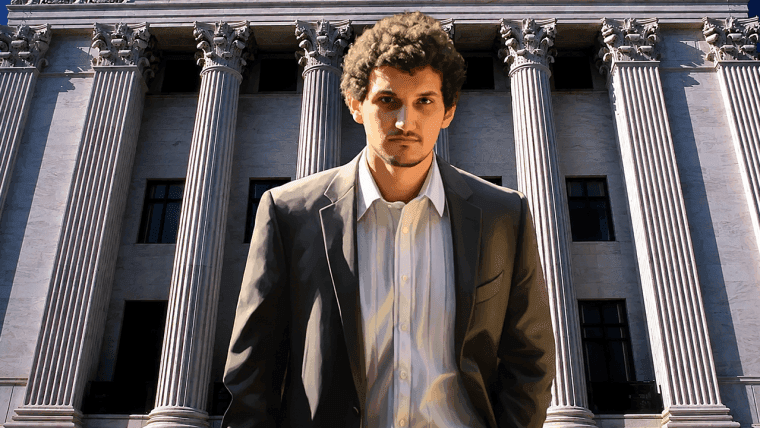
Sam Bankman-Fried, the FTX co-founder serving a 25-year sentence, has reportedly told a fellow inmate he intends to launch a…
Read Now: FTX’s Sam Bankman-Fried Wants to Launch a New Token After Prison