Ki Young Ju, the CEO of Cryptoquant, stated this weekend that bitcoin’s bull cycle has concluded, citing a growing divergence between realized cap and market cap as evidence of a bear market.
Realized Cap vs. Market Cap: Cryptoquant CEO Points to Bitcoin Bear Phase

This article was published more than a month ago. Some information may no longer be current.
WRITTEN BY

SHARE

Cryptoquant CEO and Data Suggests Bitcoin’s Bull Cycle Concludes
Realized cap, an onchain metric tracking the average cost basis of BTC holdings, reflects actual capital inflows. Market cap, based on BTC’s last traded price, measures perceived value. Cryptoquant‘s CEO Ki Young Ju explained that when realized cap rises while market cap stagnates, it signals capital entering the market without price appreciation—a bearish trend.
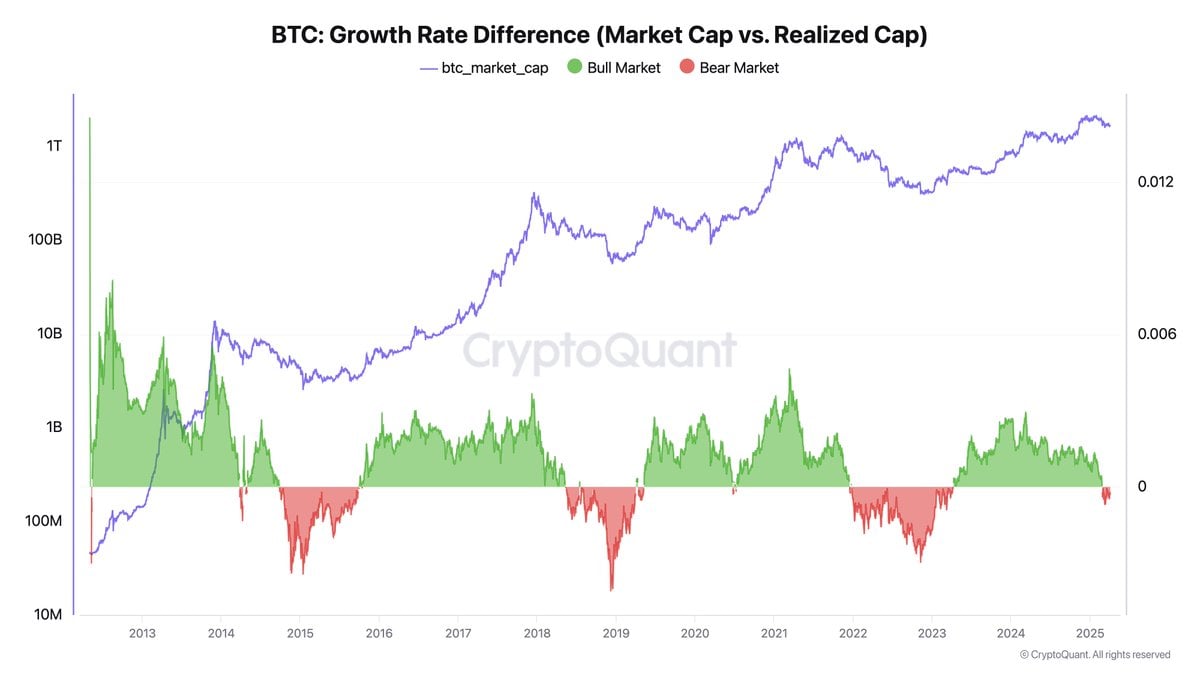
Conversely, a surging market cap with a flat realized cap indicates bullish momentum driven by speculative buying. He noted that current data shows realized cap increasing as investors accumulate BTC, but prices remain stagnant due to high selling pressure. Ju referenced Strategy’s (MSTR) convertible bond-driven BTC purchases, which amplified paper gains during low sell periods.
“But when sell pressure is high, even large purchases fail to move the price,” the Cryptoquant CEO remarked. “There are simply too many sellers. For example, when bitcoin was trading near $100K, the market saw massive volumes, but the price barely moved.”
The Cryptoquant executive noted, however, that critics argue onchain data may miss off-exchange activity, but Ju countered that major capital flows—including exchange transactions, custodial movements, and exchange-traded fund (ETF)-related trades—are visible onchain. Historically, Ju noted, bear market reversals take at least six months, making short-term rallies unlikely.
While current metrics signal caution, bitcoin’s history of defying expectations leaves room for optimism. Institutional adoption, regulatory clarity from Trump’s administration, or positive macroeconomic shifts could reignite bullish momentum, bypassing short-term sell pressure. A surprise and bullish advancement could attract fresh capital, potentially realigning Realized and Market Caps.