According to “Project 2025,” initiated by the conservative think tank the Heritage Foundation, there is a strategy aimed at implementing conservative policies effectively within the first 180 days of the next U.S. Presidential Administration. An integral part of this plan, aside from reinforcing the core principles of conservatism, is to eliminate the independence of the U.S. central bank and address what is termed the Federal Reserve’s “monetary dysfunction.”
Project 2025: A Plan to Reform the US Federal Reserve and End Its ‘Monetary Dysfunction’

This article was published more than a year ago. Some information may no longer be current.
WRITTEN BY

SHARE
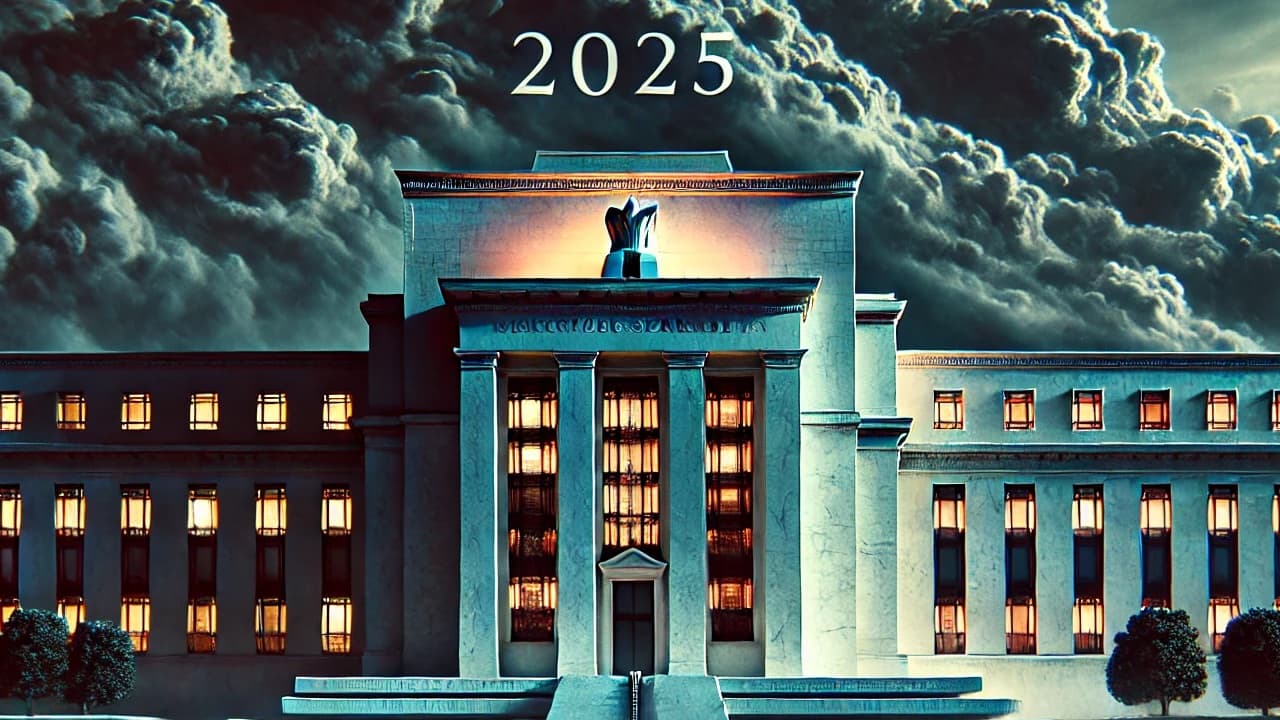
A Conservative Blueprint for the First 180 Days of the Next Administration Includes Limiting the U.S. Central Bank
In recent weeks, “Project 2025” has been a prominent topic among Americans preparing for the 2024 U.S. election. The plan is designed to ready a Republican administration for a potential 2025 takeover, outlined in a 920-page document filled with policy proposals and staffing suggestions. Unsurprisingly, Democrats are critical of the initiative, with President Joe Biden and his campaign recently condemning Project 2025.
The Biden administration views the plan as a threat to democratic institutions and a move to centralize power within the presidency. On Truth Social, Republican presidential hopeful Donald Trump claimed he knows “nothing about Project 2025.” Among the plan’s extensive policy recommendations is a proposal to eliminate the U.S. Federal Reserve’s independence. Chapter 24 of the document asserts:
In the decades since the Federal Reserve was created, there has been a downturn]roughly every five years. This monetary dysfunction is related in part to the impossibility of fine-tuning the money supply in real-time, as well as to the moral hazard inherent in a political system that has demonstrated a history of bailing out private firms when they engage in excess speculation.
Project 2025’s segment on the U.S. central bank further asserts that political influence has driven the Federal Reserve to leverage its regulatory authority over banks to support initiatives that are politically advantageous, including those related to environmental, social, and governance (ESG) goals. “Public control of money creation through the Federal Reserve System has another major problem: Government can abuse this authority for its own advantage by printing money to finance its operations,” the document’s author Paul Winfree explains.
The proposal, although currently trending, has been in existence since 2023. Its resurgence coincides with growing discontent toward the U.S. central bank and its policies. The Federal Reserve has faced criticism for printing trillions of dollars following the Covid-19 pandemic and then attempting to curb inflation by raising interest rates. Recently, two lawmakers—Republican Senator Mike Lee and Republican Representative Thomas Massie—introduced bills to abolish the Federal Reserve. For years, several politicians, including former congressman Ron Paul, have advocated for ending the Fed.
Project 2025 aims to “wind down the Federal Reserve’s balance sheet” and restrict future expansions to U.S. Treasuries. The plan also seeks to end the Fed’s practice of paying interest on excess reserves and steer the economy toward “free banking.” According to the Project 2025 document, “In free banking, neither interest rates nor the supply of money is controlled by the government — Free banking leads to stable and sound currencies and strong financial systems.”
What do you think about Project 2025 and the plan to limit the U.S. Federal Reserve? Share your thoughts and opinions about this subject in the comments section below.