Since April 2, 2025, U.S. President Donald Trump has jolted global markets with a series of broad-based tariffs, some of which were temporarily halted this past Wednesday. Prediction markets have become a hotspot for wagers tied to Trump’s trade policies, drawing significant attention from speculators and analysts alike.
Prediction Markets Stir as Trump’s Trade War Strategy Evolves
WRITTEN BY

SHARE
From Pause to Pressure: Trump’s Tariff Moves Fuel Speculation on Polymarket and Kalshi
Participants are staking capital on the trajectory of Trump’s global tariff policy. When first unveiled, the plan included a 10% minimum rate worldwide, with steeper penalties for what he referred to as “major offenders.” On April 9, the administration suspended all tariffs above 10% for a 90-day period, with the exception of China—whose rate jumped to 125%, then climbed again to 145% by Friday.
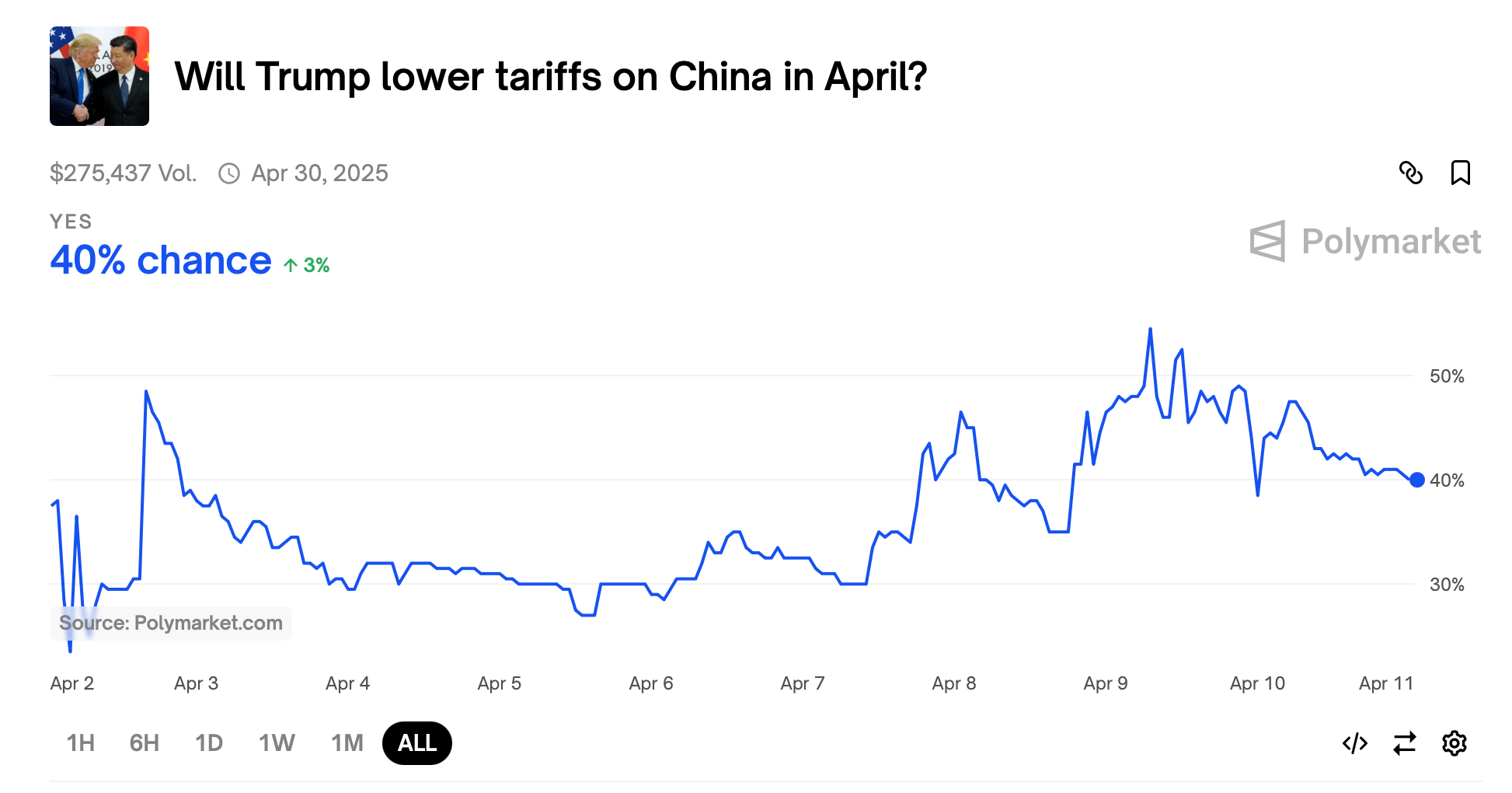
On Polymarket, traders assign a 40% probability that Trump will ease tariffs on China before the end of the month. That contract has attracted $275,437 in volume and is set to resolve on April 30. Another active bet, drawing $91,465 in volume, puts the odds of lifting the blanket 10% tariffs this month at just 8%. Meanwhile, there’s a 19% probability that Trump will raise tariffs on China to 200% by June. That position, with $22,844 in volume, will conclude at the end of this month.
Kalshi also hosts a suite of wagers tracking Trump’s tariff decisions. One titled “When will Trump end his tariffs against China?” offers only a 3% chance of a rollback by May 2025. The odds rise to 18% for June, and hit 28% by December. Kalshi users are also placing bets on the possibility of Trump introducing export tariffs.
That specific contract, touching on export tariffs, currently shows a 15% chance of materializing. Trump’s trade pronouncements continue to command the focus of financial markets, having already driven historic stock sell-offs, wiped out trillions in market capitalization, and stirred concerns about escalating trade conflicts, inflationary pressure, and economic downturns.