Polymarket bettors currently place a 56% probability on U.S. President Donald Trump abolishing the long-term capital gains tax in 2025. Though Trump has yet to address the matter directly, policy documents aligned with his agenda—as well as proposals from right-leaning think tanks—have consistently championed a dramatic reduction of the capital gains tax.
Polymarket Bettors Put 56% Odds on Trump Eliminating Capital Gains Tax
WRITTEN BY

SHARE

Trump Tax Twist? Polymarket Bets Big on Capital Gains Repeal
Speculators are increasingly convinced that the 47th U.S. president will do away with long-term capital gains taxes, and activity on Polymarket reflects this growing sentiment. As of Monday, May 12, the crypto-centric prediction platform has logged $201,432 in wagers, pricing the likelihood at 56%. The probability reached a peak of 80% in mid-April, and just two days ago, it hovered at 70%.
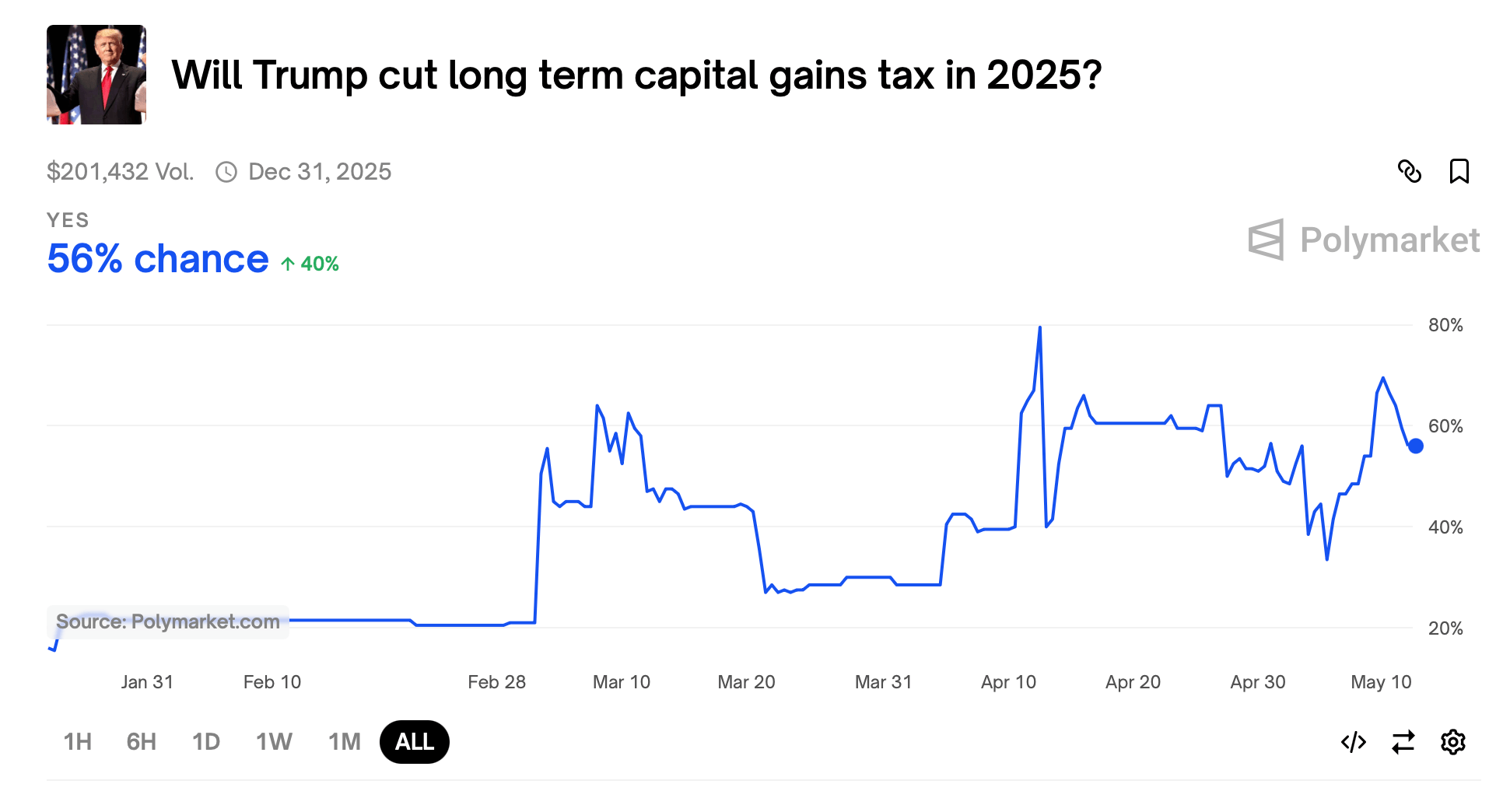
Although Trump has remained silent on capital gains specifically, he has vocally prioritized scrapping taxes on tips, overtime compensation, and Social Security benefits. He has also floated the idea of removing income tax obligations for Americans earning $150,000 or less. Meanwhile, the Heritage Foundation’s “Project 2025” blueprint advocates reducing the capital gains rate to 15%—a level not seen since 1941.
Should the U.S. president choose to pursue the path of eliminating or significantly reducing the capital gains tax, the ripple effects across financial markets would be profound. A repeal or sharp cut to long-term capital gains tax would significantly benefit bitcoin (BTC) holders by allowing them to realize profits with minimal or no tax liability. This shift could incentivize more trading, boost liquidity, and attract long-term investors seeking tax-efficient exposure.
It would also elevate bitcoin’s appeal as a store of value in a more favorable fiscal climate. Even so, the likelihood of such measures materializing appears remote, given that any repeal or substantial alteration to long-term capital gains taxes would require congressional approval. A separate wager on the regulated prediction platform Kalshi places the probability of Trump eliminating capital gains at just 12%—a stark contrast to Polymarket’s more optimistic 56% forecast.
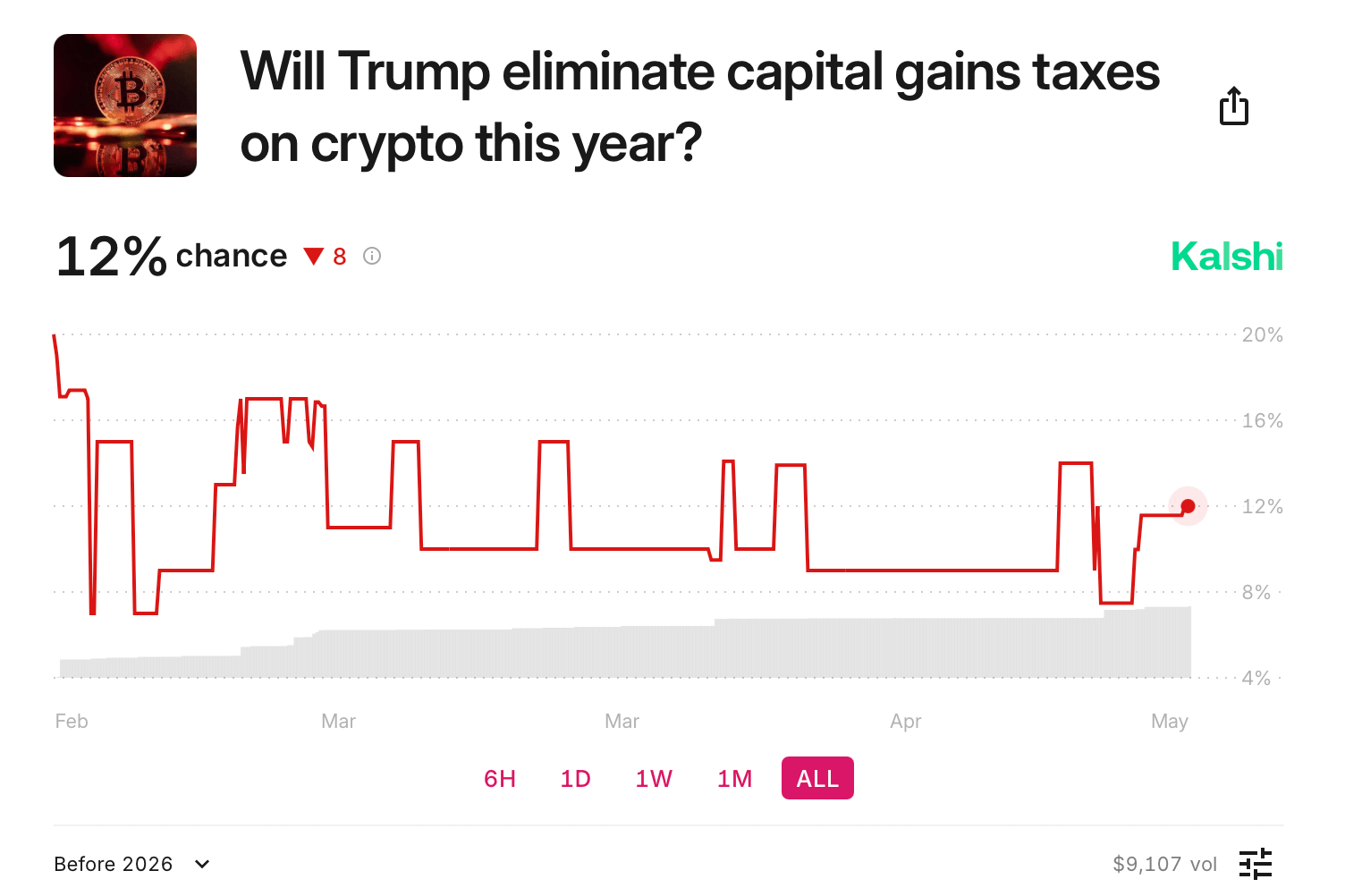
Regardless of divergent probabilities on Polymarket and Kalshi, any shift in capital gains tax policy remains notably contingent on congressional approval. Were lawmakers to greenlight such changes, bitcoin and other assets could emerge as more attractive assets through enhanced tax efficiency, potentially spurring trading activity and liquidity. Yet, until legislative hurdles are fully cleared, the prospect of abolition will remain largely theoretical.