In a recent analysis, economist Peter Schiff draws stark comparisons between the current U.S. economic optimism and the prelude to the 2008 financial crisis. Schiff, leveraging his expertise, warns of impending financial turmoil, emphasizing the critical role of money supply in understanding economic health.
Peter Schiff Warns of Severe Economic Repercussions, Highlights Inflation and Money Supply Concerns

This article was published more than a year ago. Some information may no longer be current.
WRITTEN BY

SHARE
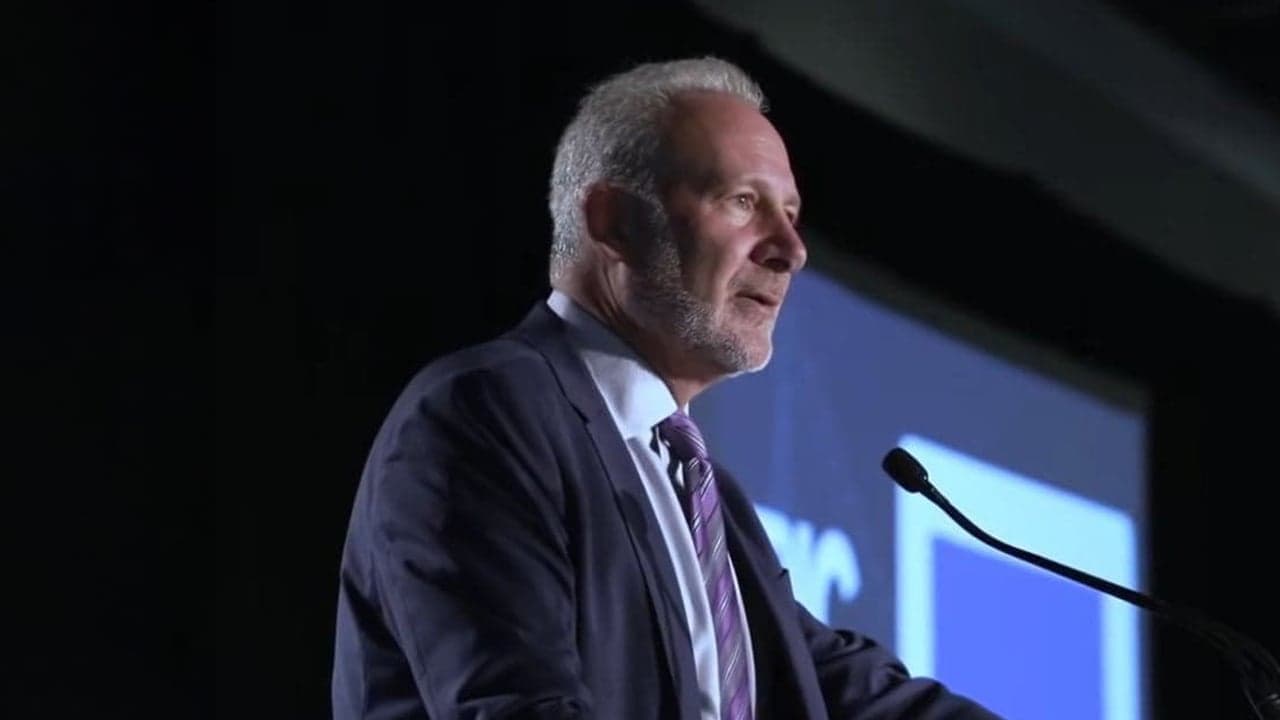
Peter Schiff Warns: U.S. Economy on the Brink, Echoes of 2008 Crisis
Peter Schiff criticizes Federal Reserve Chair Jerome Powell’s optimistic outlook on the U.S. economy as misplaced, drawing parallels with Ben Bernanke‘s pre-2008 financial crisis stance. In a recent X post, Schiff argues, “Powell’s current optimism on the state of the U.S. economy is even more misguided than was Bernanke’s optimism on the economy during the months leading up to the 2008 financial crisis. We are now on the verge of a far more devastating financial and economic outcome. Got gold?”
Schiff also talked about the U.S. Personal Consumption Expenditures this week. In February, personal spending surged by 0.8%, significantly outpacing the 0.3% rise in personal income. Schiff points out the understated impact of inflation, stating, “The .3% rise in the PCE far understates the impact that inflation has on prices. Falling real wages forced consumers to borrow more and deplete savings to pay higher prices to buy less stuff.”
The economist and gold bug challenges the Federal Reserve’s inflation forecasts, arguing that the market, reflected by the $2,234 gold price, predicts a different trajectory. He asserts, “The Fed claims that inflation is headed down to 2%. $2,234 gold indicates it’s headed in the other direction. The market is a far more reliable indicator than the Fed. In fact, if the Fed really was data dependent, the rising gold price would cause it to raise interest rates.”
Focusing on money supply, a concept Schiff detailed in a schiffgold.com article, he explains its significance as an indicator of economic direction, irrespective of Federal Reserve actions on interest rates. With reference to the “Wenzel” 13-week annualized money supply figure, Schiff highlights the inflationary effects of increasing money supply, despite any tightening measures by the Fed. Schiff stated:
Mr. Wenzel proposed that large drops in Money Supply could be a sign of stock market pullbacks. His theory, derived from Murray Rothbard, states that when the market experiences a shrinking growth rate of Money Supply (or even negative) it can create liquidity issues in the stock market, leading to a sell-off.
Schiff concludes by highlighting the critical relationship between money supply, inflation, and economic outcomes. He warns that ignoring the signs of an increasing money supply could lead to a repeat of historical economic downturns, emphasizing the need for vigilance and a reconsideration of current economic policies.
What do you think about Peter Schiff’s warnings? Share your thoughts and opinions about this subject in the comments section below.