




This editorial is from this week’s edition of the newsletter Week in Review, sent to subscribers on Friday. Subscribe to the newsletter to get this weekly editorial the second it’s finished. The newsletter also includes the biggest stories of the week, with a comment on each story.
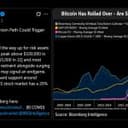
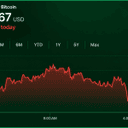
Bitcoin is roughly flat in the past seven days, while U.S. equities have been mixed, with the Dow up about 1.8%, the S&P 500 down about 0.5%, and the Nasdaq down about 2.3%. Treasury yields sank on Thursday.
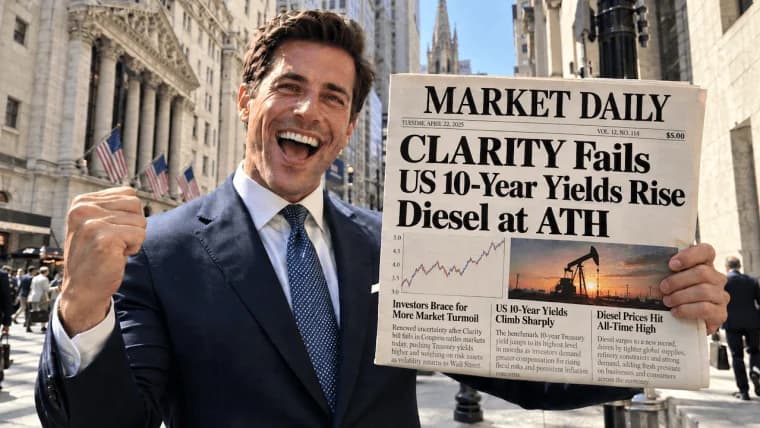
Have bond yields finally topped? The Economist cover might’ve top-ticked it. Chilean pension funds suffered heavy losses betting against rising U.S. yields, Ram Ahluwalia believes rate-sensitive assets are in a capitulation phase, which is another way of saying bond prices are at or near the bottom and yields are at or near the peak. Another wrinkle to this U.S. sovereign bond story is reporting that China might be buying U.S. bonds via Canada. At the very least, this complicates the simple story that China is abandoning Treasuries.
A more fundamental monetary discussion circulated this week. Saifedean Ammous, author of the Bitcoin Standard, posted that he’s been waiting 7 years for an economist “to explain clearly why Bitcoin’s fixed supply is a problem and why and how this compromises its operation.”
Unfortunately, Mr. Ammous’s understanding (or lack thereof) of fixed money supplies is indicative of many Bitcoin maximalists. For those who think that fixed money supplies are an unmitigated good, TXMC has a good thread on it as does George Selgin.
Mr. Selgin begins his thread thusly:
“The literature concerning why a constant money stock would pose problems is vast, with contributions from economists from numerous schools, including Hayek among other Austrians and sympathetic fellow travelers like the great Leland Yeager.”
This is not to say Bitcoin or crypto aren’t great, or that they can’t help hedge against monetary debasement and upgrade the banking system. Stories like this show how much friction in banking there is and how disruptive blockchain technology continues to be.
This is to say nothing of the mass debanking in President Biden’s administration. The OCC released findings that showed Operation Chokepoint 2.0 did indeed happen. The OCC’s review of nine large banks found that all nine had policies affecting access based on political or religious beliefs or lawful business activities. The complaints about being excluded from banking were not simply hallucinations.
Meanwhile, Bank of America received a $1.2 billion penalty for anti-money-laundering failures, alongside a separate sanctions settlement. FinCEN said the bank admitted willful violations. As mentioned in previous newsletters, financial crime is not a crypto invention. Austin Campbell thinks the fact that no banking executives were sent to jail, while Binance’s CZ was sent to jail for basically the same alleged allegations, is a “moral travesty.”
Moving on to crypto-specific news. With the bull market underway, articles like Jeff Dorman’s on the four ways to invest in crypto are worth a read. One of the four he suggests are tokens that accrue value. Hyperliquid being the poster child for this.
Hyperliquid got hyped from an unlikely source this week. Bloomberg’s Joe Weisenthal pointed out that Hyperliquid has caught up with Solana in USDC issuance.
More interestingly is the fact that Mr. Weisenthal, a long-time skeptic of crypto, is focused on something as crypto-native as Hyperliquid, writing things like:
“Hyperliquid is unlike any other crypto endeavor I can think of. It’s not another memecoin casino. It’s a focused endeavor to re-architect finance and it’s the one where people are trading oil perps 24/7.”
Hyperliquid is doing well with RWAs, but so is Backpack, which is issuing tokenized stocks on Solana. People are publicly gushing about Backpack right now, which has lead to a discussion around Backpack’s token-equity split. Backpack’s participant program gives eligible long-term BP stakers a route to company equity at an IPO or acquisition.
Speaking of Solana, China put a damper on a Solana event in Shanghai, almost exactly a year ago when police abruptly canceled a Solana event in Shenzhen. This invited speculation that the country’s relationship with crypto was improving. Reports of another intervention spoiled that interpretation.
In AI, NEAR continued to build on the thesis discussed last week. Mert Mumtaz joined the NEAR Foundation Council, and Brave brought NEAR AI-backed private inference to its Leo assistant. This is an upgrade to an existing product, not the debut of Leo. Brave says supported conversations are encrypted into a hardware-isolated environment, keeping their contents from Brave, NEAR AI and the cloud host.
Venice’s reported AI-token usage is also accelerating sharply. That strengthens the case that people want the product, although it does not by itself settle Algod’s criticism of VVV’s tokenomics discussed in the last two newsletters.
Elsewhere in the business of crypto, Blur announced a wind-down of its frontend, with the website scheduled to close on November 12 and new Blend loan matching also ending, while its on-chain contracts remain. This follows Blast’s shutdown discussed last week. Balaji Srinivasan argued at Token2049 that these experiments needed to run before anyone could know which designs worked. These individual failures are a necessary part of the ecosystem’s success.
A Token2049 party associated with Pump.fun elicited reactions of bewilderment at how the industry has changed, and revulsion that stuff like this exists. Many saw this video as a definitive example that, “the crypto world [we] grew up in and loved is mostly gone and [we] don’t fit in with or relate to what’s popular in crypto anymore”. Memecoin launchpads like Pump are probably net negative for the ecosystem. Every week there are new graphs showing that the vast majority of traders lose money while insiders and the platform itself profits.
Finally, it was a busy week in security. XRP Ledger disclosed a flaw that could have allowed attackers to create XRP outside its supply rules. The developers’ disclosure says it was patched in September and found no evidence of public-network exploitation. The reported $250,000 bounty nevertheless prompted criticism of the reward, with ZachXBT also arguing it was too small. If finding an existential vulnerability earns less than exploiting one could, the incentive problem is obvious.
The Monero-Zcash argument returned too. A Monero supporter seemed to insinuate that shielded Zcash had been traced, but a subsequent explanation pointed toward its use through services such as NEAR Intents, rather than a demonstrated break in Zcash’s underlying privacy. Both Monero and Zcash can be fingerprinted in this way when funds move across-chain. Both privacy coins can be fingerprinted in this way when funds are moved across the chain.
Ledger was at the center of the week’s scariest story. Reports of substantial losses were followed by claims that compromised devices had reached Europe. Ledger’s account describes reseller-sold devices containing implants that captured recovery phrases during setup. The company said verified drains remained tied to Southeast Asia. Its subsequent German stock checks found no tampering, while the devices shown online remained unexamined.
Then Ledger unveiled Atom, a phone-shaped self-custody device. Ledger calls it a data-only device rather than a smartphone. The timing couldn’t be worse!
Stay safe out there.
-David Sencil