North Korea’s Lazarus Group, a state-backed hacking collective renowned for its technical sophistication, executed the largest cryptocurrency theft in history by stealing $1.46 billion from Bybit, investigators confirmed.
North Korea’s Lazarus Group’s Sophisticated Tactics Behind $1.46B Bybit Crypto Heist

This article was published more than a year ago. Some information may no longer be current.
WRITTEN BY

SHARE

North Korea’s Lazarus Engineered History’s Largest Cryptocurrency Theft
The Lazarus Group, a cybercrime unit linked to North Korea’s Reconnaissance General Bureau, leveraged advanced tactics to breach Bybit’s systems, according to blockchain investigator ZachXBT’s discovery.
The group allegedly conducted meticulous test transactions to probe vulnerabilities, forged fraudulent transaction signatures, and hijacked the exchange’s cold ethereum wallet during a routine transfer.

Their ability to bypass multi-layered security measures—potentially through compromised private keys or phishing—highlights the Lazarus Group’s deep technical expertise and adaptability in exploiting crypto infrastructure.
Sophisticated laundering methods further distinguish Lazarus’ operations. After siphoning funds, the group rapidly disperses stolen funds through cryptocurrency mixers and decentralized exchanges ( DEXs), fracturing transaction trails to evade detection.

Lazarus’ use of “chain-hopping,” converting any blockchain-based assets into different coins, is a tactic refined in prior attacks. These strategies mirror those deployed in the 2022 Ronin Network breach ($600 million) and the 2023 Harmony Horizon Bridge theft ($100 million), showcasing the group’s iterative improvement over years of cybercrime.
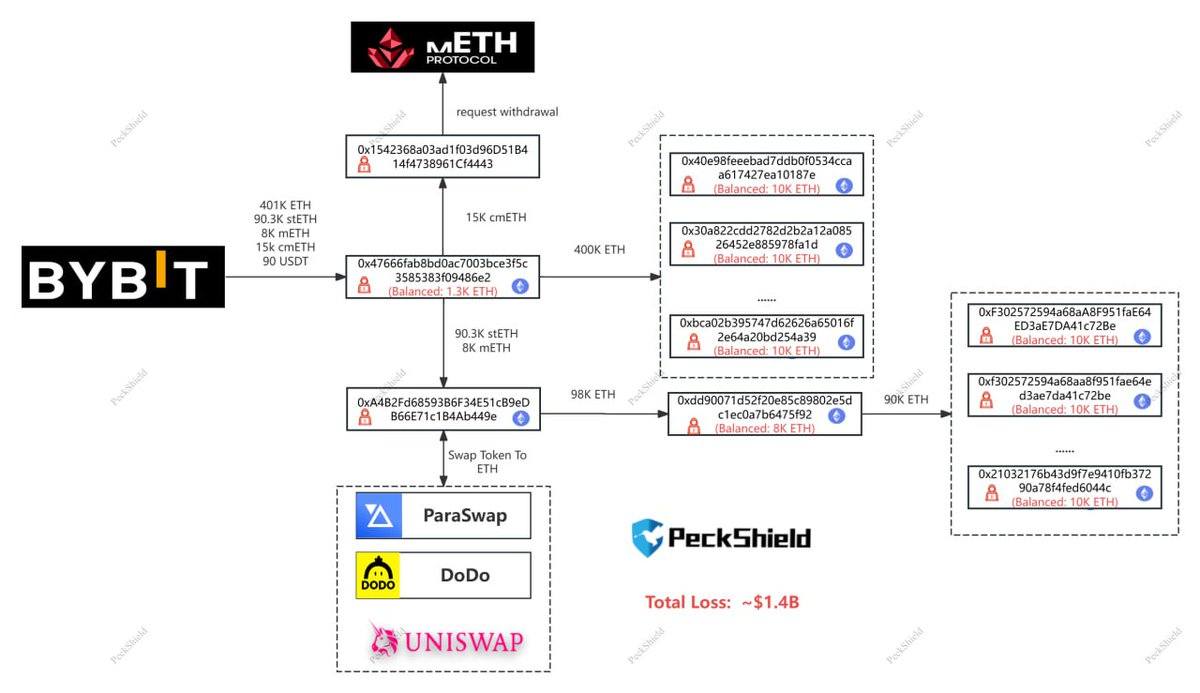
Despite higher than usual security measures, experts warn Lazarus’ state-backed resources—including dedicated R&D teams and cryptocurrency stolen in prior heists—enable them to continuously innovate, outpacing many private-sector defenses.
The incident reignites debates about the crypto industry’s preparedness against nation-state adversaries. Lazarus’ success in infiltrating many projects, platforms, and exchanges highlights the challenges of safeguarding decentralized systems and tokens.
As Lazarus refines its playbook, the attack serves as a grim benchmark for the escalating arms race between cybercriminals and the crypto sector. Their blend of technical precision, operational patience, and state sponsorship positions them as a persistent—and evolving—threat to global financial security.