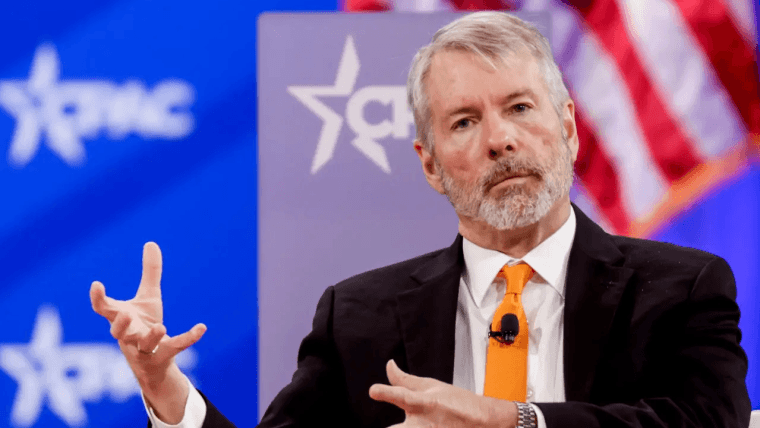



Bitcoin’s next chapter may be shaped by four competing visions for how the network should grow. Strategy Executive Chairman Michael Saylor’s framework argues that decisions around adoption, innovation, and decentralization could influence BTC’s role in the global financial system.
Michael Saylor Sees 4 Bitcoin Ideologies Testing BTC’s Future
WRITTEN BY

SHARE

Key Takeaways
- Four Bitcoin camps offer competing answers to how BTC should evolve.
- Institutional adoption raises questions about governance, integration, and monetary integrity.
- Bitcoin’s future could hinge on balancing technological progress with long-standing principles.
4 Bitcoin Camps Put BTC’s Future Path Under New Scrutiny
Strategy (Nasdaq: MSTR) Executive Chairman Michael Saylor published a paper on X on June 5 that frames Bitcoin’s next phase around four competing ideologies: Bitcoin Maximalists, Bitcoin Capitalists, Bitcoin Technologists, and Bitcoin Fundamentalists. The framework links BTC’s expanding role to deeper debates over adoption, technical change, institutional influence, and monetary integrity.
Maximalists view Bitcoin as the dominant digital monetary network and a defense against inflation, debasement, and monetary chaos. Capitalists see BTC as digital capital that can enter portfolios, balance sheets, securities, credit products, custody systems, and global financial infrastructure. That split shows how Bitcoin’s growth now depends on both ideological conviction and practical market integration.
“Bitcoin is no longer a narrow technical experiment or a niche monetary protest,” Saylor said, adding:
“It has become the dominant digital monetary network and a global asset with profound implications for individuals, institutions, corporations, banks, capital markets, and nation-states.”
The paper also separates the Technologist and Fundamentalist positions. Technologists argue that Bitcoin must keep improving as user needs, security risks, privacy concerns, and future threats evolve. Fundamentalists focus on self-custody, personal nodes, decentralization, immutability, permissionless access, and bitcoin’s use as money. That divide places protocol change and monetary preservation at the center of Bitcoin’s long-term governance debate.
Why Bitcoin’s Next Phase May Depend on Balance, Not Victory
Each ideology appears useful but incomplete on its own, Saylor noted. Maximalists supply conviction and monetary clarity, while Capitalists explain how adoption can reach institutions, families, companies, and governments. Technologists help Bitcoin respond to technical pressure, but aggressive base-layer changes can create unintended risks. Fundamentalists protect Bitcoin’s original principles, though rigid purity could limit access for many users.
The paper’s central tension turns on four questions. Maximalists ask what Bitcoin has already proven. Capitalists ask how it enters the global economy. Technologists ask how the protocol should improve. Fundamentalists ask how its core principles remain protected. Any ideology can go too far, making Bitcoin’s health dependent on conviction, integration, innovation, and preservation working together.
Saylor said:
“The challenge for Bitcoin is to preserve what makes it unique while allowing it to become useful to everyone.”
The conclusion frames Bitcoin as capable of serving many roles without belonging to one constituency. It can be money for individuals, capital for companies, collateral for banks, reserves for nations, property for families, infrastructure for markets, and hope for people facing economic misery. The preferred path treats the base layer as sacred infrastructure while pushing most innovation into higher layers, applications, custody systems, credit instruments, and capital markets.

Michael Saylor broke his silence after the market learned of Strategy’s 32 BTC sale and its $2.5 million in proceeds.…
Read Now: Saylor Breaks Silence After Strategy’s Bitcoin Sale