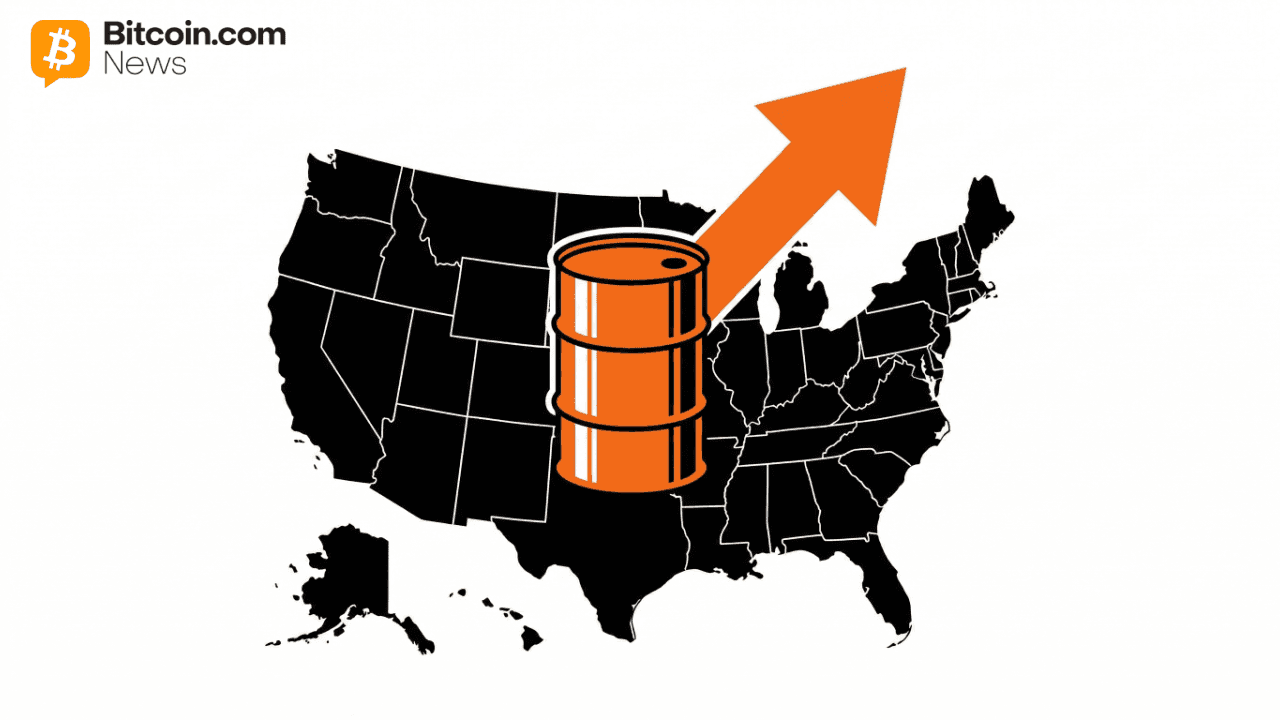
The U.S. CPI rose 3.3% in March, with the energy index, specifically gasoline prices, leading the charge and rising 21.2%. While the rise was less than expected, it underscores the challenges of reining in energy prices in the current geopolitical situation.
March US Inflation Rises 0.9% to 3.3% Led by Energy Prices
WRITTEN BY

SHARE
Key Takeaways:
- Driven by 21.2% higher gas prices, March’s 0.9% CPI rise marks a spike powered by the Iran conflict.
- The Trump Administration’s Iran conflict fueled a 10.9% energy index spike, possibly influencing the upcoming 2026 midterm elections.
- Despite a steep 0.9% CPI hike, Jerome Powell believes long-term inflation numbers remain anchored.
US Inflation Hits 3.3% in March as Iran’s Conflict Accelerates Energy Prices
While the Federal Reserve has set a historical target of 2% inflation annually, the U.S. economy is still far from reaching it, more so with the current complex geopolitical situation unfolding.
The U.S. Bureau of Labor Statistics released the Consumer Price Index (CPI) numbers for March, with the benchmark rising 0.9% after growing 0.3% in February, accumulating a total rise of 3.3% during the last 12 months. The acceleration has its origin in the energy index, which rose 10.9% in March, led by a 21.2% rise in gas prices; conversely, food registered no rise during March, a sign that the government has enjoyed some success in its attempt to control grocery prices.
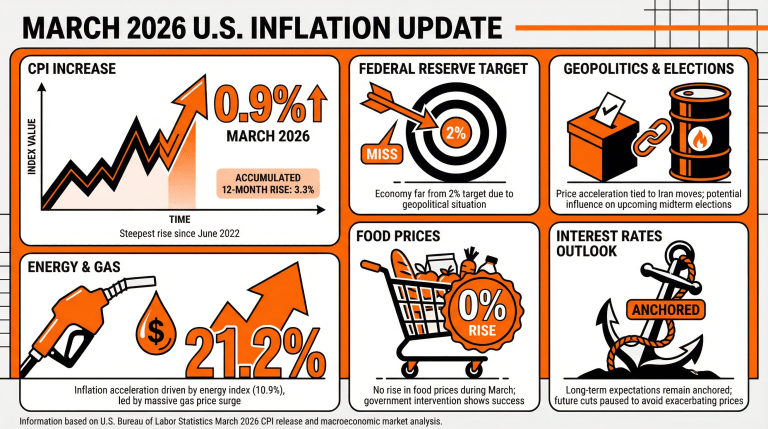
The rise is the steepest recorded since June 2022, at the peak of the post-COVID pandemic era.
While it might feel rough for consumers, some experts agree that the less-than-expected numbers signal a rising trust that the record energy prices U.S. citizens are experiencing at the pump will be transitory, and that the market expects a resolution of the Iran conflict.
Nonetheless, the 0.9% month-over-month increase underscores a price hike that will be blamed on the Trump Administration’s move into Iran, a fact that might also influence the upcoming midterm elections if the current ceasefire fails to evolve into an end to the conflict and a normalization of energy commodity prices internationally.
These numbers might affect the chances of additional rate cuts in 2026, as the Federal Reserve might decide not to take a dovish step, risking price exacerbation if geopolitical risks are not addressed. Last month, Federal Reserve Chair Jerome Powell stated that long-term inflation expectations remain “anchored,” even as inflation remains far from the 2% self-established goal.
Inflation Holds Steady at 2.4% in February as US Stocks Open With Caution on Geopolitical Risks
U.S. stocks opened cautiously Wednesday morning after fresh inflation data showed consumer prices rising at a steady pace in February,…
Read Now

Inflation Holds Steady at 2.4% in February as US Stocks Open With Caution on Geopolitical Risks
U.S. stocks opened cautiously Wednesday morning after fresh inflation data showed consumer prices rising at a steady pace in February,…
Read NowInflation Holds Steady at 2.4% in February as US Stocks Open With Caution on Geopolitical Risks
Read NowU.S. stocks opened cautiously Wednesday morning after fresh inflation data showed consumer prices rising at a steady pace in February,…