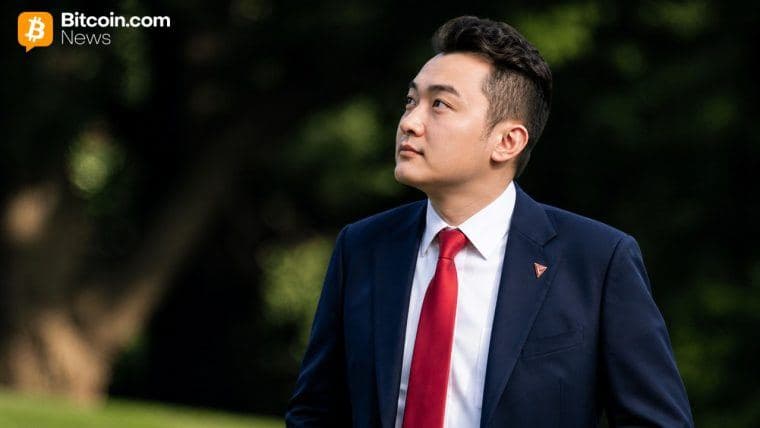



Justin Sun said Tron will pursue a post-quantum upgrade, aiming to bring NIST-backed cryptography to its mainnet.
Justin Sun Unveils Tron Post-Quantum Plan as Crypto Security Debate Grows
WRITTEN BY
SHARE
Key Takeaways:
- Justin Sun said Tron will launch a PQC upgrade.
- NIST standards may strain Tron throughput due to 10x larger signatures.
- TRX traded near $0.33 as roadmap details from Tron remain pending.
Tron Pushes Quantum-Safe Cryptography as Industry Weighs Long-Term Risks
Justin Sun, founder of the Tron blockchain, said this week, that the network is launching a post-quantum upgrade initiative designed to protect user assets from future quantum computing threats. Sun shared the announcement on X, framing the move as a step toward making quantum resistance a standard feature rather than an ongoing debate.
“While Bitcoin debates whether to freeze vulnerable coins and Ethereum forms research committees, Tron is building,” Sun wrote, adding that a technical roadmap will follow.
The proposal centers on integrating cryptographic signatures standardized by the U.S. National Institute of Standards and Technology, or NIST, directly into Tron’s mainnet. Those standards, finalized in August 2024, include ML-DSA, FN-DSA and SLH-DSA, which are designed to withstand attacks from quantum computers running algorithms capable of breaking current encryption.
Most major blockchains, including Bitcoin and Ethereum, rely on elliptic curve digital signature algorithms, or ECDSA, which could be vulnerable if large-scale quantum computing becomes viable. Tron’s move signals a push to move faster than competitors, even as other networks continue research and debate over migration strategies and long-term security models.
The trade-off is technical. Post-quantum signatures are significantly larger than ECDSA, which could affect transaction throughput, storage requirements and network efficiency on a high-volume chain. Tron processes large volumes of stablecoin transfers, including tether (USDT) transactions, meaning any change to its cryptographic structure must balance security with performance.
As of April 15, 2026, no formal governance proposal or technical documentation has been released by Tron DAO, and the announcement remains limited to Sun’s public statement. Market reaction has been mixed. Some traders and supporters viewed the initiative as forward-looking, while others raised concerns about migration complexity and the lack of technical specifics.
Tron’s token traded around $0.32 to $0.34 following the announcement. Critics noted that migrating millions of existing addresses to new cryptographic standards presents logistical challenges, especially for users holding assets tied to legacy keys. As far as freezing coins on Bitcoin, BTC proponents are not too keen on the latest Bitcoin proposal.
Others questioned which specific algorithms Tron will adopt and whether the network has engaged external experts in post-quantum cryptography. For now, the initiative remains a signal of intent rather than a deployed upgrade, with the industry waiting for a detailed roadmap that outlines implementation steps and timelines.
The announcement highlights a broader shift as blockchain developers begin treating quantum risk as a design constraint rather than a distant concern.