This week, the Japanese yen plummeted to its lowest point since 1990 against the U.S. dollar, weighed down by Japan’s monetary policy and uncertain economic indicators from the United States.
Japanese Yen Tumbles to 34-Year Low Against Soaring US Dollar

This article was published more than a year ago. Some information may no longer be current.
WRITTEN BY

SHARE
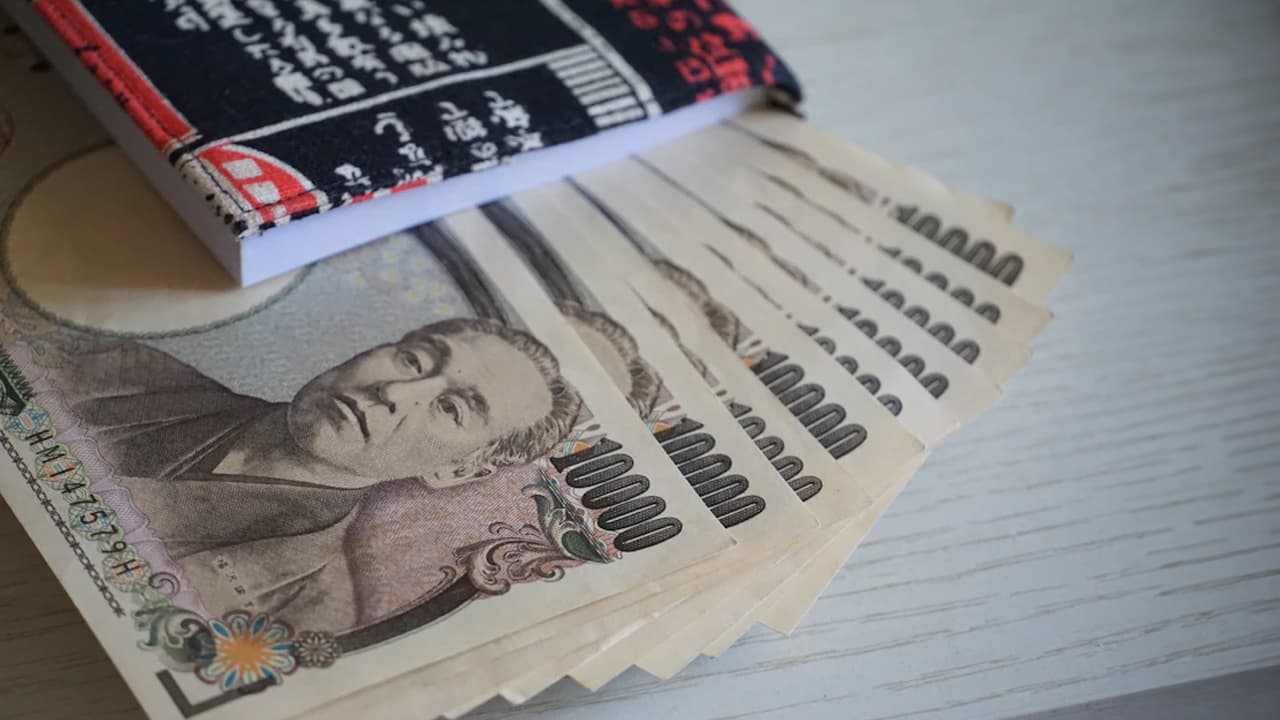
Japanese Yen’s Rapid Decline Triggers Talk of Market Intervention
The yen’s sharp drop to 158.283 per dollar signals a substantial downturn for the currency. This decline is primarily attributed to the Bank of Japan’s (BOJ) choice to keep interest rates low, as announced in their latest policy meeting. Despite the yen’s fall, the BOJ hinted at possible future rate increases, yet their cautious stance did not strengthen the Japanese currency.
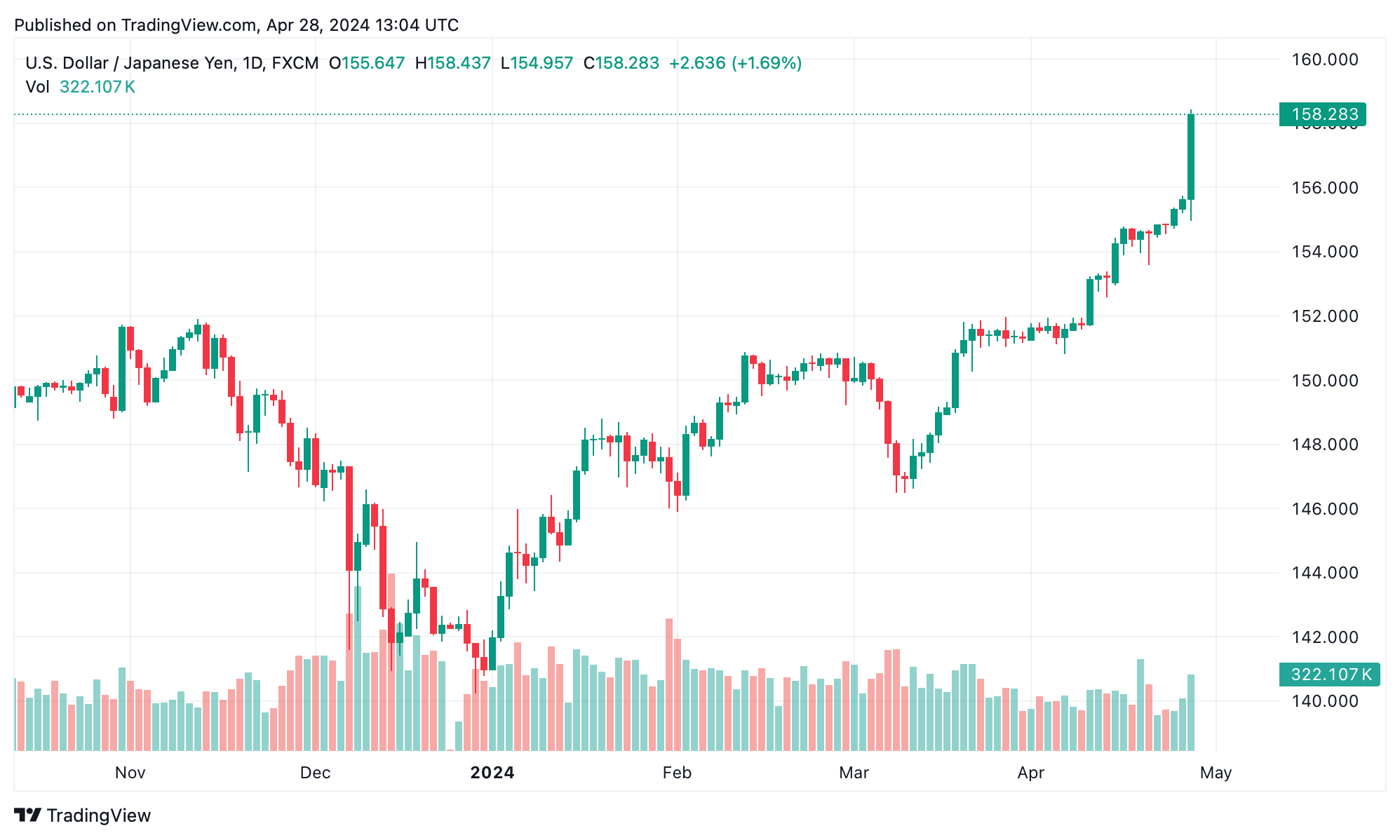
Analyst Peruvian Bull suggests the beginning of a languid collapse. “This is it. we’re moving to a new stage of the Endgame,” the X account conveyed to its 62,000 followers. “Japanese Yen ripping through barriers like paper, passing each level where the BoJ intervened before. The slow motion meltdown has finally begun to accelerate, and authorities are powerless to stop the decline, unless they want to dump their Treasuries.”
Japanese officials, including Finance Minister Shunichi Suzuki, have expressed concern over the rapid depreciation, suggesting that market interventions could be imminent to stabilize the currency. “We are carefully watching,” Suzuki was quoted by Nikkei. “We are ready to take full measures,” the Finance Minister added. Along with Peruvian Bull, the X account Wall Street Silver suggests that Japan’s monetary policymakers find themselves caught between a rock and a hard place.
“The Japanese Yen is imploding before our eyes,” Wall Street Silver wrote. “Their debt to GDP is somewhere about 250%. They can’t raise interest rates because it would implode the government’s budget and likely most of the pension funds that are stuffed with low rate debt. Something is breaking.”
An economic slump in a significant economy such as Japan, driven by sustained low interest rates and elevated public debt, could act as a catalyst. As the yen diminishes, it might lead to considerable losses for Japanese investors overseas and diminish the buying power of Japanese consumers. Additionally, until recently, the yen has been considered a “safe haven” currency. In previous times of economic uncertainty or market fluctuations, numerous global investors often shifted their funds into yen-denominated assets.
Financial markets are intricately linked worldwide. A notable downturn in one major economy might cause a drop in investor confidence, leading to sell-offs across global stock markets. With the yen approaching historic lows, the international financial community remains vigilant, waiting to see how Japan will respond to protect its currency amid a difficult economic environment.
What do you think about the Japanese yen’s drop this week? Share your thoughts and opinions about this subject in the comments section below.