Bitcoin tumbled to $83,544 on Friday, a low catalyzed by upheavals in financial markets amid Trump’s proposed tariffs on pharmaceutical companies. Concurrently, March’s consumer sentiment data illuminated the loftiest projections for long-term inflation in over three decades.
Inflation Fears and Trade Turmoil Push Bitcoin’s Price Below $84K

This article was published more than a month ago. Some information may no longer be current.
WRITTEN BY

SHARE

Wall Street Wipeout Hits Bitcoin: Crypto Economy Tumbles 4.14% as Global Markets Recoil from Trump’s Tariff Blitz
Cryptocurrency markets mirrored equities’ trajectory Friday, as leading U.S. benchmarks plunged abruptly ahead of the session’s end. A trifecta of forces – March’s consumer sentiment figures, new inflationary indicators, and renewed trade hostilities from the Trump administration – coalesced into a perfect storm of financial turbulence.
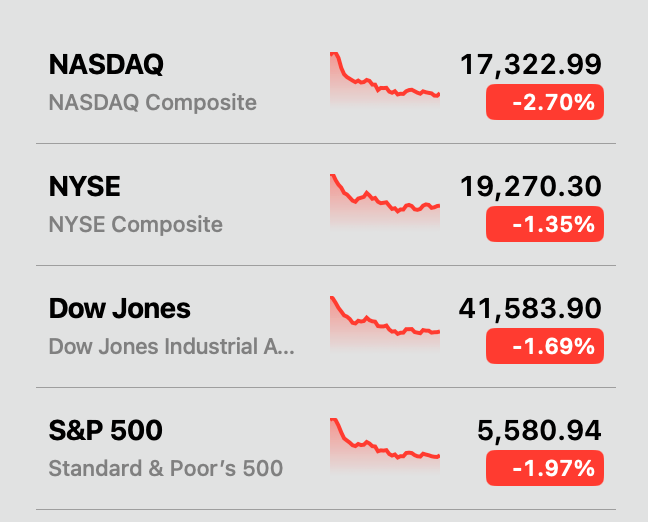
The crypto economy’s valuation eroded 4.14% in 24 hours, settling at $2.73 trillion. Bitcoin commands 61% of this valuation yet plummeted to an intraday nadir of $83,544. The premier digital asset now wages a Sisyphean struggle to breach the $84,000 threshold. Global crypto trading volumes hover near $91.4 billion, with bitcoin seizing $31.53 billion of today’s activity.
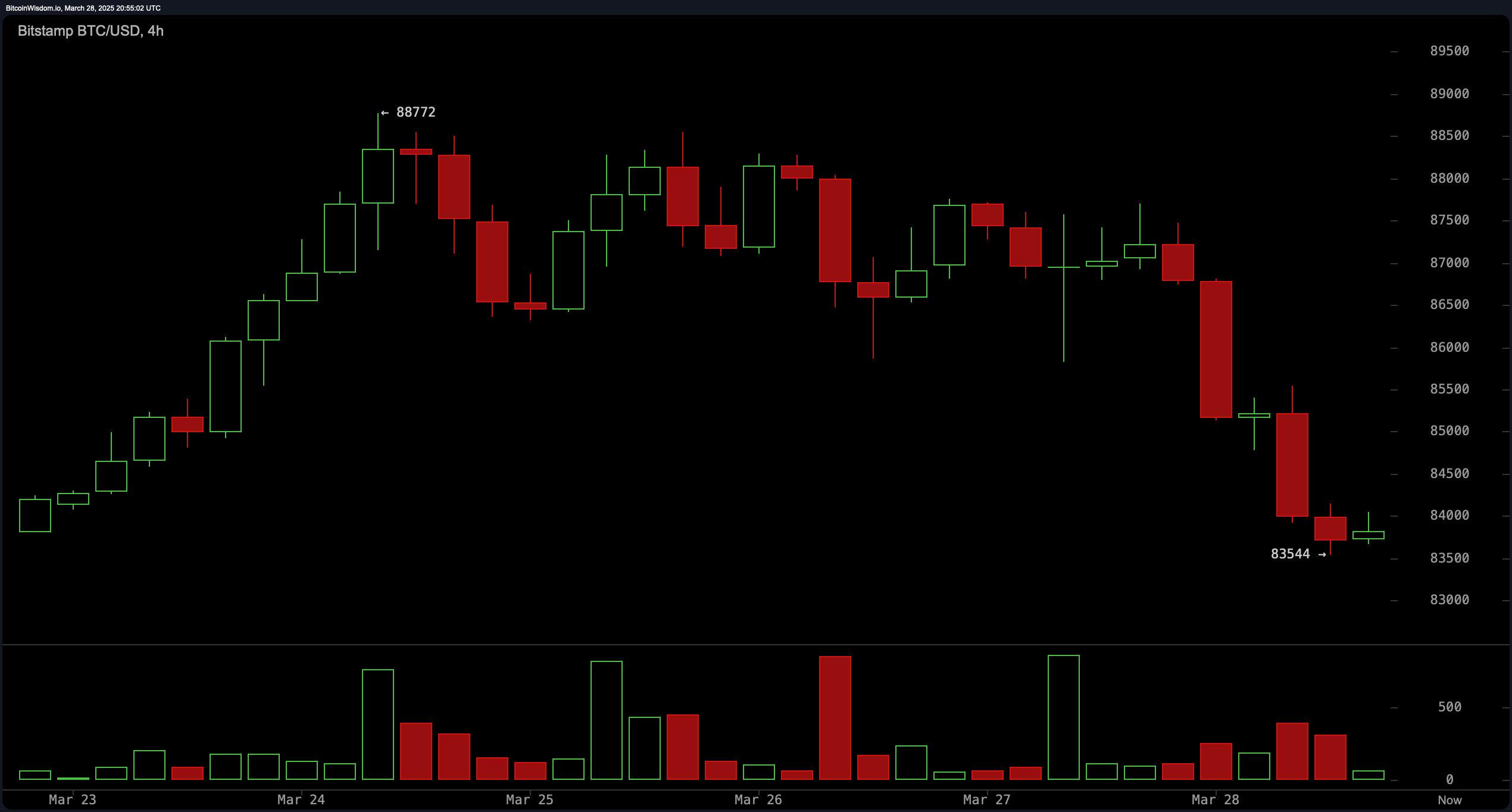
The CFGI registers a “fear” rating of 33/100—a psychological barometer now firmly in frostier territory. BTC’s Friday top trading pairs were anchored by USDT, FDUSD, USD, USDC, and EUR. South Korea’s currency claimed the sixth position in BTC pairings. Upbit—South Korea’s premier trading venue—showed BTC at $85,113 at 4:45 p.m. ET, while global averages commanded $83,883.
Coinglass data reveals $445.25 million in derivatives liquidations today, with BTC long positions absorbing $107 million. Bitcoin’s price gyrations now mirror Wall Street’s pulse, as macroeconomic ambiguity and geopolitical friction illustrate digital assets’ deepening entanglement with conventional finance.
Though bitcoin’s market share and liquidity suggest latent fortitude, the CFGI’s “fear” designation betrays skittishness among traders navigating inflationary headwinds and regulatory pivots. Mass derivatives unwinding reveals an ecosystem maturing through adversity—where speculative excess contends with structural fragility, compelling participants to navigate increasingly complex financial riptides.