As the crypto landscape evolves, a significant tightening in bitcoin’s available supply on exchanges has emerged, hinting at just nine months of reserves left. Bybit’s latest halving report unveils the reasons behind this tightening grip, indicating a looming scarcity that could reshape market dynamics.
Imminent BTC Supply Squeeze: Bybit Report Suggests Bitcoin Exchanges to Run Dry in 9 Months

This article was published more than a year ago. Some information may no longer be current.
WRITTEN BY

SHARE

Bitcoin Faces Unprecedented Supply Squeeze as Exchange Reserves Plummet
According to Bybit’s halving analysis, the shrinking bitcoin (BTC) reserves on exchanges are primarily due to increased investor retention and a reduction in mining outputs following the latest halving event. The halving effectively slashes the reward for mining new bitcoins, thereby reducing the rate at which new bitcoins are introduced to the ecosystem. This event has historically led to a supply squeeze, further intensified by the growing investor inclination to hold onto their assets longer.
Institutional interest in bitcoin has been on a steady rise, particularly with the advent of spot bitcoin exchange-traded funds (ETFs) in the U.S., as detailed in Bybit’s report. The report’s findings insist institutions are increasingly viewing bitcoin as a safe haven asset, which has led to a significant uptick in allocations from both crypto-native and traditional finance entities. These investors are not just buying but also holding, reducing the active supply available on exchanges.
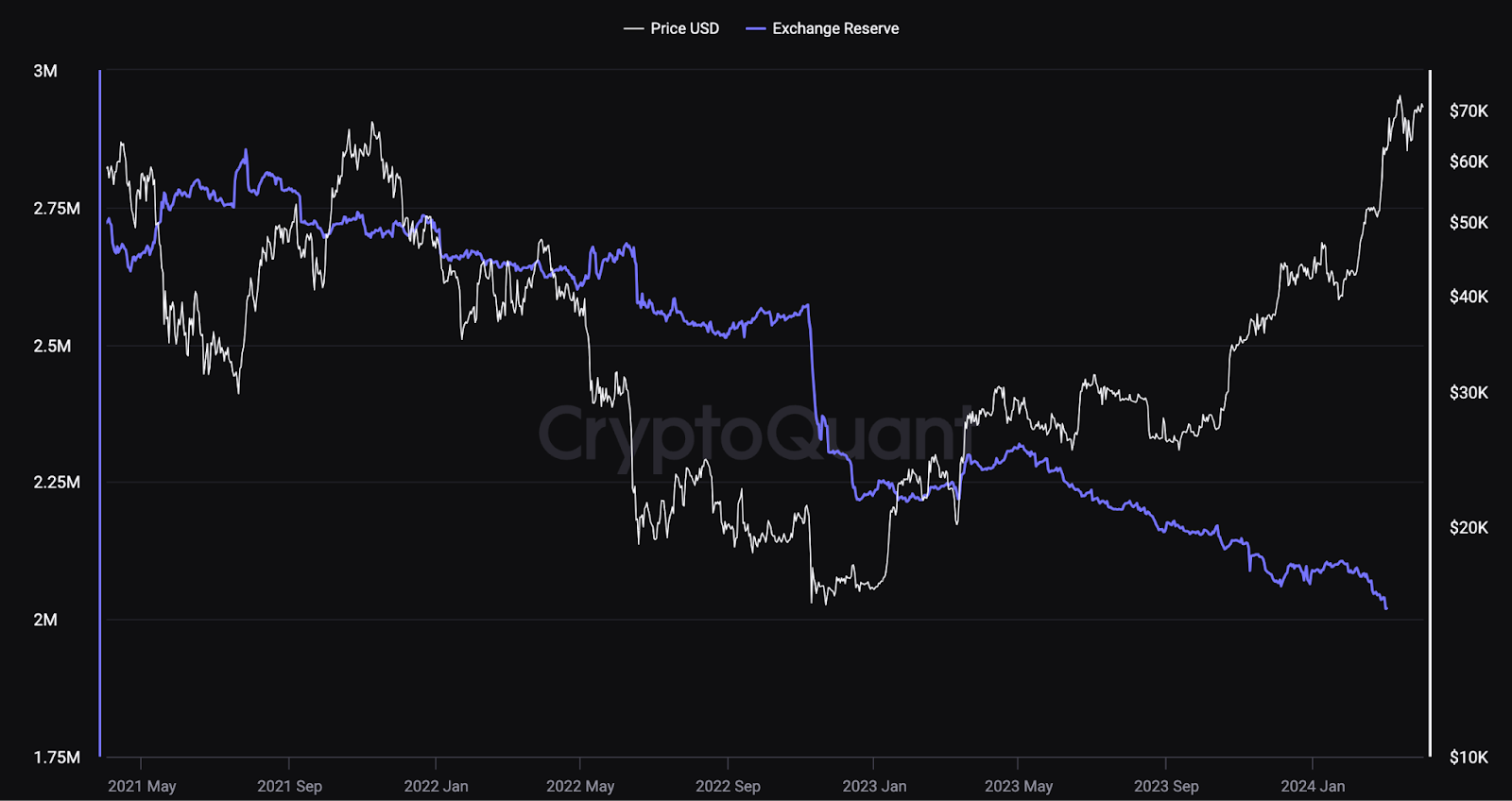
“ Bitcoin reserves in all centralized exchanges have been depleting faster. With only 2 million bitcoins left, if we assume a daily inflow of $500 million to [spot bitcoin ETFs], the equivalent of around 7,142 bitcoins will leave exchange reserves daily, suggesting that it will only take nine months to consume all of the remaining reserves,” Bybit’s researchers state in the study.
The report adds:
With this in mind, it’s unsurprising that bitcoin’s price may continue to climb before the halving, or even afterward, as the supply squeeze propels the price to another new record.
The report further highlights a shift in investor behavior, with a notable increase in the percentage of BTC being held in cold storage. This practice of holding crypto assets offline enhances security and reduces the likelihood of selling, thus contributing to the supply shortage. Bybit’s data suggests that such behavior has been encouraged by the market’s bullish outlook and the desire to maximize returns in anticipation of further price increases.
Bybit speculates that if the current trends continue, the bitcoin market, in general, could see a further tightening of the available BTC supply, which could drive prices up as demand continues to outpace the dwindling supply. This scenario is supported by their analysis of past market behaviors during similar conditions, which typically saw significant price surges.
What do you think about Bybit’s halving report about a potential supply squeeze in nine months? Share your thoughts and opinions about this subject in the comments section below.